
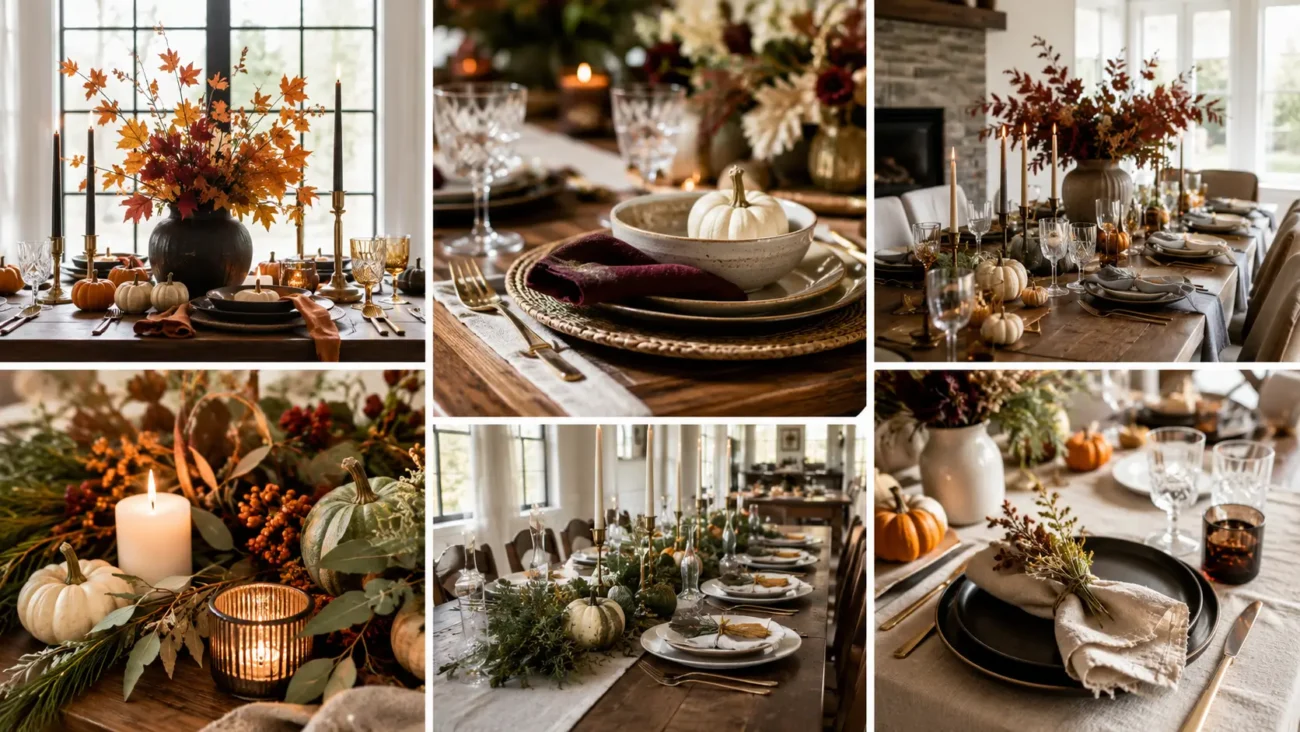
A fall dining table can make an ordinary meal feel thoughtful before the first dish arrives. The strongest settings create warmth through color, texture, light, and practical details that leave enough room for plates and conversation. Oxblood, celery green, clove brown, madder red, amber, and mellow oak offer autumn depth without depending on familiar pumpkin displays. The six ideas below explore graphic stripes, equestrian craftsmanship, fragrant pomanders, natural dye color, barrel making traditions, and glowing glass. Each direction can be simplified for weekday dinners or expanded for a longer gathering with family and friends.
Oxblood Stripe Table With Graphic Autumn Warmth
Oxblood brings confident depth to a dining table, while broad stripes keep the darker shade lively rather than formal. Pair it with celery green, warm ivory, and a small amount of black for contrast. The palette gives wood, stone, or painted tables a polished seasonal identity without requiring permanent changes.
Run Wide Ribbons Through the Center
Lay several broad fabric ribbons lengthwise down the table instead of using one traditional runner. Alternate oxblood, ivory, and muted green, allowing a narrow strip of the table to remain visible between them. Secure the ends beneath the tabletop so they stay flat. The linear arrangement gives serving dishes clear positions and makes a long table feel intentionally structured.
Add Celery Green Candle Columns
Place low candle columns or enclosed battery lights in a soft celery shade along the ribbon lines. Keep them short enough for guests to see across the table, then vary their width for gentle rhythm. Cream holders will soften the green, while dark metal bases create sharper contrast. Space each light between serving areas rather than building one crowded cluster.
Layer Oxblood Side Plates Over Ivory
Use plain ivory dinner plates, then add smaller oxblood plates or shallow bowls above them. The dark red creates a strong circle of color at every setting without requiring patterned dishes. Fold neutral napkins beside the plates and keep glassware clear. This balanced placement lets the graphic runner remain visible while connecting the palette from one end to the other.
Equestrian Table With Saddle Leather Details
An equestrian table brings autumn character through saddle leather, woven wool, aged metal, and tailored construction. The theme should suggest skilled craftsmanship rather than literal horse decorations. Tobacco brown, forest green, cream, and muted red create a grounded palette that suits traditional dining rooms, modern breakfast areas, and rustic wood tables.
Fold a Saddle Blanket as the Runner
Choose a narrow wool textile with simple bands or woven borders and fold it lengthwise through the center of the table. Keep the pattern large and the surface flat so dishes remain stable. A forest green and cream blanket feels quiet, while muted red adds warmth. Let the textile stop before the table ends for a neat tailored appearance.
Fasten Napkins With Leather Cuffs
Wrap each napkin with a slim imitation leather cuff secured by a small brass stud or simple buckle. Use smooth brown material without heavy decoration so the place settings remain refined. Cream, oat, or green napkins will highlight the darker cuff. Make every band easy to open and keep metal edges rounded for comfortable handling.
Mark Places With Prize Rosettes
Create compact fabric rosettes in burgundy, moss, and ivory, then attach a small name card to the center of each one. Place them above the plates or beside the glasses rather than on the napkins. Repeating one ribbon color around the table keeps the varied rosettes connected while giving every guest a distinctive place detail.
Pomander Supper Table With Clove and Citrus Pattern
Pomanders bring fragrance, natural color, and intricate pattern to the fall dining table. Whole citrus fruit studded with cloves feels richer when arranged with dark leaves, cinnamon brown linen, and cream ceramics. Keep the centerpiece low so the setting remains comfortable and the natural details never block conversation.
Arrange Clove Citrus in a Low Footed Bowl
Fill a low footed bowl with several oranges or small citrus fruits decorated in different clove patterns. Try rings, diamonds, and curved lines rather than covering every surface. Tuck a few dark leaves between the fruit and leave the bowl loosely filled. The raised base gives the centerpiece presence while the low profile protects conversation.
Twist Peel Curls Around Name Cards
Create fresh citrus peel curls and place one beside each name card shortly before guests arrive. Keep the pieces away from plates and remove them after the meal. Cream cards with brown ink will support the natural palette and keep each place easy to identify. Different curl shapes will make the settings feel handcrafted rather than perfectly matched.
Tie Cinnamon Napkins With Velvet Cord
Fold cinnamon colored napkins into simple rectangles and secure them with narrow velvet cord in dark green or oxblood. Add one clove or tiny dried leaf beneath the knot for a fragrant detail, ensuring it does not touch food. The soft cord introduces richness while the plain napkin keeps the setting practical and easy to unfold.
Natural Dye Table With Madder and Walnut Color
A natural dye inspired table celebrates irregular color, softened edges, and layered earthy tones. Gentle variation gives every setting an individual quality while the repeated palette keeps the table cohesive. Madder red, walnut brown, pale onion gold, and faded indigo can share the same setting when cream dishes provide visual balance.
Use Tonal Napkins With Soft Color Changes
Choose napkins in several depths of one shade, moving from pale rose clay to deeper madder red. Arrange the light and dark versions alternately around the table. The changing color creates movement without printed pattern. Keep the folds identical and use plain rings or no holders so the tonal effect remains the main detail.
Turn Dye Swatches Into Place Cards
Mount small fabric swatches onto cream cards and write each guest name beneath the material. Use walnut, indigo, madder, and golden tones while repeating each color at least twice. The swatches introduce texture and help distribute the palette evenly. Their slightly different edges make every place feel individual without disrupting the overall arrangement.
Display Sealed Pigment Jars in a Narrow Tray
Arrange small sealed jars containing decorative powders, colored sand, or dried botanical material inside a narrow tray. Label them with color names rather than ingredient claims and keep them clearly separate from food. Place the darkest jars near the center and lighter tones toward the ends. The gradual sequence creates a compact centerpiece with studio character.
Cooperage Table With Curved Oak and Iron Rings
A cooperage inspired table takes cues from the craft of shaping barrels through curved oak, fitted staves, and dark metal hoops. The combination brings architectural structure and lasting warmth without relying on ordinary rustic decorations. Use mellow oak, charcoal iron, cream linen, and a small amount of burgundy to keep the setting polished.
Build a Center Line From Curved Wood Pieces
Arrange several smooth curved wood pieces along the center of the table, turning their arcs in alternating directions. Use finished decorative pieces with stable bases rather than loose working materials. Place low cream vessels between selected curves to soften the geometry. The repeating forms suggest barrel construction while leaving open spaces for serving dishes.
Shape Iron Rings Into Low Candle Frames
Use small dark metal rings as frames around enclosed battery candles or simple glass cups. Keep every light protected and the rings lower than the guests’ sight lines. The circular metal detail connects naturally with the curved wood and creates layered shadows after sunset. Spread the rings evenly so the table does not become crowded around the center.
Use Cork Stoppers as Card Holders
Cut narrow slots into large clean cork stoppers or use ready made cork holders for place cards. Write names on cream paper and keep the lettering simple. The rounded stoppers bring a practical reference to barrel making without becoming overly themed. Place them beside the glasses where they remain visible but do not interrupt dining.
Glassblower Table With Amber Light and Molten Color
A glassblower inspired table brings autumn atmosphere through bubbled surfaces, twisted forms, and colors that appear suspended inside glass. Plain dishes and restrained linens allow the changing transparency to remain the focus. Amber, smoke, plum, and pale honey create a glowing palette that becomes especially rich under gentle evening light.
Cluster Bubbled Vases in Uneven Heights
Arrange three or five small bubbled glass vases along the center, mixing amber, smoke, and pale honey tones. Keep the stems or branches minimal so the glass remains visible. Uneven heights create movement, while clear gaps preserve serving space. Position the darkest vessel near the middle and allow the lighter pieces to extend toward the ends.
Twist Glass Stirrers Into Place Details
Place one decorative twisted glass stirrer beside each water glass or across a folded napkin. Choose related colors rather than exact matches, repeating amber and plum around the table. Make sure every piece has smooth finished ends and remains separate from children when the material is delicate. The spiral form catches light without adding bulky decoration.
Reflect the Glow With Mirrored Coasters
Use small mirrored or reflective coasters beneath selected glass vessels, not beneath every drinking glass. The surfaces will multiply amber light and emphasize bubbles inside the material. Keep the mirrors low and clean, with rounded edges for safety. A few controlled reflections create more atmosphere than a fully mirrored runner, which can become visually distracting.
Let the Fall Dining Table Set the Pace for the Whole Evening
The most inviting fall dining table feels special while remaining comfortable enough for real food and relaxed conversation. Oxblood stripes bring graphic warmth, while equestrian details add tailored craftsmanship. Pomanders introduce fragrance and pattern, natural dye colors create gentle variation, and cooperage forms celebrate wood and metal construction. Glassblower inspired pieces finish the setting with amber light and changing transparency.
Choose one main concept, then repeat its palette through the centerpiece, napkins, and place details. Keep decorations low, protect space for serving dishes, and remove anything delicate before the table becomes busy. Related inspiration for fall centerpieces, autumn dining rooms, kitchen table decorations, seasonal place settings, cozy lighting, and fall kitchen decor can help extend the atmosphere while allowing every gathering area to retain its own character.
