
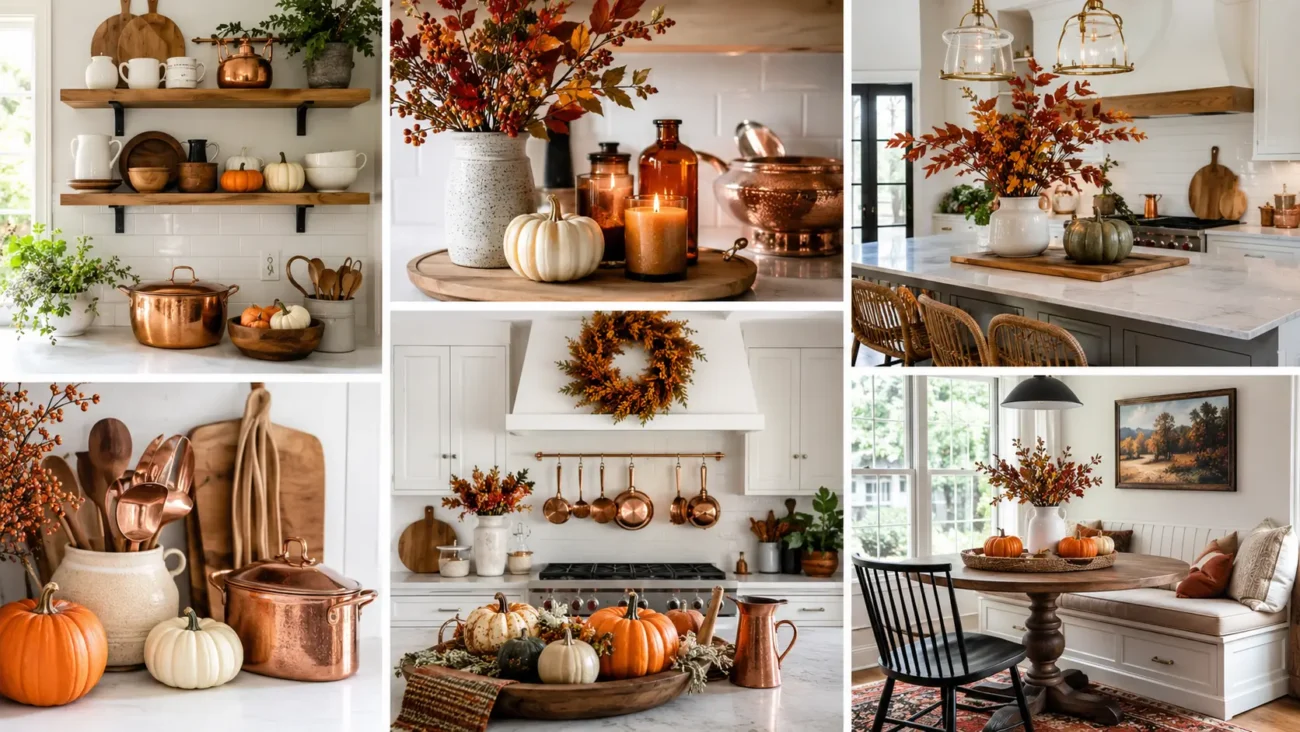
Fall kitchen decor can make the busiest room in the home feel warmer without taking away the surfaces needed for cooking, serving, and daily routines. Paprika, slate blue, chestnut, flax, aubergine, and cream create inviting depth. The six ideas below explore checked fabric, decorative tile, carved baking tools, woven storage, tailored sink fabric, and a practical serving cart. Each direction can work in a compact apartment kitchen, a spacious open layout, or a traditional cooking space.
Paprika Check Textiles With Lively Autumn Rhythm
Paprika check brings energy to neutral cabinets and wood surfaces while remaining easy to use throughout the colder months. It feels rich beside cream, dark brown, slate blue, and natural oak. Use the check across practical pieces, balanced by plain fabric and open surfaces.
Frame the Window With a Short Checked Valance
Choose a softly gathered valance in paprika and cream and mount it above the kitchen window so natural light remains unobstructed. A medium check feels cheerful without becoming visually busy, while a narrow dark border can sharpen the lower edge. Repeat the paprika shade through one bowl or utensil holder, but keep the windowsill simple so the textile remains the clear seasonal feature.
Fold Matching Napkins Into an Open Basket
Place four or six checked napkins inside a shallow woven basket near the dining nook or serving area. Fold them with the pattern facing outward and mix in two solid flax napkins for balance. The display keeps useful linens close at hand. Choose washable cotton or linen that can handle regular meals rather than saving the fabric only for special occasions.
Add a Checked Pad to a Kitchen Stool
Refresh one wooden stool with a slim seat pad in the same paprika check or a larger related pattern. Secure it neatly with fabric ties and keep the filling firm enough for comfortable seating. The upholstered surface carries color lower without covering cabinets or counters.
Hand Painted Tile Accents With Blue and Brown Detail
Decorative tile can introduce pattern without committing to a complete backsplash. Small panels and trays introduce hand painted detail gradually. Slate blue, cocoa, cream, and muted ochre create a calm palette that feels appropriate for fall while remaining useful beyond the season.
Lean a Framed Tile Panel Behind the Range
Arrange several decorative tiles inside a narrow protective frame and lean the finished panel against a safe section of wall away from direct heat. Choose simple leaves, stars, fruit outlines, or geometric marks that repeat the same two colors. The frame keeps the panel movable and gives the wall architectural character.
Line a Serving Tray With Patterned Tile
Use a shallow tray with a tiled base for mugs, a sugar bowl, or small breakfast dishes. Keep the grout lines narrow and select a pattern with generous cream space so the surface does not compete with the objects placed on it. Dark wood or chestnut edges will connect the blue and brown design to nearby cabinets and furniture.
Place a Single Tile Beneath a Countertop Lamp
Set one broad decorative tile beneath a small rechargeable lamp to create a defined pool of color. Choose a tile with a central motif rather than a repeating pattern, then leave the area around it open. The combination brings artwork and evening light without clutter.
Carved Baking Tool Displays With Honest Kitchen Character
Wooden rolling pins, pastry stamps, butter paddles, and dough cutters can become beautiful fall decorations because their warm surfaces already suit the kitchen. A limited display feels intentional. Mix pale maple, honey oak, and deep walnut, then repeat the wood tones through boards, frames, or stool legs.
Hang Rolling Pins From a Narrow Rail
Mount a sturdy rail on an open wall and hang three or four rolling pins by secure loops. Vary the handle shapes and wood tones while keeping the tools aligned at similar heights. Leave enough space between them for every silhouette to remain visible. The arrangement adds warmth and keeps useful pieces within reach.
Fill a Crock With Pastry Wheels and Stamps
Choose a plain chestnut or cream crock and fill it with carved pastry wheels, cookie stamps, and wooden spoons. Arrange the tallest handles toward the back and keep the front lower so the individual shapes can be seen. Place the crock beside cookbooks or a flour canister, leaving enough space to remove every tool easily.
Display One Oversized Board as Art
Lean a large carved breadboard or pastry board against the wall behind a clear section of counter. Look for an unusual outline, visible grain, or softly worn edge that gives the piece character even when it is not in use. Place one small bowl nearby rather than building a full vignette. The board brings height and warmth while protecting workspace.
Chestnut Basket Storage With Calm Pantry Order
Woven storage brings texture to open shelves, pantry corners, and the space above cabinets while concealing everyday packages. Chestnut and tobacco colored reeds feel warmer than pale summer baskets, especially beside cream paint and darker floors. Choose related shapes so the baskets feel collected rather than matched.
Group Lidded Baskets on the Highest Shelf
Use two lidded baskets for occasional linens, baking molds, or serving pieces on a high pantry shelf. Select one rectangular shape and one rounded form in similar chestnut tones. Small blank tags can identify the contents without adding decorative wording. Leave a gap so the shelf feels open and each shape remains visible.
Slide a Long Basket Beneath the Island
Place a low rectangular basket on an open island shelf for folded aprons, table linens, or reusable shopping bags. The long shape uses space efficiently and keeps soft items off busy counters. A dark woven finish creates contrast against pale cabinetry, while sturdy side handles make the basket easy to pull forward during daily routines.
Create a Market Basket Drop Zone
Set one handled basket near the pantry or back door for produce that does not require refrigeration. Line it with a washable flax cloth and keep the contents limited so air can circulate. Pears, squash, or onions can bring natural fall color, but the basket should remain practical rather than becoming a permanent arrangement that wastes food.
Tailored Sink Skirts With Soft Cabinet Contrast
A sink skirt can soften a kitchen filled with hard surfaces while concealing open storage beneath a farmhouse sink, utility basin, or freestanding counter. Use washable fabric, controlled fullness, and a color connected to nearby textiles. Aubergine, flax, slate, and paprika all bring seasonal depth without appearing novelty driven.
Choose Box Pleats Instead of Loose Ruffles
Use evenly spaced box pleats to give the sink skirt structure and prevent the fabric from projecting too far into the room. A flax ground with a narrow aubergine stripe feels tailored, while solid slate blue creates a calmer result. Keep the lower edge just above the floor and attach the panel securely so it can be removed for washing.
Add a Dark Border Along the Lower Edge
Finish a plain cream or oatmeal skirt with a broad paprika, chestnut, or plum border. The darker band grounds the fabric and helps disguise marks near the floor. Repeat the border color through one towel or stool pad elsewhere in the kitchen. This connection integrates the sink area with the room.
Hide Useful Baskets Behind the Fabric
Use the concealed space for sturdy baskets holding cleaning cloths, recycling supplies, or less attractive kitchen essentials. Keep everything inside trays or containers so the fabric never touches damp products. An organized interior lets the skirt add softness without reducing function.
Freestanding Harvest Cart With Flexible Serving Style
A small kitchen cart can carry seasonal color while providing storage and serving space. Choose a wood or painted frame with locking wheels and style it with useful objects. Deep aubergine, chestnut, warm cream, and aged metal create a rich palette that can move between the kitchen and dining area.
Turn the Top Into a Warm Drink Station
Arrange a kettle, two mugs, a tea tin, and a folded cloth on a sturdy tray at the top of the cart. Keep ingredients sealed and leave enough open space for preparation. A small bowl of cinnamon sticks or dried citrus can add fragrance and color, while a rechargeable lamp nearby creates a welcoming evening glow without filling the entire counter.
Store Serving Boards on the Lower Shelf
Stand several boards upright inside a secure divider or low basket on the bottom shelf. Mix round, rectangular, and handled shapes in related wood tones. This keeps heavy pieces accessible and gives the cart visual rhythm. Add one folded table runner beside them so the shelf feels complete without becoming overcrowded.
Paint the Frame in Deep Aubergine
Aubergine gives a simple cart the depth of dark furniture while appearing softer than black. Leave the top in natural wood or warm stone so the work surface remains visually clear. Small cream wheels or wood handles can create contrast. The rich frame connects with paprika textiles, chestnut baskets, and blue tile details.
Let the Kitchen Welcome Fall Through Useful Beauty
The best fall kitchen decor adds warmth without making cooking more difficult. Paprika checks bring cheerful pattern, hand painted tile introduces lasting character, and carved baking tools celebrate the room’s purpose. Chestnut baskets create calm storage, a tailored sink skirt softens hard cabinetry, and a freestanding cart adds flexible serving space. Choose one textile idea and one practical display, then repeat their colors in small amounts so the room feels connected rather than fully themed. Related inspiration for fall dining tables, autumn pantry styling, cozy breakfast nooks, seasonal living rooms, entryway decor, and kitchen organization can help the rest of the home share the same welcoming mood. Thoughtful pieces that remain useful will make the kitchen feel ready for slower breakfasts, weekend baking, and long evenings around the table.
