
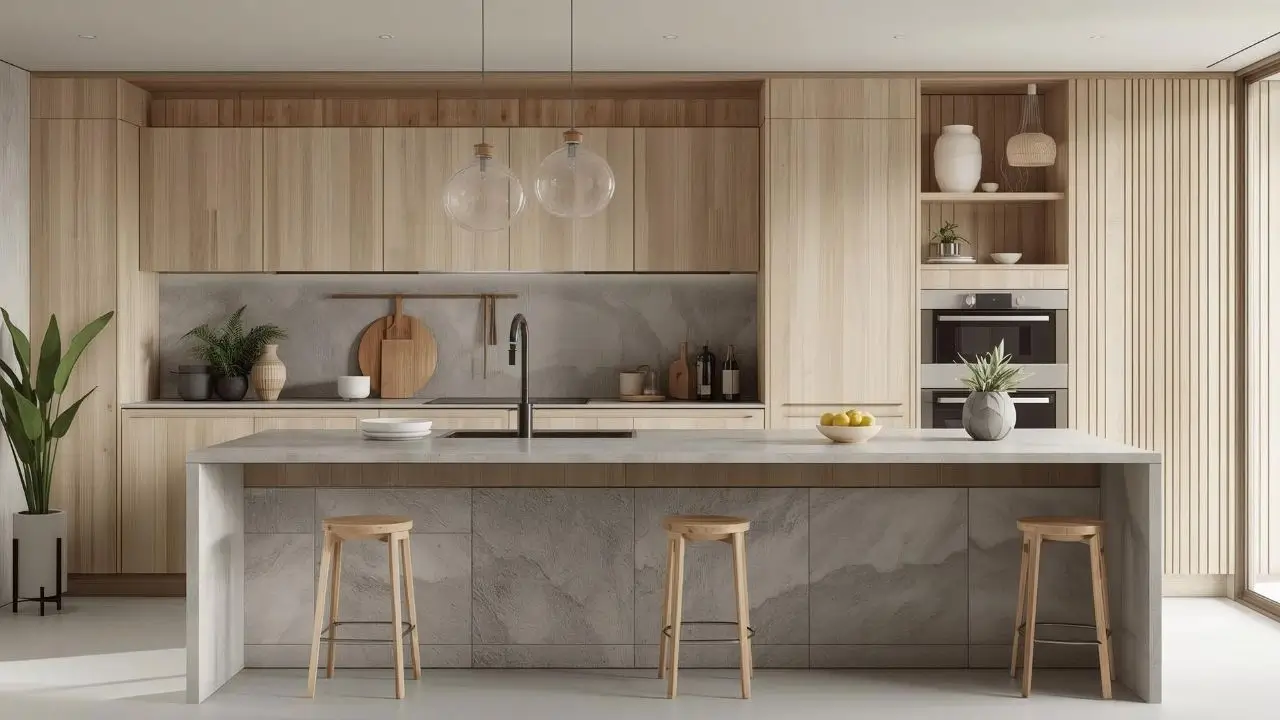
Japandi kitchen design blends the warmth of Scandinavian interiors with the simplicity of Japanese aesthetics. The result is a kitchen that feels calm, intentional, and beautifully balanced. This style focuses on clean lines, natural materials, and practical layouts that support everyday living without visual clutter. A Japandi kitchen should feel warm but not busy, minimal but not cold, and functional without looking overly plain. Natural wood, soft neutrals, matte finishes, quiet texture, and thoughtful storage all help create the look. These Japandi kitchen design ideas highlight ways to create a kitchen that feels modern, warm, and effortlessly serene.
These Japandi kitchen design ideas highlight thoughtful ways to create a kitchen that feels modern, warm, and effortlessly serene.
Neutral Color Palettes With Natural Warmth
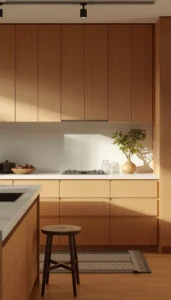
Color is the foundation of Japandi kitchens. Soft, natural tones create a peaceful base that allows wood, stone, ceramics, and simple shapes to stand out. A Japandi palette should feel calm and connected, with enough warmth to keep the kitchen inviting. Instead of using many colors, focus on quiet shades that flow smoothly together and support a clean, balanced design.
Use soft neutral shades
Warm white, beige, and light gray create a calm base. These shades make the kitchen feel open, bright, and easy to live with. They also work beautifully with natural wood cabinetry, stone counters, and simple decor, helping the space feel peaceful without looking empty.
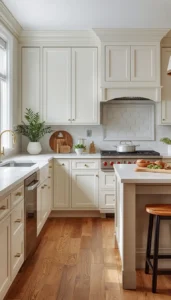
Add contrast with darker tones
Charcoal or muted black adds depth and structure. Small dark accents can appear through lighting, stools, hardware, open shelving, or window frames. These deeper tones help ground the kitchen and prevent a pale neutral palette from feeling too soft or unfinished.
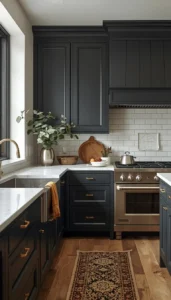
Keep the palette minimal
Fewer colors enhance visual harmony. Choose a limited range of soft neutrals, wood tones, and one or two darker accents. A restrained palette keeps the kitchen feeling organized and intentional, which is essential for the calm and functional Japandi style.
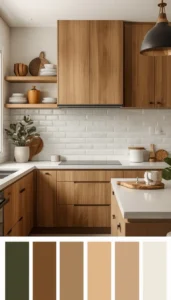
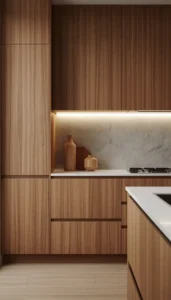
Natural Wood Cabinetry for a Balanced Look
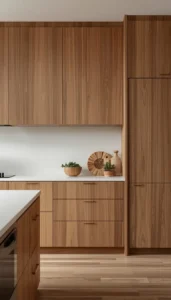
Wood brings warmth and authenticity. In Japandi kitchens, cabinetry often becomes the main source of natural texture, adding softness to the clean lines and simple layout. Wood cabinets can make the room feel grounded, timeless, and welcoming while still keeping the design modern. The key is choosing natural finishes and simple forms that feel warm without looking heavy.
Choose light to medium wood tones
Oak and ash feel soft and natural. These wood tones keep the kitchen bright while adding warmth and texture. Light to medium finishes work especially well with warm white walls, neutral counters, and matte black or brass accents.
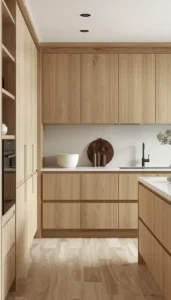
Keep cabinet designs simple
Flat panel doors suit Japandi style best. Smooth fronts create a clean and uncluttered look that supports the minimalist feel. Avoid heavy molding or overly decorative details, and let the natural wood grain provide quiet interest instead.
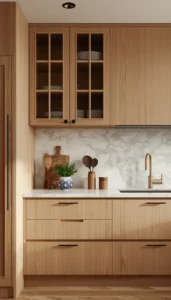
Avoid high gloss finishes
Matte textures feel more organic. A soft matte wood finish looks calmer and more natural than shiny surfaces. It also pairs well with stone, ceramic, linen, and other earthy materials, helping the kitchen feel refined and peaceful.
Minimal Kitchen Layouts That Feel Open
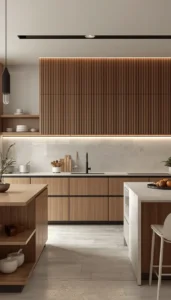
Layout plays a key role in Japandi design. A calm kitchen begins with clear movement, practical zones, and surfaces that are easy to use. Japandi layouts avoid unnecessary visual distractions and focus on flow, storage, and daily function. Every area should feel purposeful, whether it is used for cooking, cleaning, serving, or gathering.
Focus on clean sight lines
Open layouts enhance calmness. Keep the view across the kitchen simple by avoiding too many bulky details or crowded surfaces. Clean sight lines make the space feel larger, more breathable, and visually peaceful, which supports the Japandi focus on balance.
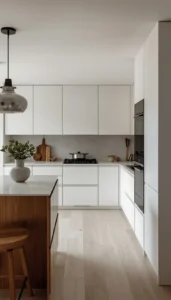
Keep countertops uncluttered
Clear surfaces support functionality. Store small appliances, extra tools, and daily items inside cabinets whenever possible. A simple countertop with only a few useful pieces feels more restful and makes cooking, cleaning, and meal preparation easier.
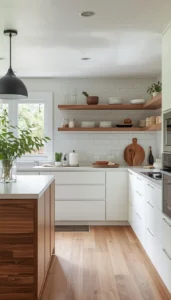
Use integrated appliances
Hidden appliances maintain simplicity. Panel ready refrigerators, built in ovens, and concealed dishwashers help the kitchen feel seamless. Integrated appliances reduce visual breaks and allow cabinetry, materials, and layout to remain the main focus.
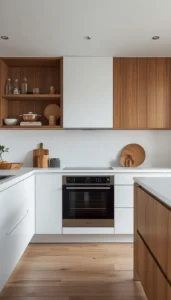
Japandi Kitchen Islands With Purpose
Islands add function without excess. In a Japandi kitchen, the island should feel useful, simple, and balanced rather than overly decorative. It can support food preparation, casual meals, storage, or gathering while still maintaining a clean look. Natural materials and restrained styling help the island feel connected to the overall design.
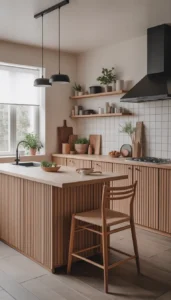
Choose simple island designs
Clean shapes feel intentional. A rectangular island with smooth sides, minimal detailing, and practical storage works beautifully in Japandi kitchens. The design should support everyday use while keeping the space open, calm, and visually refined.
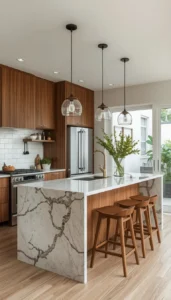
Use wood or stone materials
Natural textures ground the space. A wood base, stone countertop, or subtle concrete surface can bring warmth and depth to the island. These materials feel timeless and support the organic simplicity that defines Japandi kitchen design.
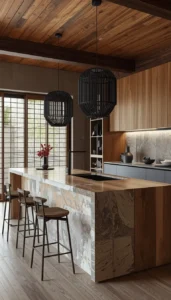
Keep island decor minimal
Function should come first. A small ceramic bowl, simple vase, or wooden tray may be enough to style the island. Keeping decor limited allows the surface to remain practical while still feeling warm and thoughtfully finished.
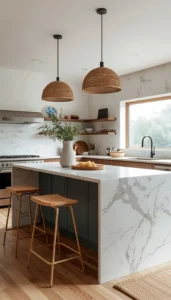
Stone and Subtle Texture for Depth
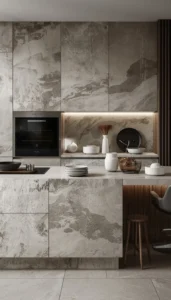
Texture adds interest without noise. Japandi kitchens often rely on quiet materials rather than bold patterns to create depth. Stone, concrete, handmade style tiles, and matte surfaces add character while keeping the room peaceful. The result is a kitchen that feels layered and natural without looking busy.
Use stone or concrete surfaces
They enhance natural beauty. Stone countertops, concrete islands, or textured slabs can add calm sophistication. These surfaces work well because they bring organic variation while still feeling simple, durable, and refined in a Japandi kitchen.
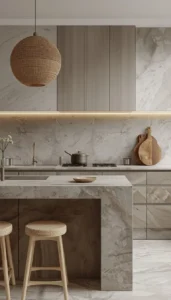
Choose subtle backsplash designs
Soft textures work better than bold patterns. A lightly textured tile, handmade style surface, or soft stone backsplash can add depth without overwhelming the room. Subtle finishes help the kitchen feel calm while giving the walls quiet character.
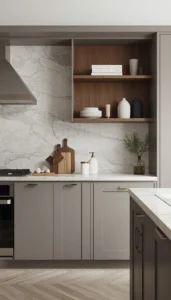
Keep finishes matte
Matte surfaces feel refined and calm. Matte counters, cabinets, tiles, and fixtures reduce glare and create a softer atmosphere. This finish style works especially well in Japandi spaces because it feels natural, understated, and easy on the eyes.
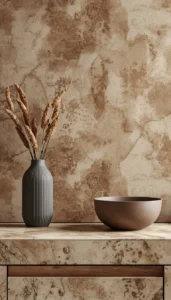
Thoughtful Lighting for a Soft Atmosphere
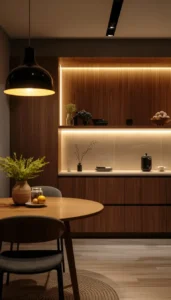
Lighting shapes the mood of the kitchen. A Japandi kitchen should feel bright enough for daily tasks but soft enough to remain warm and relaxing. Layered lighting helps create balance, highlighting work areas while adding gentle atmosphere. Simple fixture shapes and warm tones help keep the look clean and inviting.
Use warm lighting tones
Soft light enhances comfort. Warm bulbs make wood cabinetry, stone surfaces, and neutral walls feel richer and more welcoming. Avoid overly cool lighting, which can make the kitchen feel harsh and less connected to the natural Japandi mood.
Layer lighting sources
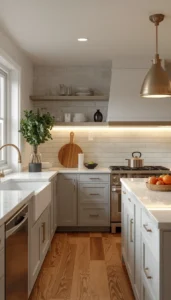
Pendant and under cabinet lighting add depth. Pendants can define an island, while under cabinet lights improve task visibility. Layering light sources makes the kitchen more functional and helps the space feel softer in the evening.
Choose simple fixture designs
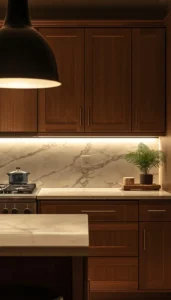
Clean forms complement Japandi style. Look for lighting with minimal shapes, natural materials, or matte finishes. Simple pendants, slim sconces, and understated ceiling fixtures add function without distracting from the kitchen’s calm design.
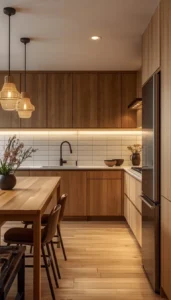
Functional Storage That Blends Seamlessly
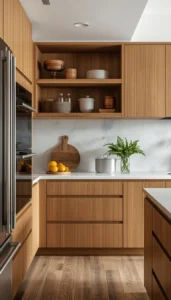
Storage should feel effortless. Japandi kitchens depend on organization because clear surfaces and clean lines are central to the style. The best storage solutions hide clutter while keeping daily essentials easy to access. Cabinets, drawers, pantry systems, and interior organizers should support calm living and smooth kitchen routines.
Use concealed storage solutions
Hidden cabinets reduce visual clutter. Tall pantry units, appliance garages, deep drawers, and built in storage can keep tools and supplies out of sight. Concealed storage helps the kitchen look calm while making it easier to maintain every day.
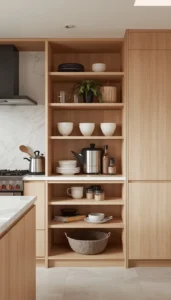
Choose handle less or minimal hardware
Clean fronts support simplicity. Handle less cabinets, slim pulls, or discreet knobs keep the design smooth and quiet. Minimal hardware allows the cabinet material and overall layout to stand out without adding unnecessary visual detail.
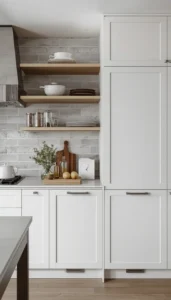
Organize interiors efficiently
Function enhances calm. Drawer dividers, pull out shelves, spice inserts, and hidden bins help everything stay in place. When the inside of the kitchen works well, the outside can remain simple, clean, and peaceful.
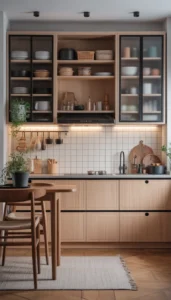
Japandi Backsplash Ideas With Subtle Style
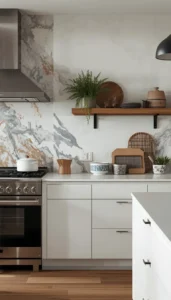
Backsplashes add quiet character. In Japandi kitchens, a backsplash should support the design rather than dominate it. Neutral colors, clean lines, and soft textures work best because they add depth while keeping the kitchen calm. A subtle backsplash can make the space feel finished without interrupting the minimalist flow.
Use neutral tiles
Soft tones maintain balance. Warm white, beige, greige, soft gray, and pale clay tiles blend beautifully with wood and stone. Neutral tiles create a restful background while adding just enough texture to make the kitchen feel complete.
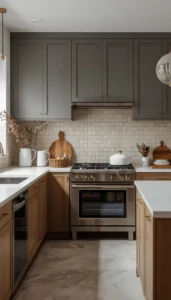
Choose simple layouts
Straight or vertical patterns feel modern. Simple tile placement keeps the backsplash clean and easy to look at. Vertical layouts can add height, while straight stacked designs create a crisp, contemporary look that suits Japandi style well.
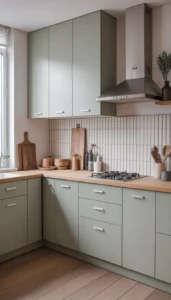
Avoid busy designs
Simplicity is key. Strong patterns, bright colors, or high contrast designs can take away from the calm atmosphere. Choose a backsplash that feels quiet and timeless so it supports the kitchen’s natural materials and balanced layout.
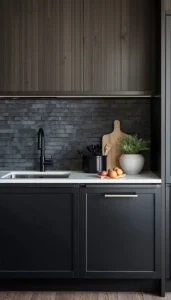
Natural Accessories With Purpose
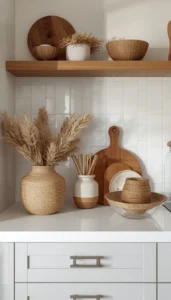
Decor should feel intentional. Japandi kitchens use accessories sparingly, choosing pieces that are both beautiful and useful. Handcrafted bowls, wooden boards, ceramic cups, linen towels, and simple trays can add warmth without clutter. Every visible item should feel connected to the kitchen’s purpose and style.
Use handcrafted kitchenware
Ceramic and wood pieces add warmth. Handmade bowls, mugs, cutting boards, and serving trays bring a personal touch to the kitchen. Their natural texture and slight imperfections add beauty while supporting the quiet character of Japandi design.
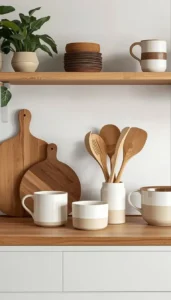
Display items sparingly
Less decor feels more refined. A few carefully chosen pieces look better than crowded counters or shelves. Leave open space around accessories so each item feels intentional and the kitchen remains calm, functional, and easy to clean.
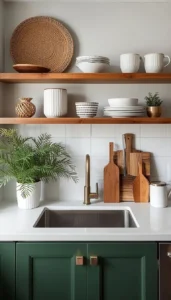
Choose functional decor
Beauty and usefulness should align. Items like a wooden tray, ceramic utensil holder, linen towel, or stone bowl can be decorative while serving a real purpose. This keeps the kitchen practical and supports the Japandi focus on mindful design.
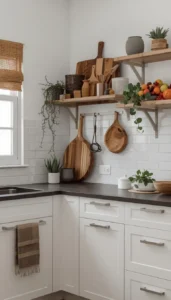
Open Shelving Styled With Restraint
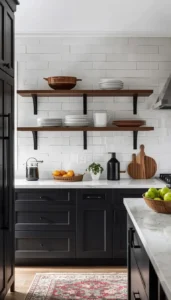
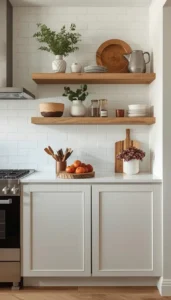
Open shelves add lightness when styled well. They can make a Japandi kitchen feel airy and warm, but they need careful editing to avoid clutter. The best open shelves show only useful, beautiful, and cohesive items. Natural materials and negative space help the shelves feel calm rather than busy.
Limit items on display
Negative space enhances calm. Keep only a small selection of dishes, bowls, jars, or decorative pieces on open shelves. Leaving gaps between items allows the shelf to breathe and supports the clean, peaceful feel of Japandi interiors.
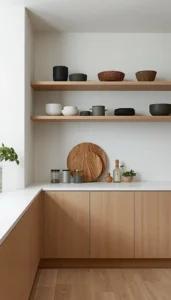
Use neutral toned dishes
Consistency creates harmony. White, beige, clay, gray, and soft earth toned dishes work beautifully with natural wood shelves. Matching or coordinated pieces help open shelving look neat, intentional, and visually soothing.
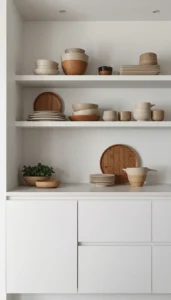
Keep shelf placement balanced
Symmetry feels soothing. Place shelves where they align naturally with cabinets, counters, or nearby walls. Balanced placement makes the kitchen feel organized and calm, while thoughtful spacing keeps the design light and refined.
Create a Japandi Kitchen That Feels Timeless
A Japandi kitchen is about balance, function, and quiet beauty. By blending natural materials, neutral colors, clean layouts, and thoughtful details, you can create a kitchen that feels calming and effortlessly stylish. Start with a simple palette, then add warmth through wood cabinetry, stone surfaces, matte finishes, and handcrafted accessories. Keep storage concealed, surfaces clear, and decor purposeful so the kitchen remains easy to use every day. When every design choice supports both beauty and function, the space feels timeless, peaceful, and deeply livable. A well planned Japandi kitchen becomes more than a cooking area. It becomes a calm, balanced heart of the home.
If you enjoy serene interiors and purposeful design, exploring more Japandi, minimalist, and natural kitchen decor ideas can help you continue creating spaces that feel refined, peaceful, and beautifully designed.
