
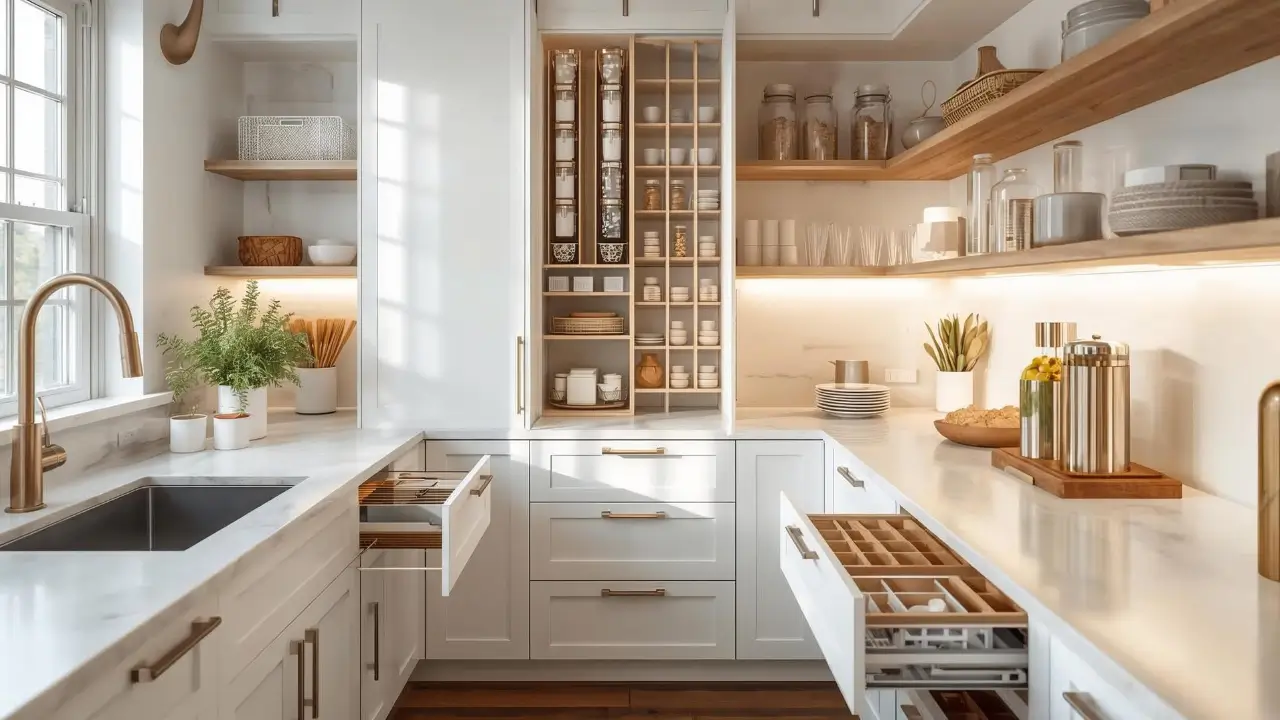
An organized kitchen creates a smoother cooking experience, saves time, and keeps the space looking clean and welcoming. When everything has a designated place, daily tasks feel more efficient and less stressful. Smart organization is not only about storage but also about accessibility, flow, and visual simplicity. A good system makes it easier to prep meals, find ingredients, clean up quickly, and keep counters from becoming crowded. Whether your kitchen is large or compact, small changes can make a big difference. These kitchen organization ideas focus on maximizing space, improving functionality, and maintaining a tidy look without sacrificing style.
These kitchen organization ideas focus on maximizing space, improving functionality, and maintaining a tidy look without sacrificing style.
Drawer Organization for Utensils and Tools
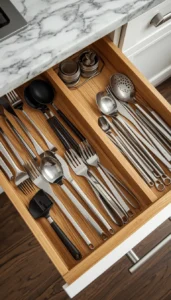
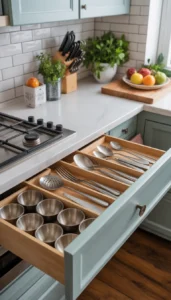
Well organized drawers improve efficiency and reduce clutter. Kitchen drawers often hold utensils, measuring tools, gadgets, towels, and small accessories, so they can quickly become messy without a clear system. Dividers, categories, and regular editing make drawers easier to use and help every tool stay in its proper place.
Use adjustable drawer dividers
They allow flexible storage for different tools. Adjustable dividers work well for spoons, spatulas, tongs, peelers, measuring cups, and small accessories. Since drawer needs can change over time, flexible dividers make it easier to update the layout without replacing the whole organizer.
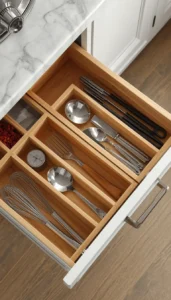
Group similar items together
This speeds up daily tasks. Keep cooking utensils in one drawer, baking tools in another, and serving pieces in a separate section. Grouping items by purpose saves time because you always know where to reach while preparing meals.
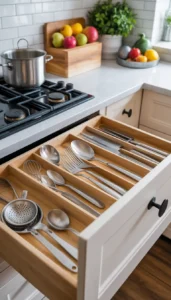
Avoid overfilling drawers
Proper spacing prevents mess. When too many items are packed into one drawer, tools become hard to find and harder to put away. Keep only what you use regularly, and move duplicates or rarely used items to another storage area.
Pantry Organization for Easy Access
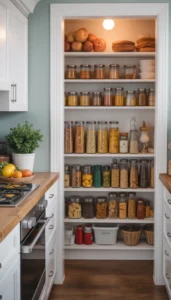
A well structured pantry improves visibility and freshness. When pantry items are easy to see, you can plan meals faster and avoid buying duplicates. Clear containers, labels, and smart shelf placement make dry goods, snacks, spices, and cooking staples easier to manage every day.
Use clear storage containers
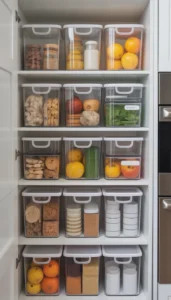
They make contents easy to identify. Clear containers work well for pasta, rice, flour, sugar, cereal, snacks, and baking ingredients. They reduce bulky packaging, keep shelves looking cleaner, and help you notice when supplies are running low.
Label shelves and jars
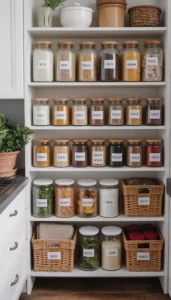
Clear labels save time. Labels help everyone in the home return items to the right spot. Use them for containers, baskets, shelves, or pantry zones so the system stays organized even during busy weeks.
Keep frequently used items at eye level
Accessibility improves flow. Store daily items like breakfast foods, snacks, oils, and cooking staples where they are easiest to reach. Less used items can go higher or lower so prime shelf space supports your everyday routine.
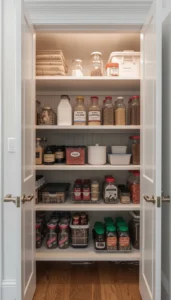
Cabinet Storage Solutions for Maximum Space
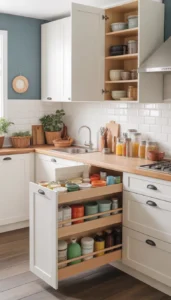
Cabinets often hide unused space. Deep shelves, awkward corners, and stacked items can make it difficult to reach what you need. With the right organizers, cabinets can hold more while staying neat, safe, and easy to use during cooking and cleaning.
Install pull out shelves
They improve reach and visibility. Pull out shelves let you access items at the back of a cabinet without digging. They are helpful for pots, pans, pantry goods, mixing bowls, and cleaning products because everything slides into view.
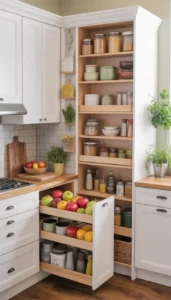
Use stacking organizers
Vertical storage increases capacity. Shelf risers, plate racks, and stacking bins help you use the full height of each cabinet. These organizers prevent messy piles and make dishes, mugs, cans, and bowls easier to separate.
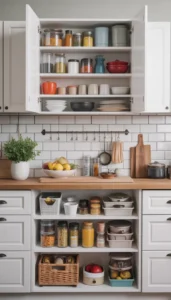
Keep heavy items on lower shelves
Safety and convenience improve. Pots, appliances, large bowls, and heavy cookware are easier and safer to store near the floor. Keeping weight low also prevents strain when lifting items in and out of cabinets.
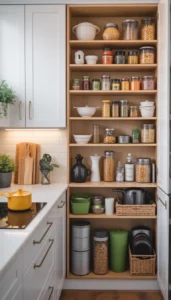
Countertop Organization for a Clean Look
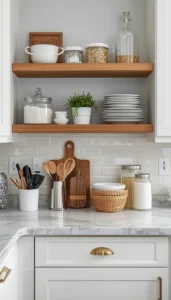
Clear counters make kitchens feel larger. Countertops are work surfaces first, so they should stay open enough for chopping, mixing, serving, and cleaning. A few useful items can remain visible, but too many appliances or accessories can make the whole kitchen feel crowded.
Limit countertop appliances
Keep only daily essentials visible. Coffee makers, toasters, or frequently used blenders may deserve counter space, but rarely used appliances should be stored away. This keeps the kitchen looking cleaner and gives you more room to cook.
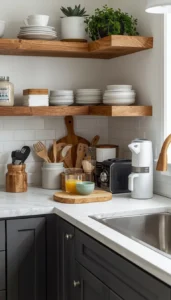
Use trays to group items
Visual structure keeps surfaces tidy. A tray can hold oils, salt, pepper, utensils, or coffee supplies in one defined area. Grouping items prevents them from spreading across the counter and makes cleaning easier.
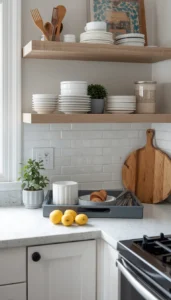
Store small items in nearby cabinets
This reduces clutter. Items like extra measuring spoons, chargers, lids, and packaged snacks should have a cabinet or drawer close to where they are used. Nearby storage keeps counters clear while still supporting convenience.
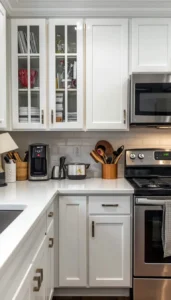
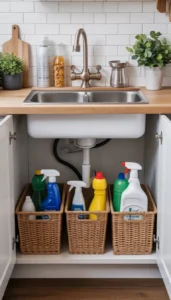
Under Sink Storage for Cleaning Supplies
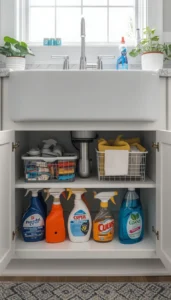
Under sink areas can become cluttered quickly. Pipes, disposal units, and cleaning bottles often make this cabinet difficult to organize. A practical system keeps supplies easy to reach while protecting the cabinet from leaks, spills, and messy product buildup.
Use adjustable organizers
They adapt around pipes. Under sink organizers with movable shelves, sliding baskets, or stackable sections work well around plumbing. This makes better use of awkward space and helps cleaning supplies stay upright and visible.
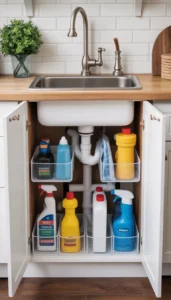
Separate cleaning categories
Organization improves access. Group dishwashing supplies, sprays, sponges, trash bags, and cloths into separate bins or sections. Category storage makes it easier to find what you need and prevents everything from getting mixed together.
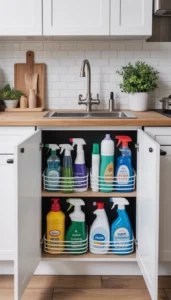
Use bins for spill control
Containment keeps areas clean. Plastic or washable bins can catch drips from bottles and protect the cabinet floor. They also make it easier to pull out supplies, wipe the area, and maintain a cleaner under sink space.
Spice Organization for Quick Cooking Access
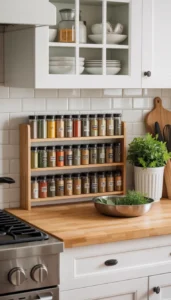
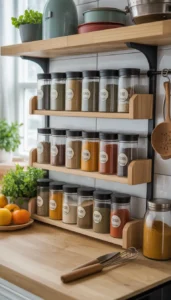
Spice organization improves cooking efficiency. When spices are easy to see and reach, meal prep feels faster and less frustrating. A simple spice system also helps prevent expired jars, duplicate seasonings, and messy cabinets filled with containers of different sizes.
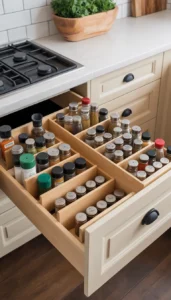
Use drawer spice inserts
They save cabinet space. Drawer inserts hold spice jars at an angle, making labels easy to read. This setup works well near the stove or prep area because seasonings stay visible and accessible while cooking.
Label spice containers clearly
Quick identification saves time. Matching jars with clear labels can make spice storage look cleaner and easier to use. Label tops or fronts depending on where you store them, so you can find the right seasoning quickly.
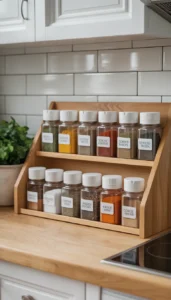
Keep spices away from heat
This preserves freshness. Avoid storing spices directly above the stove or beside strong sunlight. A cool, dry drawer, cabinet, or pantry shelf helps spices keep their flavor and color for longer.
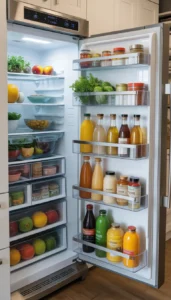
Refrigerator Organization for Freshness and Visibility
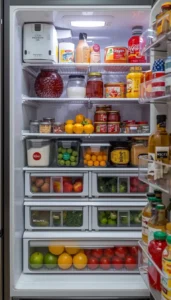
A tidy fridge reduces food waste. When food is visible and grouped properly, it is easier to use ingredients before they spoil. Clear bins, smart placement, and regular rotation help keep the refrigerator clean, practical, and ready for meal planning.
Use clear bins for categories
Grouping improves visibility. Use bins for snacks, condiments, dairy, produce, leftovers, or meal prep items. Clear bins make it easier to pull out whole categories at once and prevent small items from getting lost.
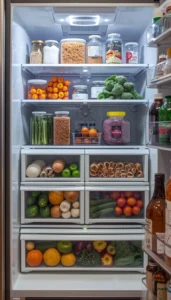
Store produce properly
Correct placement extends freshness. Keep fruits and vegetables in the right drawers and use containers that support airflow when needed. Proper produce storage helps ingredients last longer and keeps the fridge feeling organized.
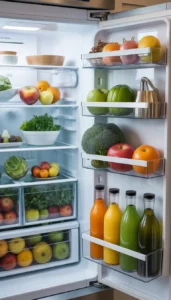
Rotate older items forward
This prevents spoilage. Place newer groceries behind older items so the oldest food gets used first. This simple habit helps reduce waste, saves money, and keeps the refrigerator easier to manage.
Pot and Pan Storage for Easy Access
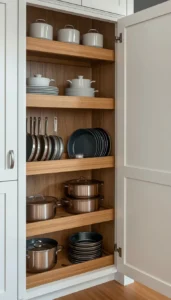
Heavy cookware needs accessible storage. Pots, pans, lids, and baking dishes can become difficult to manage when they are stacked without a system. Good cookware organization saves space, protects surfaces, and makes cooking feel smoother from the start.
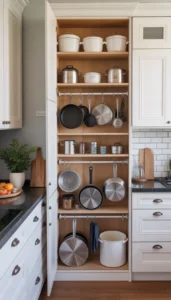
Use vertical rack organizers
They save cabinet space. Vertical racks hold pans, baking sheets, cutting boards, and lids upright so they are easier to grab. This prevents noisy stacks and keeps cookware from scratching or sliding around.
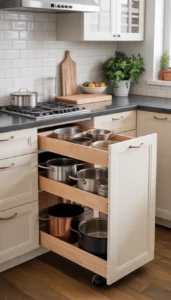
Install pull out pot drawers
Ease of access improves usability. Deep pull out drawers are excellent for pots, pans, and larger cookware. They let you see everything at once and reduce the need to bend and search through deep lower cabinets.
Stack lids separately
Organization reduces clutter. Lids often create the biggest mess because they slide and take up awkward space. Store them in a lid rack, drawer divider, or door mounted organizer so they stay easy to find.
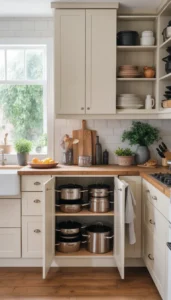
Small Kitchen Organization for Compact Spaces
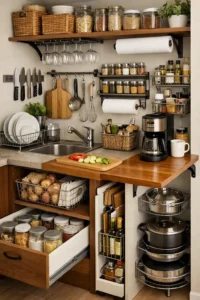
Small kitchens benefit from smart solutions. Limited cabinets and counters require thoughtful storage that makes every inch count. Wall mounted pieces, flexible organizers, and multi purpose tools can help a compact kitchen stay functional without feeling crowded or difficult to use.
Use wall mounted storage
Vertical space increases capacity. Rails, hooks, pegboards, and shelves can hold utensils, mugs, pans, or small baskets. Wall storage keeps essentials accessible while freeing up drawers, cabinets, and counter space.
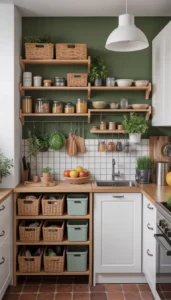
Choose multi functional organizers
They reduce clutter. Use pieces that serve more than one purpose, such as tiered racks, stackable bins, or baskets that fit inside cabinets and shelves. Multi functional organizers help small kitchens stay flexible and efficient.
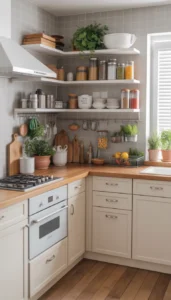
Keep layouts flexible
Adaptable storage improves flow. Small kitchens often need systems that can change as routines shift. Movable carts, adjustable shelves, and removable dividers make it easier to update storage without a major redesign.
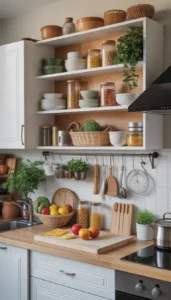
Open Shelf Styling for Practical Display
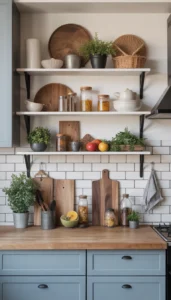
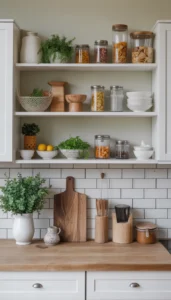
Open shelves blend storage with decor. They can make a kitchen feel lighter while keeping everyday dishes, mugs, jars, and cookbooks within reach. The key is styling shelves with useful items, cohesive colors, and enough empty space so they feel organized rather than crowded.
Display everyday dishes
Functional display saves cabinet space. Plates, bowls, mugs, and glasses can look beautiful when arranged neatly on open shelves. Keeping frequently used pieces visible also makes daily meals and clean up more convenient.
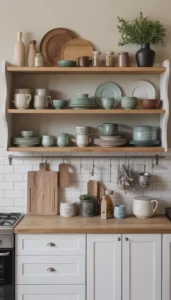
Keep color palettes cohesive
Visual order feels calm. Use dishes, jars, and decor in similar colors or materials to avoid a busy look. White ceramics, clear glass, wood accents, and soft neutrals often create a clean and balanced shelf display.
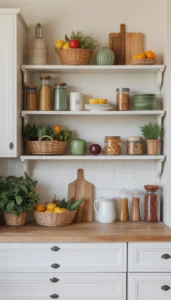
Avoid overcrowding shelves
Balance maintains beauty. Leave space between stacks, containers, and decorative pieces so the shelves can breathe. A lighter arrangement feels more polished and makes it easier to remove and replace items during daily use.
Create a Kitchen That Stays Organized and Enjoyable
An organized kitchen supports smoother cooking, easier cleaning, and a more enjoyable daily routine. By using smart storage solutions, maintaining clear surfaces, and keeping everything accessible, your kitchen can stay both functional and visually appealing. Start by organizing the areas you use most, such as drawers, pantry shelves, counters, and cabinets, then build systems that match how you actually cook. Use labels, bins, dividers, shelves, and clear containers to make items easier to find and return. When storage feels simple and practical, the kitchen becomes easier to maintain, more pleasant to use, and more welcoming every day.
If you enjoy creating practical and beautiful spaces, exploring more kitchen organization and home styling ideas can help you continue designing spaces that support everyday living.
