
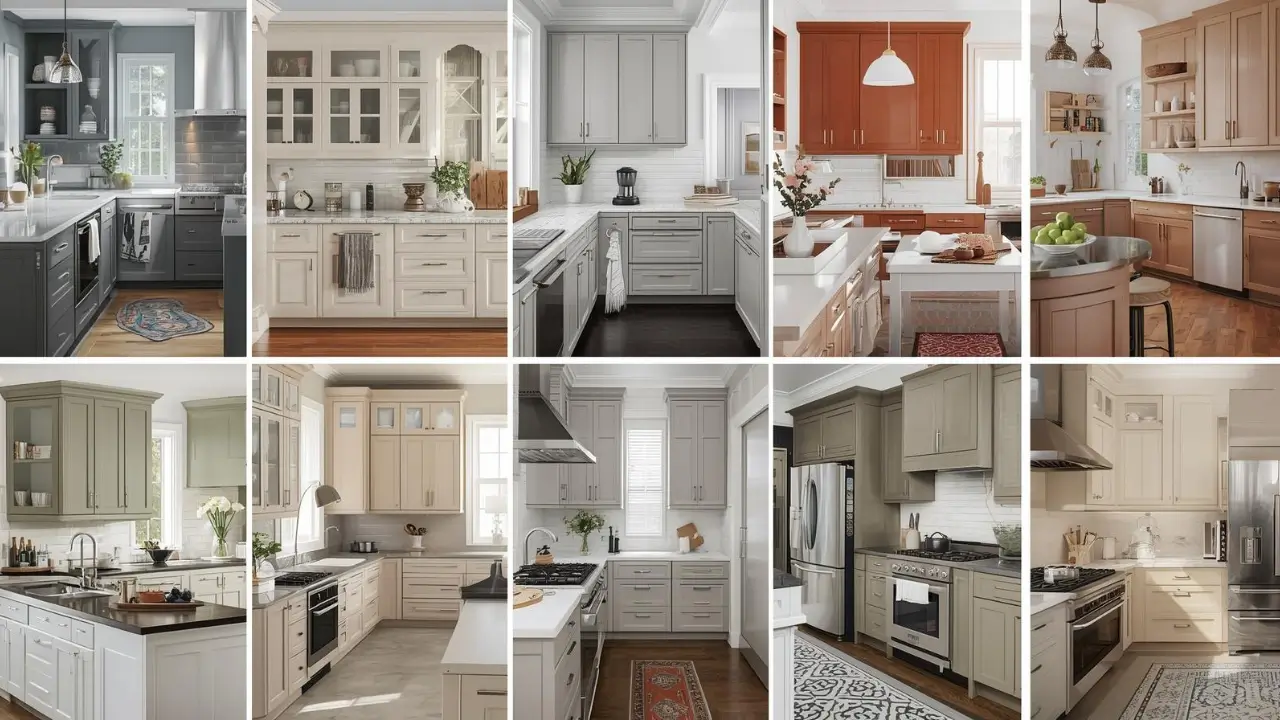
Kitchen cabinet color plays a major role in shaping the overall mood and style of your kitchen. Whether you prefer light and airy spaces or rich and dramatic tones, the right cabinet color can completely refresh your kitchen without a full remodel. Thoughtful color selection helps create balance, brightness, and visual harmony throughout the space. Cabinets cover a large visual area, so their color affects how countertops, backsplashes, flooring, hardware, and lighting all work together. These kitchen cabinet color ideas highlight versatile shades and styling tips that help you design a kitchen that feels modern, welcoming, and timeless.
These kitchen cabinet color ideas highlight versatile shades and styling tips that help you design a kitchen that feels modern, welcoming, and timeless.
White Cabinets for a Bright and Classic Look
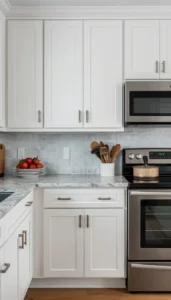
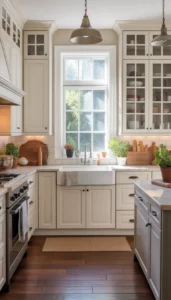
White cabinets remain a timeless choice for many kitchens. They make the room feel clean, open, and easy to style with almost any countertop, backsplash, or hardware finish. White cabinetry works well in traditional, farmhouse, coastal, modern, and transitional spaces because it creates a fresh foundation that can be warmed up with texture and contrast.
Choose warm white shades
Warm whites feel softer and more inviting. Instead of a stark bright white, consider cream white, ivory, or a gentle off white. These shades keep the kitchen bright while adding a subtle warmth that feels more comfortable for everyday living.
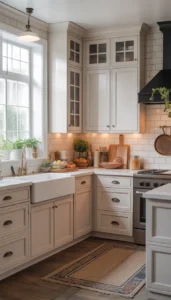
Add contrast with darker hardware
Dark handles create visual definition. Black, bronze, or deep metal hardware can break up white cabinetry and make door details stand out. This contrast adds structure to the kitchen while keeping the overall look classic, simple, and polished.
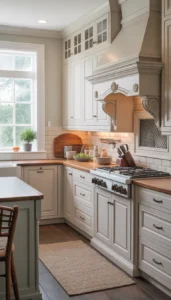
Balance with textured surfaces
Wood or stone prevents the space from feeling flat. White cabinets look best when paired with natural grain, veined counters, handmade style tile, or woven accents. These textures add depth and keep the kitchen from feeling too plain or sterile.
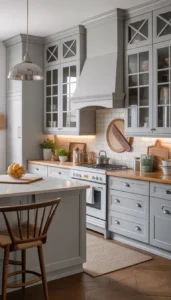
Soft Gray Cabinets for Subtle Elegance
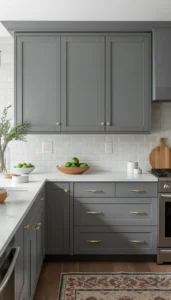
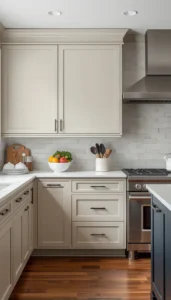
Gray cabinets offer a neutral yet modern appeal. This color feels calm, versatile, and slightly more layered than white while still remaining easy to style. Soft gray works especially well when you want a kitchen that feels refined without becoming too dark or dramatic. It pairs beautifully with warm metals, light counters, and natural wood.
Select light to medium gray tones
They keep the kitchen feeling open. Pale gray and medium gray cabinets add depth while still reflecting enough light for a fresh look. These tones are especially useful in smaller kitchens where darker colors may feel too heavy.
Pair with warm accents
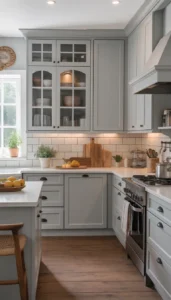
Wood and brass add warmth. Gray can sometimes feel cool, so natural wood shelves, brass hardware, woven stools, or warm lighting help soften the palette. These details make the kitchen feel more welcoming and balanced.
Keep walls light
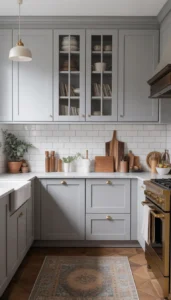
This enhances brightness and balance. White, cream, soft beige, or pale greige walls help gray cabinets feel airy rather than closed in. A light wall color also allows the cabinet shade to stand out gently without overwhelming the room.
Sage Green Cabinets for Natural Warmth
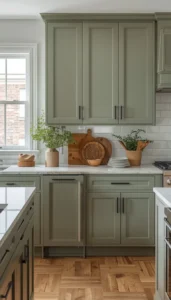
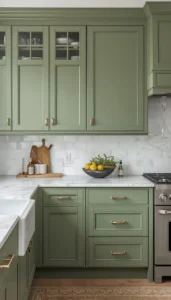
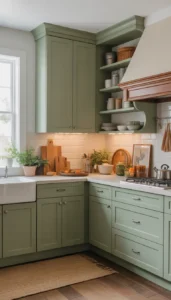
Green tones bring freshness and calm into kitchens. Sage green cabinets feel soft, organic, and timeless, making them a beautiful choice for anyone who wants color without a loud effect. This shade connects naturally with wood, stone, warm white, brass, and neutral tile, creating a kitchen that feels peaceful and inviting.
Choose muted green shades
Soft greens feel timeless and soothing. Muted sage, eucalyptus, or olive green tones work well because they feel grounded and easy to live with. Avoid overly bright greens if you want a kitchen that feels calm, elegant, and lasting.
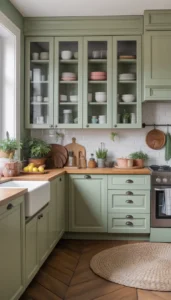
Balance with neutral countertops
This keeps the palette cohesive. White, cream, beige, light gray, or soft stone countertops pair beautifully with sage green cabinets. Neutral surfaces allow the cabinet color to shine while keeping the kitchen bright and visually balanced.
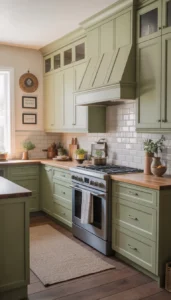
Use simple hardware finishes
Clean details maintain elegance. Brass, black, nickel, or bronze hardware can all complement sage green when used thoughtfully. Choose simple knobs or pulls so the cabinet color remains the main feature and the overall design feels refined.
Navy Blue Cabinets for Bold Sophistication
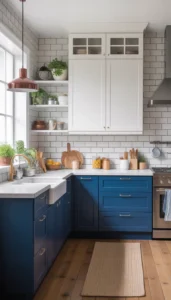
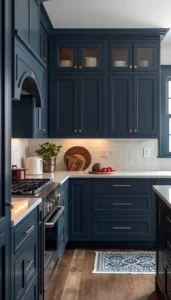
Deep blue cabinets add depth and drama. Navy is a strong cabinet color that feels classic, confident, and stylish when balanced properly. It works beautifully in kitchens that need a richer focal point, especially when paired with light surfaces, warm metals, and strong lighting that keeps the space from feeling too dark.
Use navy on lower cabinets
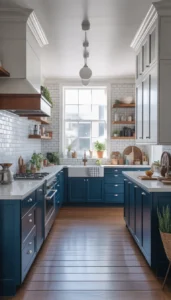
This keeps the kitchen grounded. Navy lower cabinets create depth near the floor while keeping the upper part of the kitchen lighter. This approach works well in both small and large kitchens because it adds color without closing in the room.
Pair with light upper cabinets
Contrast keeps the space open. White, cream, or pale gray upper cabinets can balance navy lowers and make the kitchen feel brighter. This two tone approach gives the room personality while still feeling clean and practical.
Add warm lighting
Lighting softens darker tones. Navy cabinets look richer under warm bulbs, pendant lights, and under cabinet lighting. Good lighting highlights the depth of the color and prevents the kitchen from feeling shadowy or overly heavy.
Beige and Cream Cabinets for Cozy Appeal
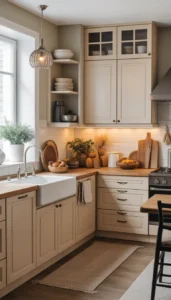
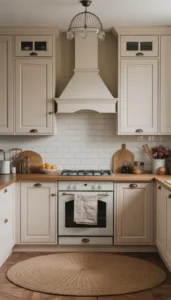
Warm neutrals create welcoming kitchens. Beige and cream cabinets offer a softer alternative to white while still keeping the room light and flexible. These shades bring warmth, comfort, and understated elegance into the kitchen, making them ideal for spaces that need a calm and inviting atmosphere.
Choose creamy undertones
They feel warmer than pure white. Cream, almond, oatmeal, and soft beige cabinet colors make the kitchen feel cozy without looking dark. These tones pair well with wood floors, stone countertops, brass hardware, and textured backsplashes.
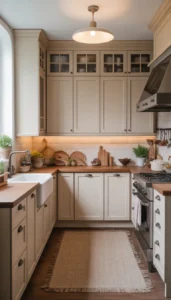
Add texture through backsplashes
Texture adds visual interest. A neutral backsplash with handmade style tile, subtle stone, or soft pattern can keep beige cabinets from feeling too simple. Texture gives the kitchen depth while maintaining a calm and cohesive color palette.
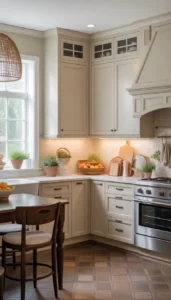
Keep accent colors minimal
Simplicity maintains elegance. Beige and cream cabinets look best when paired with a restrained palette. Use one or two accent shades through stools, decor, lighting, or textiles so the kitchen feels polished rather than busy.
Two Tone Cabinets for Visual Interest
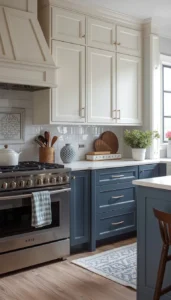
Two tone kitchens add dimension and personality. Combining two cabinet colors can help define areas, create contrast, and make the kitchen feel more custom. This style works best when the colors feel connected through undertones, hardware, countertops, or flooring, so the design looks intentional instead of mismatched.
Keep one color neutral
This maintains balance. Pairing a bolder shade with white, cream, gray, or light wood keeps the kitchen from feeling overwhelming. A neutral cabinet color gives the eye a place to rest while allowing the second color to stand out.
Use darker tones on lower cabinets
It grounds the space visually. Dark lower cabinets in navy, charcoal, green, or wood tones create a stable base. Lighter upper cabinets keep the room bright, making this layout practical for kitchens of many sizes.
Match tones with flooring
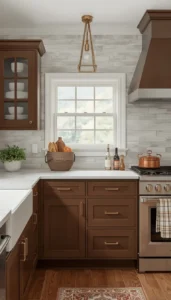
Consistency enhances flow. Cabinet colors should feel connected to the floor’s undertones, whether warm, cool, or neutral. When flooring and cabinetry work together, the whole kitchen feels smoother, more balanced, and easier to style.
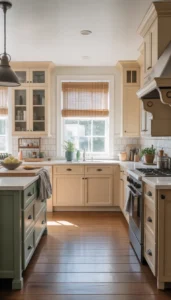
Charcoal Cabinets for Modern Depth
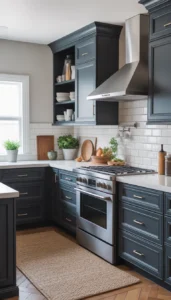
Dark gray cabinets create a contemporary feel. Charcoal is bold but softer than black, making it a strong option for modern kitchens that need depth and structure. It pairs beautifully with white counters, wood accents, metallic hardware, and simple tile for a look that feels sleek and refined.
Use matte finishes
They feel sleek and refined. Matte charcoal cabinets reduce glare and create a smooth, modern look. This finish also feels more understated than glossy surfaces, helping dark cabinetry appear sophisticated rather than overly dramatic.
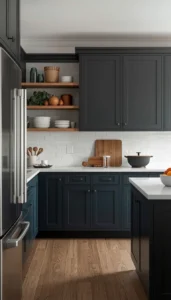
Balance with light countertops
Contrast prevents heaviness. White quartz, pale stone, cream counters, or light butcher block can lift charcoal cabinets and brighten the kitchen. The contrast adds clarity and helps the darker cabinet color feel intentional.
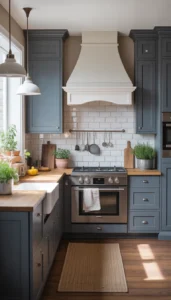
Keep decor simple
Minimal styling enhances the look. Charcoal cabinets already create strong visual impact, so avoid too many competing accessories. Clean counters, simple lighting, and coordinated hardware allow the cabinet color to feel elegant and modern.
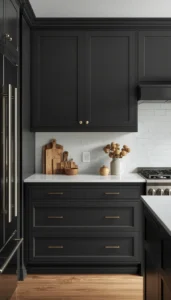
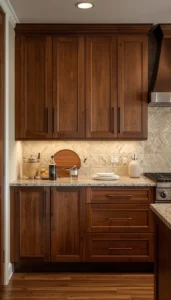
Warm Wood Cabinets for Natural Style
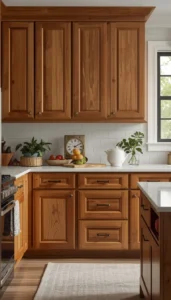
Wood cabinets bring warmth and authenticity. They make the kitchen feel grounded, inviting, and connected to natural materials. Warm wood works well in modern, farmhouse, Japandi, rustic, and transitional kitchens because it adds texture without relying on strong color. The key is choosing tones and finishes that feel cohesive.
Choose consistent wood tones
Uniformity keeps the kitchen cohesive. Oak, walnut, maple, ash, and pine can all look beautiful when the undertones are controlled. Keeping the wood finish consistent across cabinets helps the kitchen feel calm, organized, and thoughtfully designed.
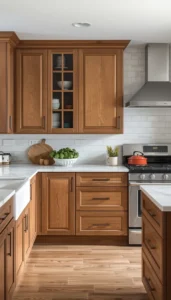
Pair with neutral walls
This allows the wood to stand out. White, cream, beige, soft gray, or warm greige walls create a simple backdrop for wood cabinetry. Neutral walls let the grain and natural warmth become the main feature without visual competition.
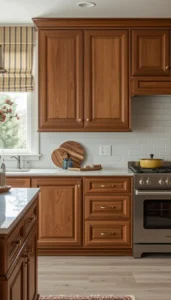
Use soft lighting
Warm lighting enhances grain texture. Pendant lights, under cabinet lighting, and warm bulbs bring out the richness of wood cabinets. Good lighting helps the natural material feel cozy, dimensional, and welcoming throughout the day and evening.
Pastel Cabinets for Soft Personality
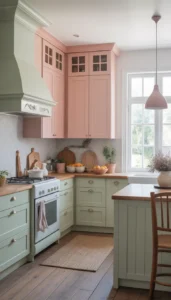
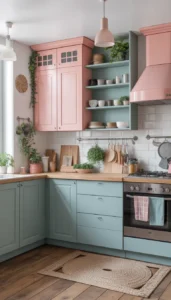
Light pastel tones add gentle color. Pastel cabinets can make a kitchen feel cheerful, fresh, and unique without becoming too bold. When muted and balanced with neutral surfaces, pastel shades can look sophisticated rather than overly sweet. They work well in cottage, retro, coastal, and soft modern kitchens.
Choose muted pastel shades
Soft tones feel sophisticated. Dusty blue, pale mint, muted blush, buttercream, or soft lavender can add charm while staying refined. Muted pastels are easier to style than bright versions and feel more timeless in a kitchen setting.
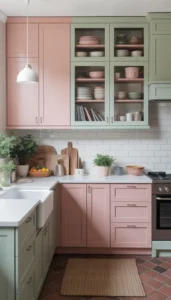
Balance with neutral surfaces
This keeps the space calm. White counters, cream walls, pale wood floors, or simple tile can soften pastel cabinets and prevent the kitchen from feeling too colorful. Neutral materials help pastel shades feel fresh and balanced.
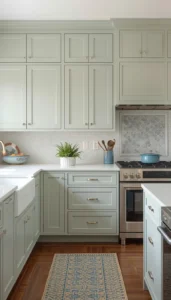
Keep accessories minimal
Let the color be the focus. Pastel cabinets already add personality, so simple hardware, clean counters, and restrained decor work best. Minimal accessories help the kitchen feel stylish, not overly decorated or visually crowded.
Black Cabinets for Dramatic Impact
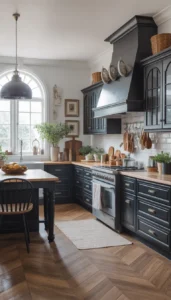
Black cabinets create bold kitchens. They feel sleek, dramatic, and elegant when balanced with enough light and contrast. Black can work in modern, industrial, farmhouse, and luxury kitchen styles, but it needs thoughtful styling to avoid making the space feel too dark or heavy.
Use black selectively
Accent areas prevent heaviness. Black lower cabinets, a black island, or one wall of cabinetry can create drama without covering the entire kitchen. This approach keeps the room balanced while still giving the design a strong focal point.
Add reflective surfaces
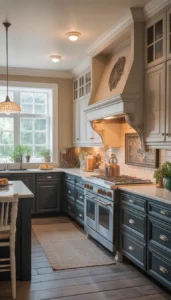
Gloss or metallic accents add brightness. Light countertops, glass tile, brass hardware, stainless appliances, or polished stone can reflect light around black cabinetry. These details prevent the kitchen from feeling flat and add a more luxurious finish.
Ensure good lighting
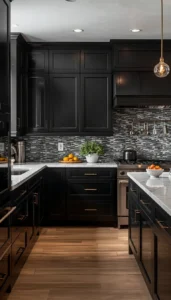
Lighting keeps black from feeling dark. Use ceiling lights, pendants, under cabinet lighting, and natural light wherever possible. Strong, warm lighting helps black cabinets feel rich and intentional rather than shadowy or overwhelming.
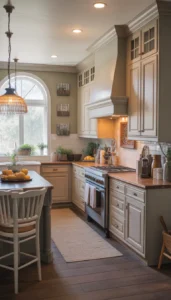
Create a Kitchen Cabinet Color Palette You Love
Choosing the right kitchen cabinet color helps define the entire space. By balancing tone, lighting, and surrounding materials, you can create a kitchen that feels beautiful, functional, and aligned with your personal style. Start by deciding whether you want the room to feel bright, warm, bold, natural, or dramatic, then choose a cabinet color that supports that mood. Pair it with countertops, hardware, flooring, backsplash, and lighting that bring the full palette together. Whether you choose white, sage green, navy, wood, charcoal, pastel, or black, thoughtful color planning can transform your kitchen into a space that feels fresh, welcoming, and beautifully designed.
If you enjoy refreshing spaces with color and design, exploring more kitchen styling and cabinet ideas can help you continue building a home that feels inspired and thoughtfully designed.
