

Halloween decor feels most memorable when the house tells one connected story instead of displaying unrelated pumpkins and novelty pieces in every room. Deep green, inky blue, plum, aged gold, smoky glass, warm amber, and weathered wood can build atmosphere while remaining elegant.
The ideas below explore six separate worlds, including a haunted conservatory, an illusionist parlor, a candlelit library, a monster supper club, a shadow theatre hallway, and a forgotten attic.
Haunted Conservatory Decor With Wild Botanical Drama
A haunted conservatory combines overgrown plants, strange specimens, damp stone colors, and elegant decay. Use dark foliage, mossy textures, aged pots, and unusual plant shapes rather than obvious characters.

Black, olive, aubergine, rust, and pale bone create depth, while glass vessels make the setting feel like an abandoned botanical study.
Fill Planters With Midnight Foliage
Combine houseplants with black branches, dried seed heads, dark purple leaves, and twisted vines. Place the tallest pieces toward the back and let one vine trail across a table or shelf. A few pale stems can create contrast.
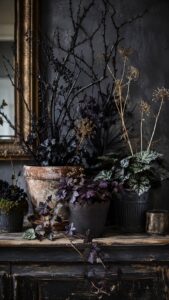
Weathered terracotta, charcoal ceramic, and aged metal pots will help the arrangement feel collected rather than newly purchased.
Display Unidentified Garden Specimens
Arrange seed pods, feathers, unusual stones, curled bark, and dried flowers beneath glass domes or inside shallow trays. Small handwritten labels can give each object an invented botanical name or mysterious date.
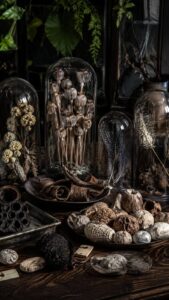
Keep the wording brief so the display feels convincing. Grouping the specimens by color or material will prevent the arrangement from looking random.
Let the Greenery Escape Its Boundaries
Allow vines, moss, or thin branches to move beyond one container and travel across a mirror, picture frame, or doorway. The growth should look controlled yet irregular, suggesting the room is slowly being reclaimed.

Use removable hooks or clear ties to guide every piece safely. One spreading installation creates more impact than many small decorations.
Illusionist Parlor Decor for a Night of Mystery
An illusionist parlor brings stage magic into the home through rich fabric, playing cards, velvet boxes, mirrored objects, and symbols that appear to hide a secret. Navy, black, burgundy, antique gold, and creamy white create a theatrical palette without familiar orange decorations.
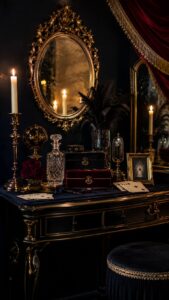
This concept suits a console, living room, drinks corner, or party area where guests can discover details gradually.
Build a Suspended Card Composition
Arrange playing cards in a rising curve above a console so they appear to float. Clear thread can keep the support almost invisible, while changing angles create movement.
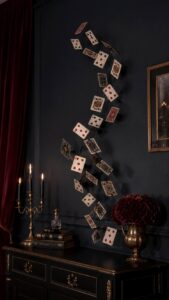
Limit the display to one wall area and repeat only a small card symbol elsewhere.
Style a Fortune Table Without Clutter
Cover a small round table with deep fabric, then add one crystal object, a shallow bowl, two tall candles, and a closed book. A few zodiac symbols or illustrated cards can sit beneath the glass of a framed tray.

Leave open space between each piece so the surface feels purposeful rather than crowded.
Hide Small Tricks in Plain Sight
Place a false key inside a glass box, suspend a ring beneath a shelf, or position a mirror so one object appears to duplicate. These details do not need moving parts.

The surprise comes from discovering them slowly. Keep each illusion simple and secure, then allow the surrounding decor to remain calm.
Candlelit Gothic Library Decor With Storied Elegance
A gothic library theme gives bookshelves, reading corners, and living rooms a darker sense of history. Work with real books, framed art, candleholders, and meaningful objects rather than fake filler.
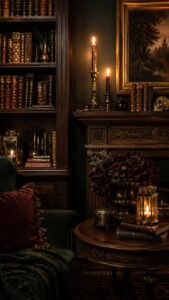
Emerald, oxblood, espresso, black, and antique brass create a rich foundation.
Dress Shelves With Blackened Greenery
Run a loose strand of dark leaves, dried vines, or black branches along one section of shelving. Allow it to dip behind books and reappear near a frame or candlestick.

Avoid covering every shelf because open areas help the greenery feel intentional. Add one pale bust or ivory candle to break the darkness.
Create a Midnight Reading Station
Place a comfortable chair beside a small table holding a book, shaded lamp, and dark ceramic cup. Add a folded throw in plum, brown, or forest green.

A stack of ghost stories can support a candleholder or small object. Keeping the arrangement usable makes the seasonal scene feel naturally connected to the room.
Hang Portraits With Unsettling Details
Choose old style portraits, silhouettes, or serious photographs and add one subtle alteration, such as a painted shadow, unexpected reflection, or eyes turned toward the doorway.
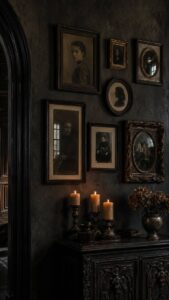
The change should not be noticed immediately. Use mismatched dark frames with related finishes and hang the group closely so it reads as one inherited collection.
Monster Supper Club Decor for Playful Entertaining
A monster supper club mixes polished table styling with humorous creature details. Dark plum, acid green, black, amber, and iridescent glass can make the table lively.

Choose serving pieces that are useful as well as decorative, then let food and drinks become part of the display.
Serve From Creature Inspired Pieces
Use platters shaped like leaves, mouths, claws, or unusual flowers to bring character to the meal. Skeleton hand servers or a bowl with raised eyes can become one strong talking point.

Limit novelty pieces to those that perform a real function. Plain plates and simple linens will give them enough space to stand out.
Layer Plum Green and Amber Glass
Mix translucent plum goblets, green bottles, and amber candle cups to create color through reflected light. The pieces do not need to match, but they should share a similar weight or shape.

Place them at varied heights. Dark neutral plates and a muted cloth will prevent the jewel tones from becoming too busy.
Give Every Place Setting a Personality
Assign each seat a tiny character through a folded card, unusual napkin ring, miniature mask, or creature symbol. Keep the names invented and playful rather than frightening.

One guest might receive the moth keeper, while another becomes the moon gardener. This small storytelling detail makes the dinner feel personal and starts conversation.
Shadow Theatre Hallways With Moving Silhouettes
A shadow theatre transforms a plain hallway, stair landing, or passage into a dramatic transition between rooms. The decoration relies on cut shapes, layered screens, and carefully placed light rather than bulky objects.

Branches, birds, hands, keys, and abstract figures can produce mysterious silhouettes across walls and doors.
Project Branches Across the Walls
Place a small warm light behind a vase of twisting branches so enlarged shadows stretch across the wall. Moving the branches closer to the light creates broader shapes, while greater distance produces sharper lines.
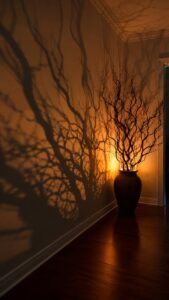
Test the position before guests arrive and secure the arrangement carefully. One large composition can transform an ordinary wall.
Cut a Story Into Layered Screens
Create paper or lightweight card silhouettes and place them at different distances from a concealed light. A bird, doorway, tree, or reaching hand can overlap to form a visual story.
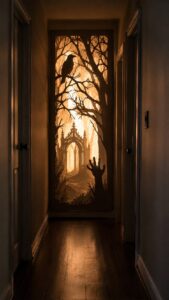
Keep the shapes bold so they remain clear from a distance. Mount the screen where it cannot be touched accidentally in narrow areas.
Make One Shape Appear to Follow
Repeat the same small silhouette at several points along the hallway, changing its angle or height each time. A cat, moth, key, or narrow figure can appear near a frame and later beside a doorway.

The repetition creates movement without animation. Avoid competing motifs so guests slowly realize that it has travelled with them.
Forgotten Attic Decor With Dusty Treasures and Secrets
A forgotten attic theme creates atmosphere through covered furniture, old trunks, faded fabric, half opened boxes, and objects that seem stored for decades.

The scene should feel discovered rather than staged, so vary heights and leave some areas almost empty. Taupe, faded rose, charcoal, brown, and dull silver support the aged mood.
Drape Furniture With Faded Covers
Use lightweight cotton or gauze in cream, gray, or tea stained beige to cover a chair, small table, or stacked boxes. Let the fabric fall naturally instead of wrapping each object tightly.

One corner can reveal part of the furniture beneath, suggesting someone recently disturbed the room. Keep the floor clear and secure trailing material.
Open One Trunk to Reveal a Story
Fill an open trunk with old letters, ribbon, costume jewelry, faded photographs, and a folded garment.

Arrange the pieces as though they belonged to one unknown person rather than mixing unrelated themes. Use reproductions when guests may handle the display.
Leave Evidence of a Recent Visitor
Place one fresh candle, newly opened envelope, or chair turned away from the wall among the older objects. This contrast suggests someone has entered the forgotten room recently.

The detail should remain quiet and believable, not theatrical. A single sign of activity can create more unease than several obvious ghost figures.
Make Halloween Night Feel Like a Story Guests Walk Through
The most unforgettable Halloween decor creates a sequence of moods rather than filling every surface with the same symbol. A haunted conservatory welcomes guests with wild botanical drama, while an illusionist parlor introduces mystery. The gothic library offers candlelit elegance, the monster supper club brings playful hosting, and the shadow theatre turns movement through the home into part of the experience.
Choose two or three ideas that suit the rooms you already use, then connect them through a repeated color, material, or type of light. Related articles about fall porch decor, Halloween table settings, autumn centerpieces, entryway styling, outdoor lighting, and seasonal living room ideas can extend the atmosphere. The goal is not to decorate more. It is to make every chosen detail feel as though it belongs to the same beautifully haunted house.
