
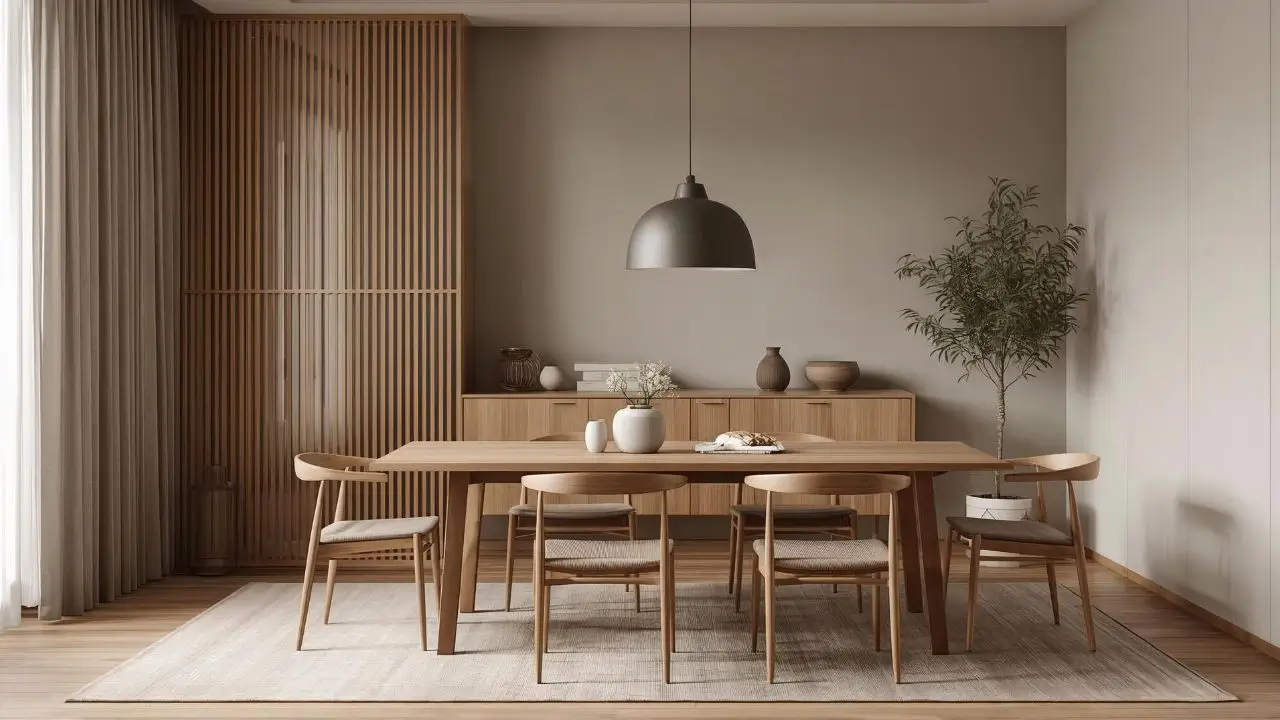
A Japandi dining room blends the simplicity of Japanese design with the warmth of Scandinavian interiors. The result is a space that feels clean, peaceful, and naturally inviting. This style focuses on minimal clutter, high quality materials, and soft neutral tones that create a balanced and harmonious atmosphere for everyday dining. Japandi dining spaces feel refined without being cold because they use natural wood, gentle textures, warm lighting, and purposeful decor. Whether you are styling a small dining space or refreshing a formal dining room, these Japandi dining room ideas will help you design a space that feels modern, cozy, and beautifully refined.
Whether you are styling a small dining space or refreshing a formal dining room, these Japandi dining room ideas will help you design a space that feels modern, cozy, and beautifully refined.
Neutral Color Palettes for a Serene Foundation
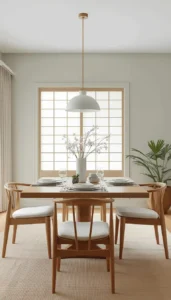
Color plays a key role in creating a calm Japandi atmosphere. Soft neutral tones help the dining room feel open, grounded, and easy to enjoy. Instead of using bold or busy colors, Japandi style relies on subtle variation, natural warmth, and quiet contrast. A well chosen palette allows wood furniture, lighting, textiles, and decor to feel connected.
Use warm neutral tones
Beige, soft white, taupe, and light gray create balance. These shades work beautifully on walls, rugs, curtains, and upholstery because they feel calm and natural. Warm undertones keep the dining room inviting while still maintaining the clean simplicity of Japandi design.
Add subtle contrast with darker accents
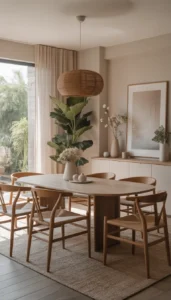
Charcoal or deep brown adds depth. A dark chair frame, pendant light, cabinet handle, or ceramic piece can ground the room visually. These accents should be used sparingly so the dining space feels structured without becoming heavy or dramatic.

Keep color transitions smooth
Gentle shifts maintain visual harmony. Move softly between warm white, beige, taupe, wood, and muted gray instead of creating sharp contrast. Smooth transitions help the dining room feel peaceful, cohesive, and thoughtfully designed from every angle.
Natural Wood Furniture for Warmth and Simplicity
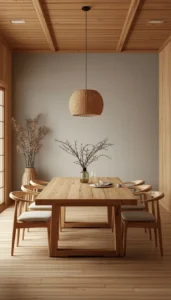
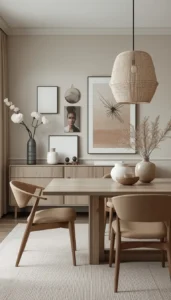
Wood brings organic beauty into Japandi spaces. It softens the minimal design and adds a sense of warmth that makes the dining room feel welcoming. Natural wood also creates texture without visual clutter, which is ideal for this calm and refined style. Simple finishes and clean shapes work best.
Choose light to medium wood tones
They feel airy and natural. Oak, ash, beech, and light walnut tones suit Japandi dining rooms beautifully. These finishes keep the space bright while adding enough warmth to make the room feel comfortable, grounded, and connected to nature.
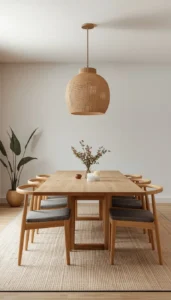
Keep furniture lines clean
Simple shapes enhance minimalism. Choose dining tables, chairs, and cabinets with smooth edges, balanced proportions, and little ornamentation. Clean lines allow the beauty of the material to stand out while keeping the room visually calm.
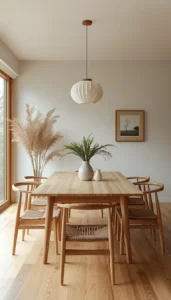
Match wood finishes consistently
Consistency creates cohesion. The wood tones do not need to be identical, but they should share similar undertones. Repeating related wood finishes through the table, chairs, shelving, or sideboard helps the dining room feel intentional and harmonious.
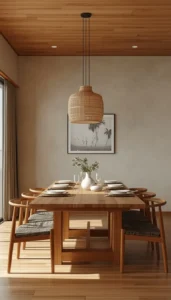
Minimal Dining Tables for a Clean Look
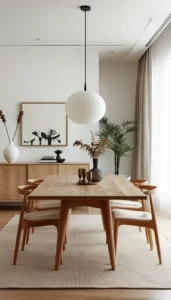
The dining table is the focal point. In a Japandi dining room, it should feel practical, sturdy, and quietly beautiful. A simple table can anchor the space without overwhelming it. Natural finishes, slim proportions, and an uncluttered surface help the dining area feel peaceful and easy to use.
Choose solid wood or veneer tables
Natural finishes feel authentic. A wood table with visible grain brings warmth and character to the room. Whether solid wood or quality veneer, the finish should feel natural, matte, and simple enough to suit the calm Japandi mood.
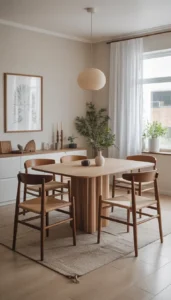
Avoid bulky table designs
Slim profiles feel light and modern. Heavy legs or oversized tops can make the dining room feel crowded. A table with clean lines and balanced proportions keeps the space open while still offering enough function for everyday meals.
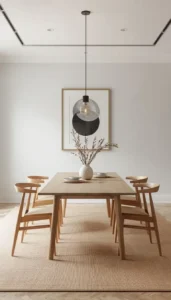
Keep table surfaces uncluttered
Simplicity enhances elegance. A clear table feels calm and ready for use. One small centerpiece, a ceramic bowl, or a simple vase is often enough to style the surface while keeping the dining room practical and refined.
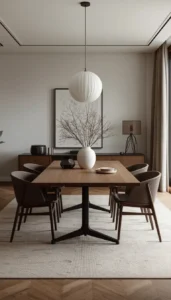
Japandi Chairs That Balance Comfort and Style
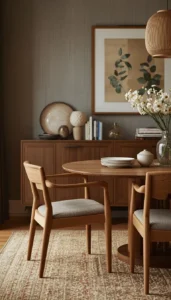
Chairs should feel both functional and beautiful. In Japandi design, seating should support daily comfort while maintaining a clean and natural look. The best chairs have simple shapes, quality materials, and soft proportions that make the dining room feel relaxed without losing structure.
Use ergonomic designs
Comfort supports everyday use. Dining chairs should feel pleasant during meals, conversations, and longer gatherings. Look for supportive backs, comfortable seat heights, and balanced shapes so the room feels practical as well as visually refined.
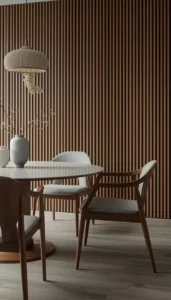
Mix wood and fabric materials
This adds softness and texture. A wood chair with a woven seat, upholstered cushion, or fabric detail can make the dining area more inviting. Mixing materials gently adds depth while keeping the overall design calm and natural.
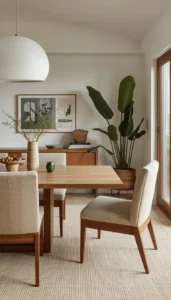
Keep color tones neutral
Calm tones maintain cohesion. Beige, cream, taupe, gray, wood, and soft charcoal chairs work well in Japandi dining rooms. Neutral seating helps the table, rug, lighting, and decor blend smoothly into one balanced design.
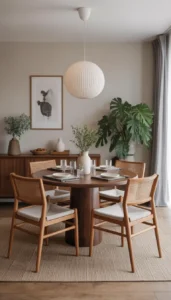
Soft Lighting for a Relaxed Dining Mood
Lighting shapes the dining experience. A Japandi dining room should feel warm, calm, and comfortable during both daily meals and evening gatherings. Lighting should be functional, but it should also soften the room and highlight natural materials. Simple fixtures and warm bulbs create the best atmosphere.
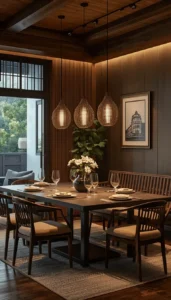
Use warm light bulbs
Soft light creates a cozy atmosphere. Warm lighting enhances wood tones, neutral walls, and natural textures. It also makes the dining room feel more intimate and inviting, especially in the evening when harsh lighting can feel too sharp.
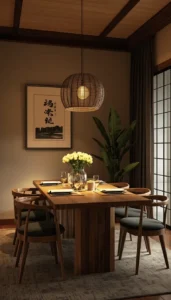
Choose simple pendant designs
Clean lines feel modern and timeless. A pendant with a simple shape, matte finish, paper shade, wood detail, or soft fabric texture can suit Japandi style beautifully. The fixture should add presence without distracting from the room’s calm design.
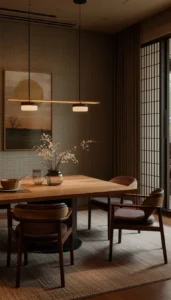
Position lighting directly above the table
Focused lighting enhances function. Centering a pendant or chandelier over the table creates balance and improves visibility during meals. Proper placement also makes the dining table feel like the natural heart of the room.
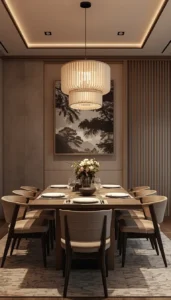
Textures That Add Depth Without Clutter
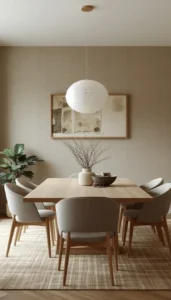
Texture adds warmth while maintaining simplicity. Japandi dining rooms often use fewer decorative items, so texture becomes important for creating interest. Linen, cotton, woven fibers, wood grain, ceramics, and matte finishes can make the space feel layered without making it look busy.
Use linen or cotton textiles
Natural fabrics feel breathable. Linen napkins, cotton seat cushions, or simple curtains add softness to the dining room. These materials feel relaxed and timeless, making the space more comfortable while still supporting a clean, minimal look.
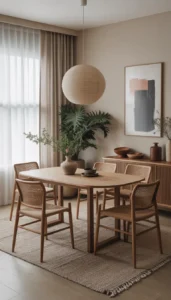
Add subtle woven elements
They enhance visual interest. Woven seats, baskets, placemats, or pendant shades bring quiet texture into the room. These details work well because they feel natural and handcrafted without adding unnecessary decoration or clutter.
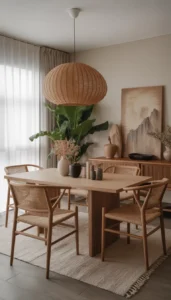
Keep patterns minimal
Avoid bold prints. Japandi style works best with solid colors, soft weaves, and very subtle designs. Minimal patterns allow the materials and shapes to stand out while keeping the dining space peaceful and visually balanced.
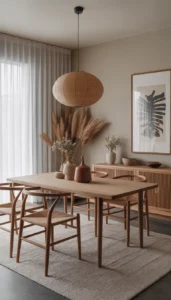
Functional Storage With a Minimal Aesthetic
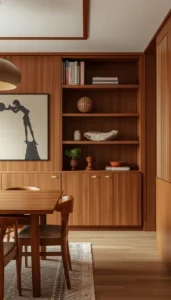
Storage should feel seamless and intentional. A Japandi dining room benefits from hidden organization because clutter quickly disrupts the calm atmosphere. Sideboards, cabinets, and simple storage pieces help keep dishes, linens, and serving items nearby while preserving the room’s clean look.
Use closed cabinetry
Hidden storage keeps the space clean. Cabinets with doors or drawers are ideal for storing tableware, candles, napkins, and dining essentials. Closed storage keeps visual clutter out of sight and helps the room feel peaceful every day.
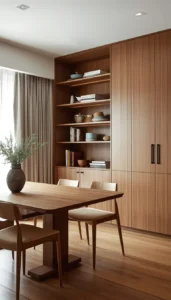
Choose furniture with simple hardware
Minimal details feel refined. Slim pulls, handle less fronts, or small matte knobs work beautifully with Japandi furniture. Simple hardware keeps the storage piece clean and allows the material, shape, and finish to remain the focus.
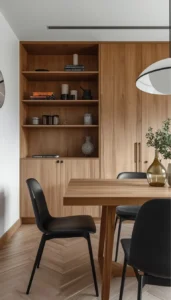
Keep surfaces clear
Less visual clutter supports calmness. A sideboard or cabinet top should not be crowded with decor. One lamp, vase, bowl, or small arrangement can be enough to add warmth while keeping the room fresh and organized.
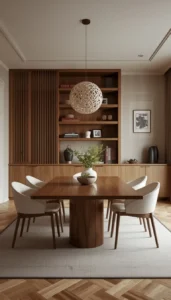
Organic Decor for a Natural Touch
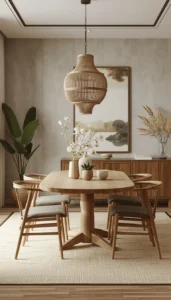
Decor should feel purposeful and restrained. Japandi dining rooms use fewer decorative pieces, but each one should add beauty, function, or texture. Organic materials like ceramic, stone, wood, and greenery work especially well because they bring natural character without overwhelming the room.
Add ceramic or stone accents
They enhance the organic feel. A ceramic vase, stone bowl, clay dish, or handmade vessel can bring quiet beauty to the dining room. These pieces add texture and character while keeping the overall style simple and grounded.
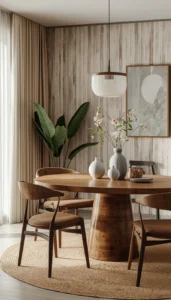
Use simple centerpieces
A small plant or bowl works beautifully. A single branch arrangement, low bowl, or small potted plant can style the table without blocking conversation. Simple centerpieces keep the dining area useful while adding a soft natural detail.
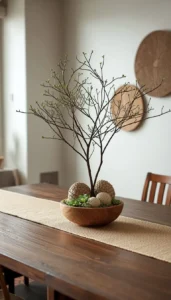
Keep decor minimal
Quality over quantity maintains balance. Choose a few thoughtful pieces instead of filling every surface. This restraint helps the dining room feel calm, refined, and true to the Japandi focus on purposeful living.
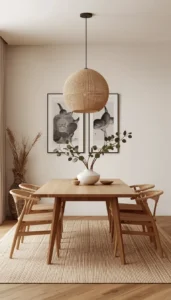
Window Treatments That Let in Natural Light
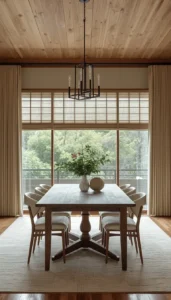
Light enhances Japandi interiors. Natural light makes the dining room feel open, warm, and peaceful, which is central to this design style. Window treatments should soften daylight without blocking it completely. Light fabrics, neutral colors, and simple forms help maintain the airy feeling.
Use sheer or light curtains
They soften sunlight gently. Sheer linen, cotton, or light woven curtains filter brightness while keeping the dining room open. These fabrics add movement and softness without feeling heavy, making the space feel more relaxed and inviting.
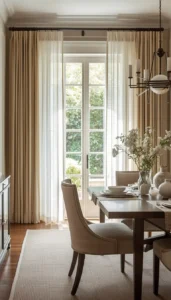
Keep curtain colors neutral
This maintains harmony. White, cream, beige, taupe, or pale gray curtains blend naturally with Japandi palettes. Neutral curtains support the calm atmosphere and allow wood furniture, lighting, and textures to remain the main visual features.
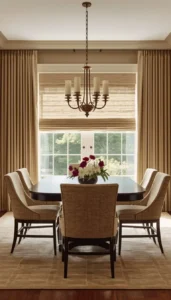
Avoid heavy fabrics
Light materials feel airy. Thick or dark curtains can make the dining room feel closed in. Choosing lighter fabrics keeps the space fresh, supports natural light, and helps the room feel peaceful throughout the day.
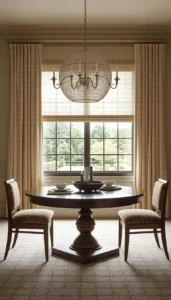
Layouts That Encourage Flow and Comfort
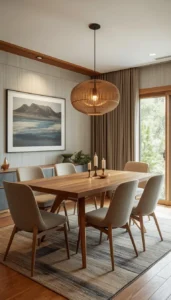
Space planning improves usability. A Japandi dining room should feel open, balanced, and easy to move through. Furniture placement matters because the style depends on calmness and function. Clear pathways, simple arrangements, and thoughtful proportions help the room feel comfortable without unnecessary clutter.
Keep walkways open
Easy movement supports functionality. Leave enough space around the dining table so chairs can move comfortably and people can walk through the room. Open flow makes the dining space feel larger, calmer, and easier to enjoy.
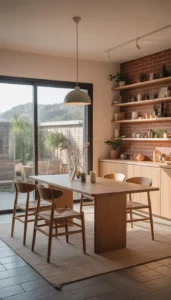
Arrange furniture symmetrically
Balance feels calming. Centering the table, aligning chairs, and placing storage thoughtfully can create a peaceful visual rhythm. Symmetry does not need to feel rigid, but it helps the dining room look organized and intentional.
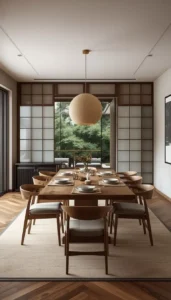
Avoid overcrowding
Open space enhances serenity. Too much furniture or decor can weaken the calm Japandi feeling. Choose only what the room needs, and allow empty space to become part of the design. This restraint makes the room feel more refined and comfortable.
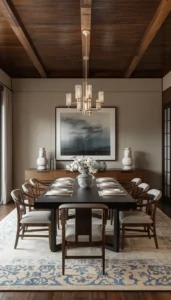
Create a Japandi Dining Room That Feels Peaceful
A Japandi dining room brings together simplicity, warmth, and thoughtful design. By focusing on natural materials, neutral colors, clean lines, soft lighting, and minimal decor, you can create a dining space that feels both stylish and deeply calming. Start with a simple wood table, comfortable chairs, and a gentle color palette, then layer texture through linen, ceramics, woven details, and matte finishes. Keep storage hidden, surfaces clear, and layouts open so the room remains practical for daily life. When each piece has purpose and the design feels balanced, your dining room becomes a peaceful place to gather, eat, and enjoy slow moments at home.
If you enjoy balanced interiors and modern natural styling, exploring more minimalist and Scandinavian inspired decor ideas can help you continue shaping a home that feels peaceful and beautifully curated.
