
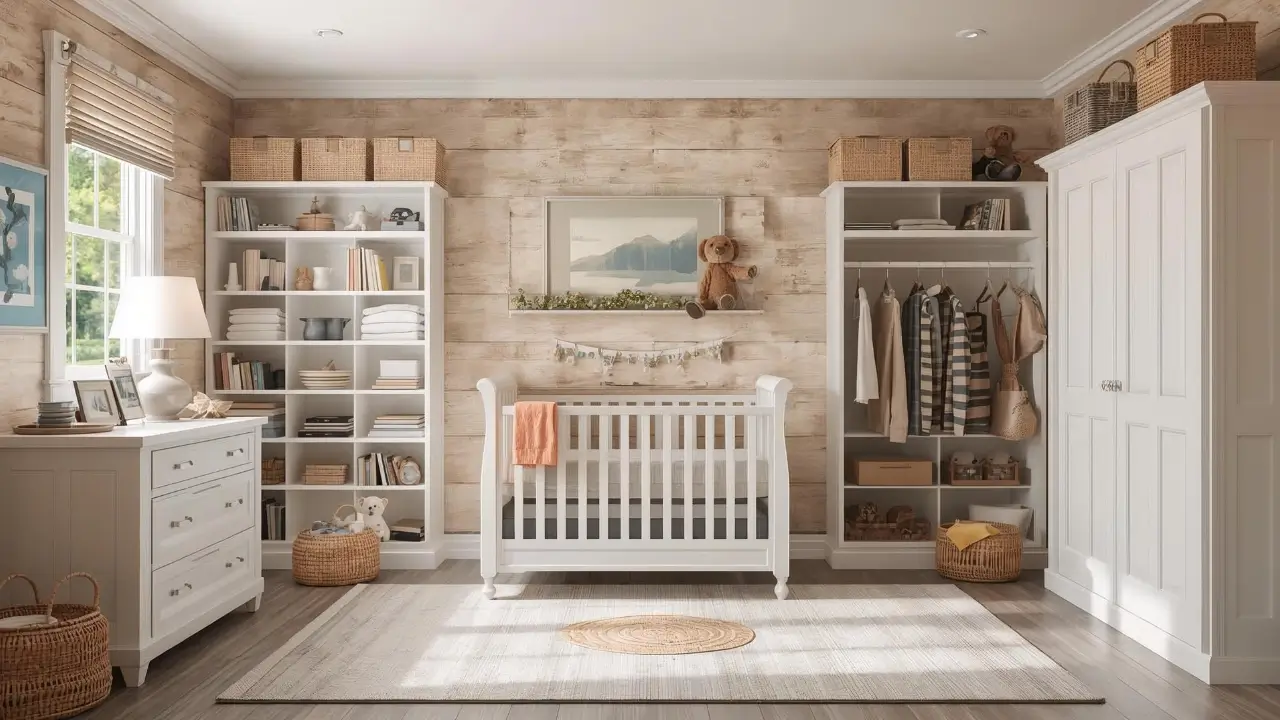
A well organized nursery closet can make everyday routines much easier for parents. From storing tiny outfits to keeping diapers, blankets, shoes, and accessories within reach, a thoughtful nursery closet organization system helps keep everything tidy and easy to find. Because baby items come in many small pieces, the right storage approach can turn even a small closet into a highly functional space.
With shelves, bins, closet dividers, baskets, and simple labeling methods, the nursery closet can feel practical, calm, and visually pleasing while supporting busy daily care.
Use Closet Dividers for Baby Clothes Organization
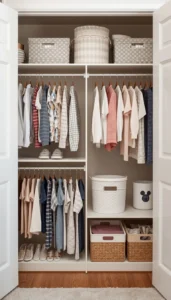
Closet dividers are a simple way to keep baby clothes sorted and easy to access. They help separate outfits by size, season, or category so parents can quickly find what they need. This system is especially helpful because babies grow quickly, and organized clothing sections make daily dressing much easier.
Separate Clothing by Size
Organizing clothes by size makes it easier to rotate outfits as the baby grows. Keep newborn, three month, six month, and larger sizes in clearly divided sections. This prevents smaller clothes from getting mixed with larger ones and helps you notice which sizes are ready to use next.
Group Everyday Essentials Together
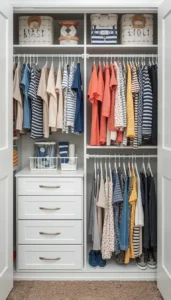
Keep frequently used items like onesies and sleepwear in one section so they are easy to grab during busy moments. Daily essentials should be placed at eye level or within comfortable reach. This makes morning changes, bedtime routines, and quick outfit swaps feel smoother and less stressful.
Use Labeled Dividers for Quick Access
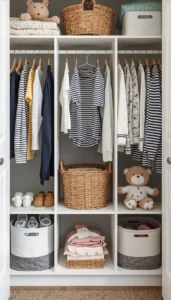
Labels help maintain order in the closet and make it simple to identify clothing sections at a glance. Use clear wording for sizes, seasons, or clothing types. Labeled dividers also make it easier for other family members to help with laundry, dressing, and closet cleanup.
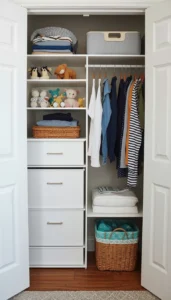
Add Shelves to Maximize Closet Space
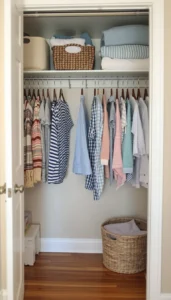
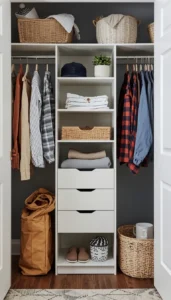
Shelves can transform a basic nursery closet into a well structured storage area. They allow parents to store folded items, blankets, baby supplies, and decorative baskets neatly. A good shelving setup makes use of vertical space and helps keep the closet organized without crowding the hanging area.
Install Adjustable Closet Shelves
Adjustable shelves make it easy to change the layout as storage needs grow and change. Baby items shift from tiny clothes to toys, shoes, books, and larger supplies over time. Shelves that can move up or down give the closet flexibility and help the storage system last longer.
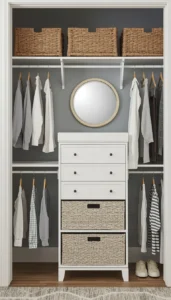
Use Folded Storage for Soft Items
Blankets, towels, and burp cloths can be neatly folded and stacked on shelves for easy access. Keep similar items together so the closet feels clean and simple to manage. Folding soft items in tidy rows also makes it easier to see what is available at a glance.
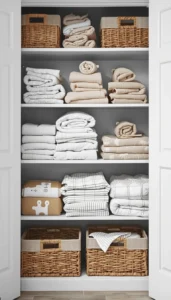
Decorate Shelves with Storage Baskets
Baskets keep smaller items organized while adding a soft decorative touch to the closet. Use them for swaddles, extra sheets, bibs, washcloths, or small toys. Woven, fabric, or neutral baskets can make the nursery closet feel warmer while hiding visual clutter from everyday supplies.
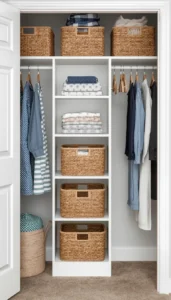
Use Storage Bins and Baskets for Small Items
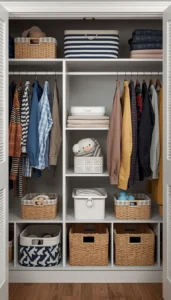
Nursery closets often hold many small items that can quickly create clutter. Storage bins help keep everything in its place and make the closet easier to maintain. Grouping tiny accessories into clear categories saves time, reduces mess, and helps parents find baby essentials without searching through piles.
Store Accessories in Separate Containers
Hats, socks, and mittens can be grouped into individual bins so they are easy to locate. Small baby accessories can disappear quickly if they are mixed with larger clothes. Separate containers keep these little items contained, visible, and ready to grab whenever they are needed.
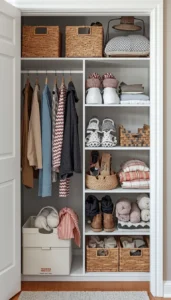
Choose Clear Bins for Visibility
Transparent containers make it easier to see what is inside without opening each box. Clear bins are helpful for backup supplies, seasonal clothing, shoes, and extra accessories. They also make closet checks faster because you can quickly notice what needs restocking, washing, or reorganizing.
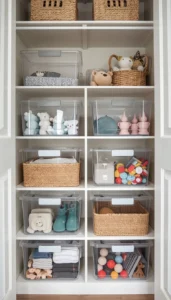
Label Containers for Better Organization
Labels help maintain order and make it easier for anyone to find baby essentials. Add labels to bins for socks, bibs, blankets, diapers, toys, or outgrown clothing. A clear labeling system keeps the nursery closet practical and helps prevent items from being placed in the wrong spot.
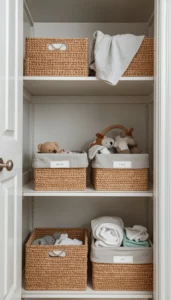
Install Double Hanging Rods for More Clothing Space
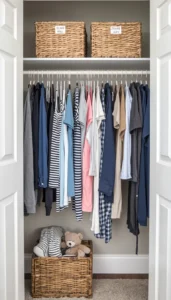
Adding a second hanging rod is a practical way to increase storage in a nursery closet. Baby clothes are small, so this setup allows more outfits to fit neatly without wasting vertical space. Double rods also help divide clothing into useful sections for daily wear, special outfits, and seasonal pieces.
Hang Smaller Clothes on the Lower Rod
The lower rod can hold everyday baby outfits while keeping them easily accessible. Place onesies, rompers, sleepers, and frequently used clothing where parents can reach them quickly. This lower section is ideal for daily dressing because it keeps the most important items visible and simple to use.
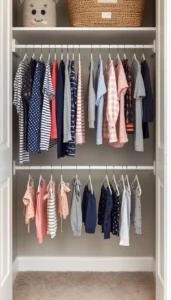
Use the Upper Rod for Jackets or Special Outfits
Formal clothing or seasonal items can be placed on the upper rod to keep the closet balanced. This area works well for jackets, coats, holiday outfits, or larger sizes waiting to be used. Storing less frequent pieces higher keeps the main closet area clear and practical.
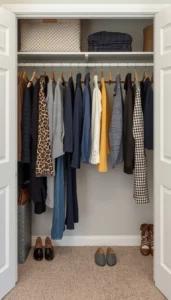
Keep Matching Hangers for a Clean Look
Using similar hangers creates a uniform appearance and helps the closet look more organized. Matching hangers also allow clothes to hang evenly, which makes the space feel calmer and easier to scan. Choose slim baby hangers that save space and support small garments properly.
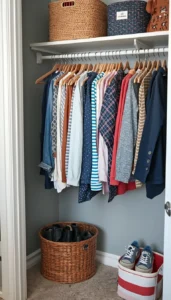
Create a Diaper and Changing Supply Station
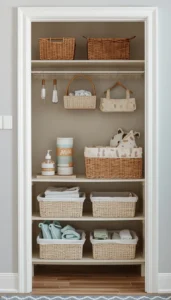
A nursery closet can also serve as a place to store diaper changing supplies. Organizing these essentials in one area keeps them easy to reach and helps daily routines feel more efficient. A dedicated supply section can include diapers, wipes, creams, refills, and extra changing pads.
Use Small Baskets for Diapers
Baskets keep diapers neatly arranged and ready to grab when needed. Place one basket at a comfortable height for daily use and keep backup diapers nearby. This simple setup prevents loose diapers from spreading across shelves and makes the changing routine faster and more organized.
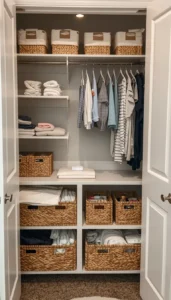
Store Wipes and Creams in Containers
Grouping these items together makes diaper changes quicker and more convenient. Use small containers for wipes, creams, lotions, hand sanitizer, and changing supplies. Keeping them in one section helps parents avoid searching for essentials during busy moments, especially at night or during quick changes.
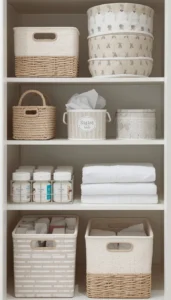
Keep Extra Supplies on Upper Shelves
Backup items such as refill packs can be stored higher to keep the main area uncluttered. Upper shelves are useful for bulk diapers, unopened wipes, extra toiletries, and seasonal supplies. This keeps daily items easy to reach while still making full use of the closet space.
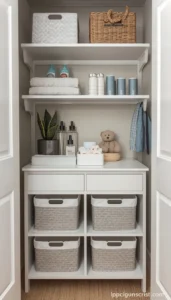
Use Vertical Storage to Expand Closet Capacity
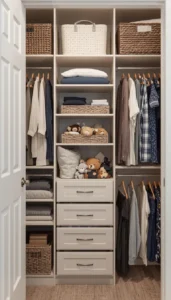
Vertical storage solutions can help maximize every inch of the nursery closet. Making use of wall space, hanging space, and tall organizers can significantly improve storage without making the closet feel crowded. This is especially helpful in small nurseries where every shelf, rod, and corner needs to work efficiently.
Install Hanging Organizers
Fabric hanging organizers are useful for storing folded clothes, shoes, or accessories. They can hang from the closet rod and create extra shelves without permanent installation. Use each compartment for small outfits, swaddles, hats, or backup supplies to keep everything neat and easy to reach.
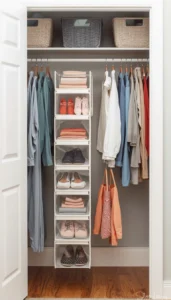
Add Hooks for Bags and Accessories
Wall hooks can hold diaper bags, baby carriers, or small storage pouches. They make use of empty side walls or the back of the closet door. Hooks are also helpful for keeping frequently used items off the floor and ready to grab before leaving the room.
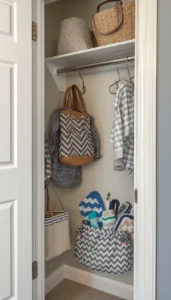
Use Tall Storage Units for Extra Space
Slim storage units help utilize vertical space while keeping items neatly arranged. A tall unit can hold baskets, folded clothes, shoes, toys, or extra blankets without taking up much floor space. Choose a narrow design that fits the closet comfortably and keeps the layout open.
Simple Ideas to Keep Your Nursery Closet Organized
A well planned nursery closet organization system can save time and reduce clutter in everyday routines. With smart storage solutions, labeled sections, practical shelves, double hanging rods, baskets, and vertical organizers, the closet can become one of the most helpful spaces in the nursery.
Focus on keeping everyday essentials easy to reach and backup items stored neatly above or behind them. When every item has a clear place, the nursery feels calmer, cleaner, and ready for daily life with your baby.
