
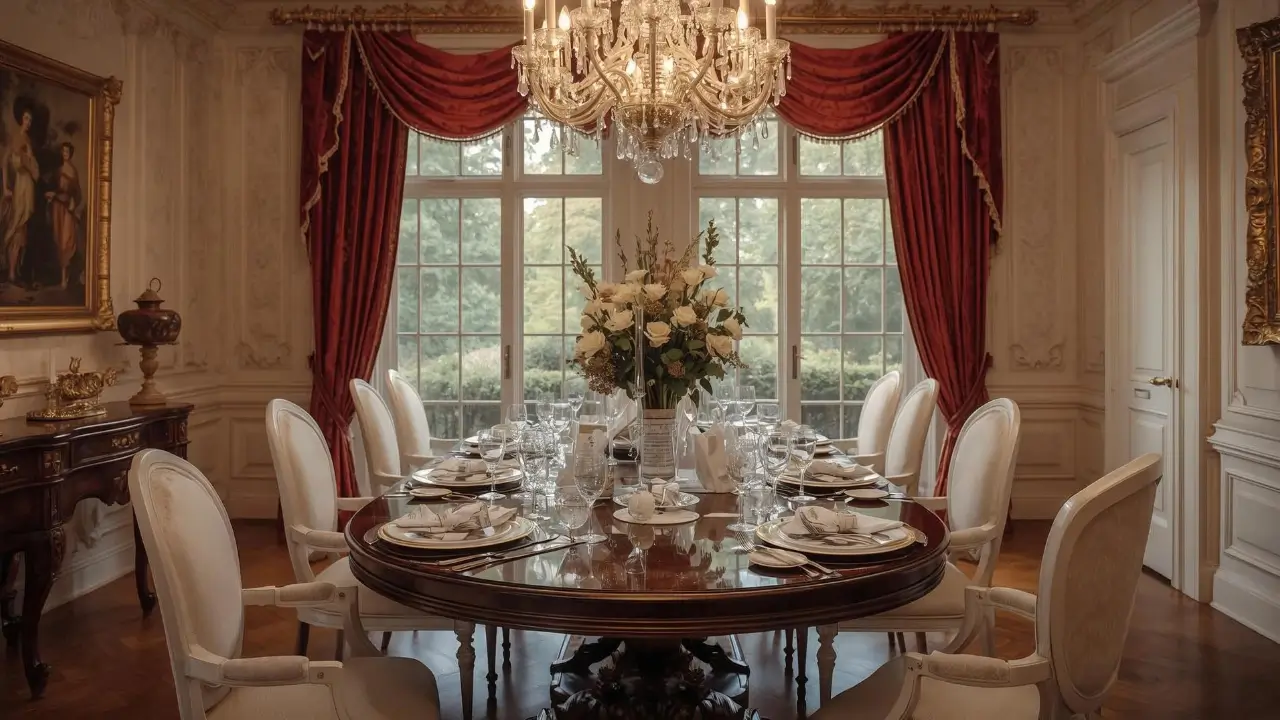
The dining room is more than just a place to eat. It is where families connect, guests are entertained, and everyday moments turn into memories. A thoughtfully decorated dining room creates a welcoming atmosphere while reflecting personal style and comfort. From modern simplicity to warm traditional touches, dining room decor combines function, beauty, and balance. With the right colors, lighting, furniture, textures, and accents, your dining space can feel elegant, cozy, and perfectly designed for daily living. These dining room decor ideas will help you create a space that feels stylish, practical, and inviting for every meal.
From modern simplicity to warm traditional touches, dining room decor combines function, beauty, and balance. With the right colors, lighting, furniture, and accents, your dining space can feel elegant, cozy, and perfectly designed for daily living.
Statement Lighting That Defines the Space
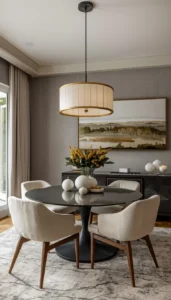
Lighting is one of the most important elements in dining room design. The right fixture sets the mood, highlights the dining table, and becomes a strong visual focal point. Whether you choose a chandelier, pendant, or modern linear light, the fixture should feel balanced with the size, height, and style of the room.
Choose the right fixture size
Select lighting that matches the table and room proportions for balance. A fixture that is too small can feel lost, while one that is too large may overwhelm the space. Choose a piece that feels substantial above the table without blocking views or conversation.
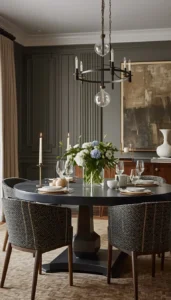
Use warm toned bulbs
Soft lighting enhances comfort and makes meals more enjoyable. Warm bulbs create a relaxed glow that flatters table settings, wood finishes, and wall colors. Avoid lighting that feels too cool or harsh, as it can make the dining room feel less welcoming.
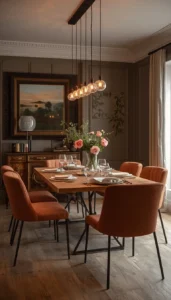
Center the light over the table
Proper placement keeps the room visually organized. A centered fixture helps anchor the dining area and makes the table feel intentional. When the light aligns with the table, the whole room feels more polished, balanced, and thoughtfully arranged.
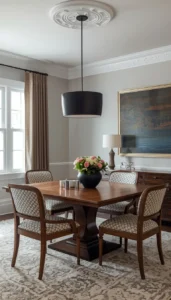
Dining Table Styling for Everyday Elegance
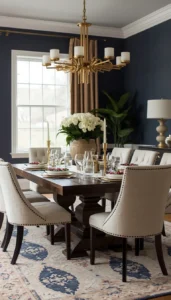
The dining table is the heart of the room and deserves thoughtful styling. Everyday table decor should feel beautiful but still practical enough for regular use. Simple centerpieces, layered textiles, and flexible accents can make the table feel finished without creating clutter or making meals difficult to enjoy.
Use simple centerpieces
Bowls, trays, or floral arrangements add beauty without clutter. A low centerpiece works best because it keeps conversation easy across the table. Choose pieces that match your room style, such as ceramic bowls, glass vases, candles, greenery, or natural wood trays.
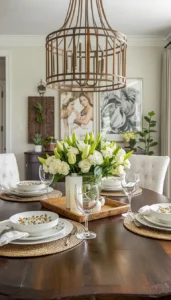
Layer placemats and runners
Textiles create texture and protect the table surface. A runner can define the center of the table, while placemats add structure to each seat. Choose fabrics and colors that complement the chairs, lighting, and wall tones for a cohesive dining room look.
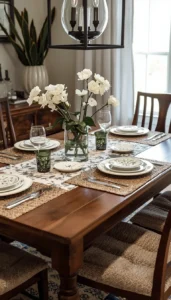
Keep seasonal flexibility
Switch small decor items to match different occasions. You can update the table with flowers, candles, napkins, or decorative bowls without changing the entire room. This keeps the dining area fresh while allowing the main furniture and color palette to stay timeless.
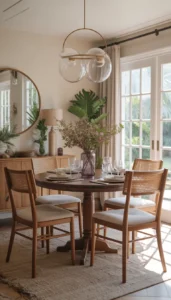
Wall Decor That Adds Character
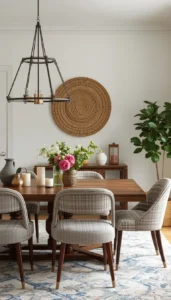
Walls provide an opportunity to enhance the dining room without taking up space. The right wall decor can make the room feel personal, stylish, and complete. Artwork, mirrors, framed photos, or simple decorative pieces can add interest while keeping the dining area open and functional.
Create a gallery wall
Framed art and photos personalize the room. A gallery wall can make a dining room feel more collected and meaningful. Keep frame colors, spacing, or artwork tones coordinated so the arrangement feels polished rather than random or visually crowded.
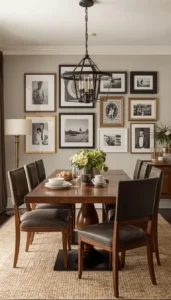
Use mirrors to reflect light
Mirrors make the space feel larger and brighter. A well placed mirror can reflect natural light, candlelight, or a beautiful fixture, giving the dining room more depth. Choose a mirror shape and frame style that complements your table, chairs, and overall decor.
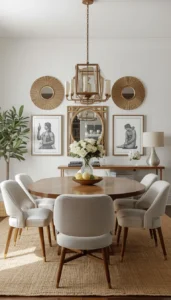
Maintain visual balance
Arrange wall decor evenly for a polished look. Large pieces should feel centered with furniture, while smaller pieces should have enough breathing room. Balanced wall styling helps the dining room feel calm, elegant, and intentionally designed.
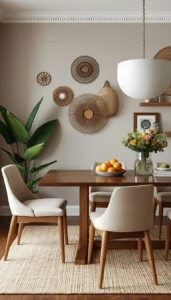
Comfortable Seating With Style
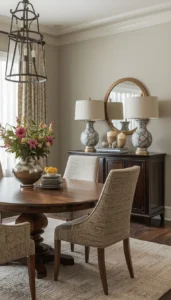
Dining chairs influence both comfort and design appeal. Since people often sit for meals, conversations, and gatherings, seating should feel supportive as well as attractive. The right chairs can soften the room, add texture, and help define the overall style of the dining space.
Choose ergonomic seating
Supportive chairs improve long meal experiences. Look for seats with comfortable backs, proper height, and enough width for relaxed sitting. Beautiful chairs matter, but comfort is essential if the dining room is used often for family meals or entertaining.
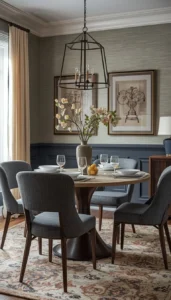
Mix materials carefully
Wood, fabric, and metal combinations add interest. Mixing materials can make the room feel layered, but the pieces should still relate to one another. Repeat a color, finish, or shape so the seating feels connected to the table and surrounding decor.
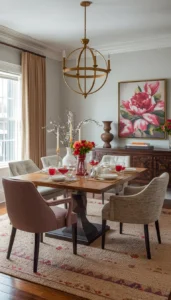
Add cushions when needed
Seat pads improve comfort and soften the look. Cushions are especially useful for wood or metal chairs that feel firm during longer meals. Choose fabric that is durable, easy to clean, and coordinated with the dining room color palette.
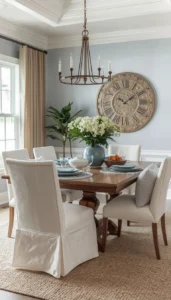
Color Schemes That Feel Warm and Timeless
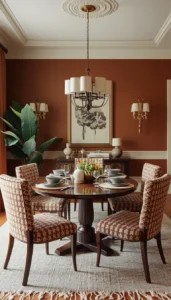
Color choices shape the dining room atmosphere. A strong color palette can make the room feel cozy, elegant, modern, or traditional. The best dining room colors feel welcoming while working well with furniture, lighting, flooring, and nearby spaces in the home.
Use neutral base colors
Beige, gray, and cream create versatility. Neutral walls and larger furniture pieces provide a calm foundation that can be styled in many ways. These tones also make it easier to update table decor, artwork, and accents over time.
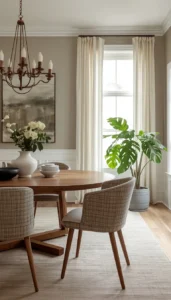
Add accent tones through decor
Pillows, art, and rugs bring personality. Accent colors can make the dining room feel more expressive without overwhelming it. Muted green, navy, rust, black, gold, or soft blue can all add depth when used through smaller decorative details.
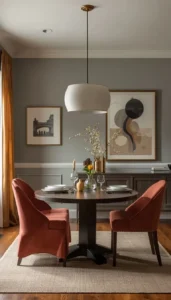
Maintain color harmony
Limit strong shades to avoid visual clutter. Too many bold colors can make the room feel busy, especially around a dining table. Choose a few repeating tones so the space feels coordinated, warm, and easy to enjoy.
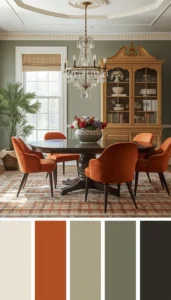
Rugs That Anchor the Dining Area
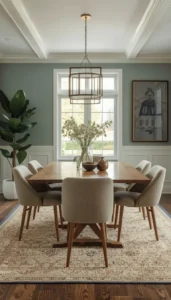
A rug defines the dining zone and adds comfort underfoot. It can also bring color, pattern, and softness into a room filled with hard surfaces. The right rug should be practical for meals, large enough for chairs, and coordinated with the overall dining room style.
Choose stain resistant materials
Easy to clean rugs are practical for dining spaces. Since spills can happen, choose durable fibers or washable options that handle regular use. A practical rug allows the room to feel stylish without making everyday meals stressful.
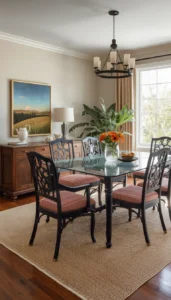
Ensure proper rug size
All chairs should remain on the rug when pulled out. A rug that is too small can make the dining area feel awkward and uncomfortable. Choose a size that extends beyond the table on every side for easy chair movement.
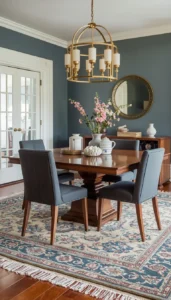
Match patterns with decor style
Simple designs suit modern rooms while patterns suit traditional spaces. A subtle pattern can hide minor marks and add character. Choose a rug design that supports the table, chairs, lighting, and wall decor instead of competing with them.
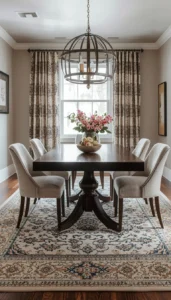
Storage and Display Solutions
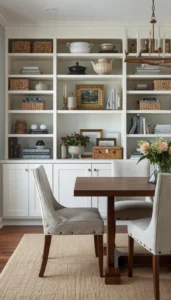
Functional storage keeps the dining room organized and stylish. Buffets, sideboards, cabinets, and shelves can hold dishes, linens, serving pieces, and decorative accents. Good storage makes the room more useful while also providing opportunities to display beautiful items in a balanced way.
Use buffets and sideboards
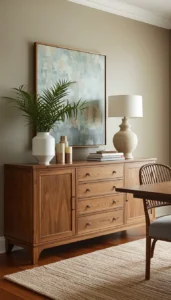
They offer both storage and display space. A sideboard can store table linens, extra plates, glasses, and serving pieces while giving you a surface for lamps, artwork, trays, or seasonal decor. It also helps complete the room visually.
Style open shelves neatly
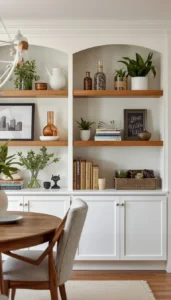
Balance decorative and functional items. Display plates, bowls, glassware, books, plants, or pottery in a way that feels organized. Leave space between objects so shelves feel curated instead of crowded or difficult to maintain.
Avoid overcrowding surfaces
Clear space maintains elegance. A dining room feels more refined when surfaces are not filled with too many objects. Keep only a few useful or beautiful items on display, and store the rest behind doors or inside drawers.
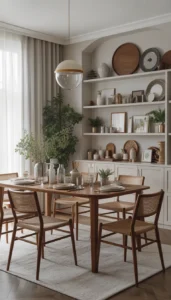
Window Treatments for Light and Privacy
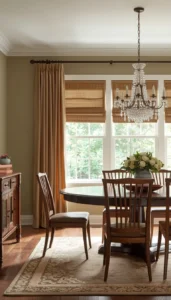
Window decor influences both brightness and mood. Curtains, shades, or blinds can soften natural light, provide privacy, and make the dining room feel more complete. The best window treatments work with the room’s style while still being practical for everyday use.
Select light filtering curtains
They soften sunlight while preserving privacy. Light filtering fabrics help create a gentle glow during the day and reduce harsh brightness. They are especially useful in dining rooms where you want natural light without glare or a cold feeling.
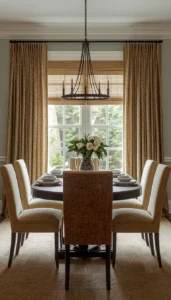
Keep fabrics easy to maintain
Washable materials simplify upkeep. Dining rooms can collect dust, food scents, or occasional spills, so practical fabrics are helpful. Choose curtains or shades that are easy to clean and durable enough for regular use.
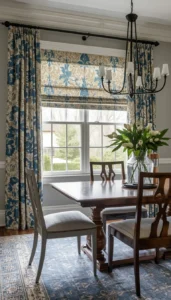
Natural Elements for a Balanced Look
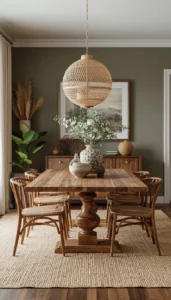
Nature inspired decor adds warmth and freshness. Natural materials can soften formal dining spaces and make everyday meals feel more relaxed. Plants, wood, stone, ceramic, and woven accents all bring texture and balance while helping the room feel grounded and inviting.
Incorporate plants or greenery
Indoor plants soften structured spaces. A plant in the corner, greenery on a sideboard, or simple stems on the table can bring life to the room. Choose low maintenance greenery that fits the light conditions and does not crowd the dining area.
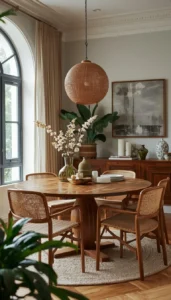
Use wooden accents
Natural textures create comfort. Wood furniture, trays, bowls, frames, or candle holders can warm up the dining room. Even small wood details help balance metal, glass, or painted finishes and make the room feel more welcoming.
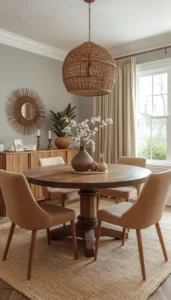
Add stone or ceramic pieces
These materials enhance visual depth. A ceramic vase, stone bowl, clay planter, or textured serving piece can make the room feel more layered. Natural finishes add quiet character without making the dining room feel overly decorated.
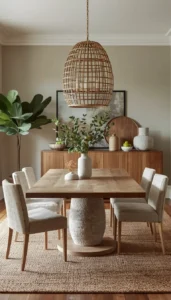
Minimalist Accents for a Clean Finish
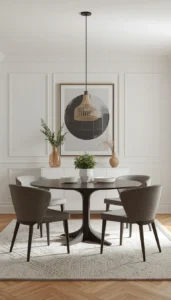
Small details complete the dining room without overwhelming it. Minimalist accents help the space feel finished, calm, and elegant. Instead of filling every surface, choose a few high quality pieces that support the room’s function and style while leaving enough open space.
Choose quality over quantity
Fewer meaningful items look more refined. A beautiful vase, simple artwork, sculptural bowl, or well made candle holder can have more impact than several small decorations. Thoughtful choices keep the dining room sophisticated and easy to maintain.
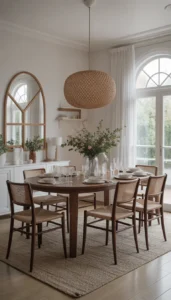
Use trays for organization
They group decor neatly. A tray on the table, buffet, or shelf can hold candles, flowers, or serving pieces in one organized place. This keeps surfaces tidy while making decorative accents feel connected and intentional.
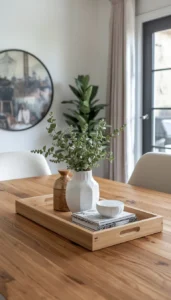
Refresh accents occasionally
Changing small pieces keeps the room updated. Swap napkins, flowers, candles, or a centerpiece to match the season or occasion. Small updates can make the dining room feel fresh without requiring a full redesign.
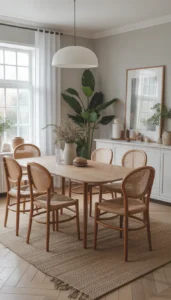
Create a Dining Space That Brings People Together
A well designed dining room encourages connection, comfort, and conversation. When lighting, furniture, colors, and decor work together, the space feels welcoming and intentional. Start with a balanced table and comfortable chairs, then add lighting that defines the area, a practical rug, useful storage, and thoughtful accents. Keep the palette cohesive, choose materials that feel warm, and leave enough space for meals to feel relaxed. Whether you are hosting guests or enjoying everyday dinners, thoughtful styling can transform your dining room into a place where people naturally gather, share moments, and create lasting memories.
Explore more home styling ideas, table setting inspiration, and space planning tips to continue designing a home that feels beautiful and functional.
More Decor Ideas You’ll Love
- Cozy Teen Bedroom Ideas for a Comfortable and Stylish Personal Space
- Cozy Guest Bedroom Ideas to Make Every Visitor Feel at Home
- Moody Bedroom Ideas That Create a Cozy and Sophisticated Retreat
- Cozy Bedroom Ideas to Create a Warm and Relaxing Retreat
- Home Office Inspiration Ideas to Create a Stylish and Motivating Workspace
