
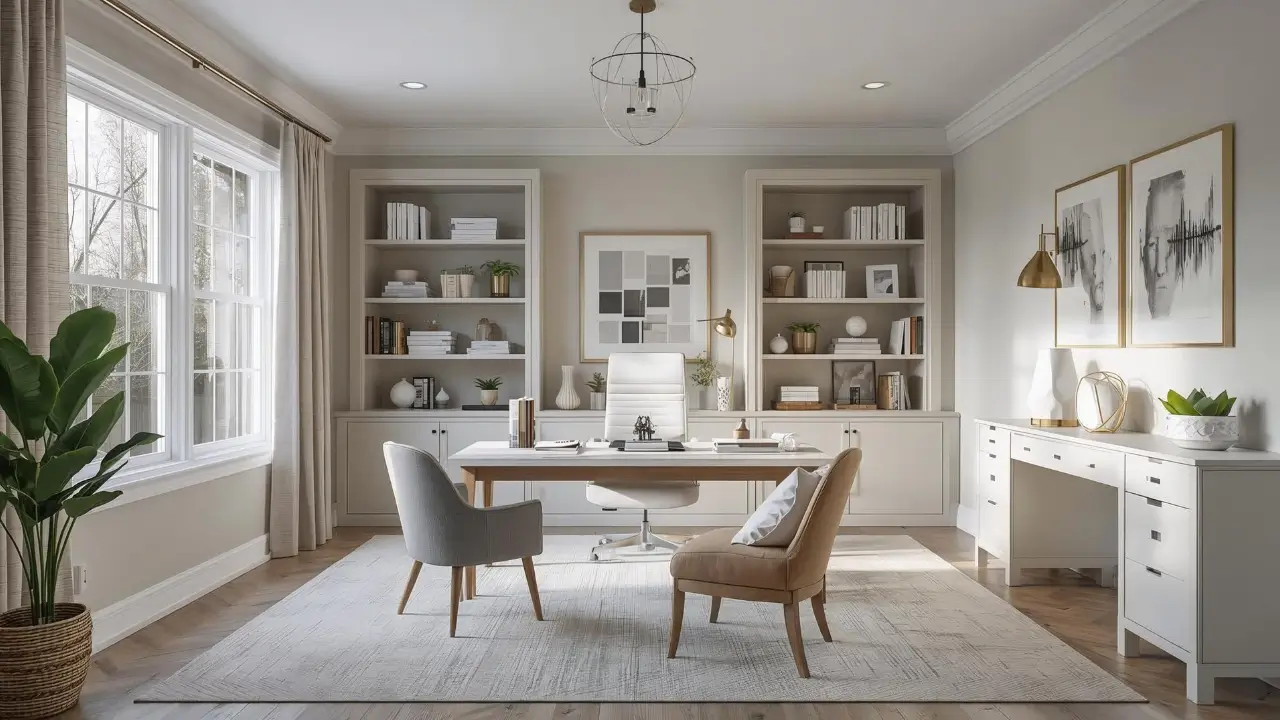
A well designed home office is no longer just a desk and a chair. It is a space that supports focus, creativity, and comfort while still blending beautifully with the rest of the home. Thoughtful home office design helps improve daily routines, reduces distractions, and makes working from home feel more intentional. The right layout, lighting, storage, seating, and decor can turn even a small corner into a productive workspace. From compact setups to dedicated rooms, these home office design ideas focus on functionality, aesthetics, and smart styling choices that elevate both productivity and visual appeal.
From small corners to dedicated rooms, these home office design ideas focus on functionality, aesthetics, and smart styling choices that elevate both productivity and visual appeal.
Functional Desk Setup for Daily Work
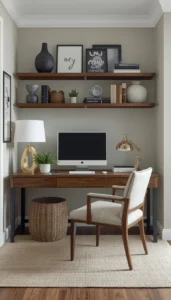
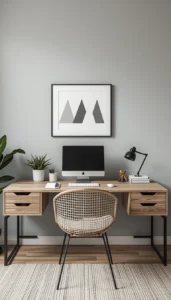
The desk area is the foundation of any home office design and should balance comfort with efficiency. A good desk setup gives you enough room to work, keeps supplies organized, and helps the space feel calm. The goal is to create a surface that supports daily tasks without becoming cluttered or visually distracting.
Choose the right desk size
Select a desk that fits your space without overwhelming it while still offering enough surface area. A smaller room may need a slim writing desk, while a dedicated office can handle a larger work table. The desk should feel practical and proportional.
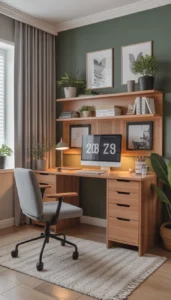
Keep essentials within reach
Organize frequently used items to reduce movement and distractions. Pens, notebooks, chargers, files, and daily tools should be easy to access without crowding the surface. A tray, drawer organizer, or small desktop holder can keep everything neat.
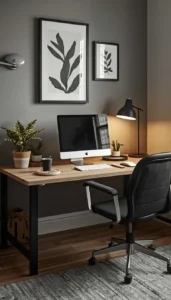
Leave open space on the desk
A clutter free surface helps maintain focus and visual calm. Keep only the items you truly use during work hours on display. Open space makes the desk easier to clean, improves workflow, and helps the office feel more peaceful.
Ergonomic Seating for Comfort and Support
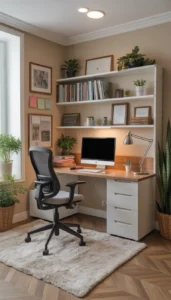
Comfort is one of the most important elements in a productive home office. A beautiful workspace will not feel useful if the chair causes discomfort during long work sessions. Supportive seating helps protect posture, reduce fatigue, and make the home office easier to use every day.
Invest in supportive seating
A well cushioned chair with proper back support improves posture during long hours. Look for a seat that supports the lower back and allows relaxed shoulders. Comfort should always come before appearance when choosing daily office seating.

Match chair style with decor
Choose a chair that complements the room while remaining functional. Upholstered chairs, leather finishes, neutral fabrics, or sleek modern designs can all work well. The best choice blends comfort with the overall home office aesthetic.
Adjust seating height properly
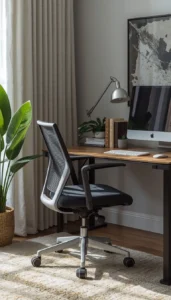
Correct height helps reduce strain on shoulders and wrists. Your feet should rest comfortably, and your arms should sit naturally at desk level. Small adjustments can make the workspace feel more comfortable and efficient.
Smart Storage Solutions for a Clean Look
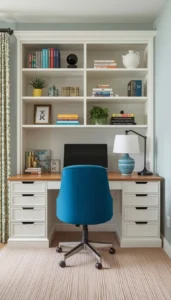
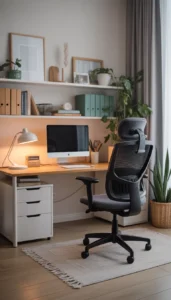
Storage plays a major role in keeping a home office organized and visually pleasing. Without a clear system, papers, supplies, books, and tech accessories can quickly create clutter. Smart storage keeps items easy to find while helping the office feel polished, calm, and ready for work.
Use vertical storage
Shelves and wall units maximize space without crowding the floor. Vertical storage is especially helpful in small offices because it uses empty wall space. It can hold books, files, baskets, and decor while keeping the desk clear.
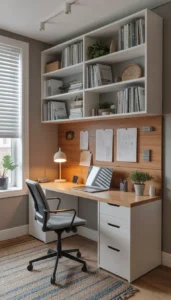
Mix open and closed storage
Open shelves display decor while closed units hide clutter. Use open storage for attractive books, plants, or baskets, and closed cabinets for paperwork, supplies, and less decorative items. This balance keeps the room both useful and stylish.
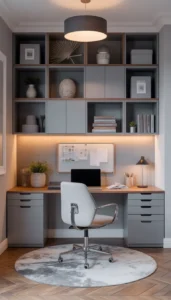
Keep storage visually cohesive
Matching colors and materials create a seamless look. Choose baskets, boxes, shelves, and cabinets that share similar finishes or tones. Cohesive storage makes the office feel intentional rather than pieced together.
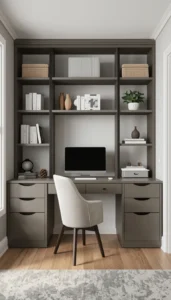
Lighting Ideas That Improve Focus
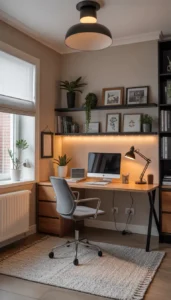
Good lighting enhances productivity and sets the mood of the home office. A workspace needs enough brightness for reading, writing, and screen work, but it should not feel harsh or tiring. Layered lighting helps create a balanced office that feels comfortable throughout the day.
Use layered lighting
Combine natural light, task lamps, and ambient lighting for balance. A desk lamp supports focused tasks, while ceiling or wall lighting brightens the room. Layering prevents eye strain and makes the office feel warmer.
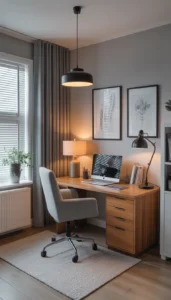
Position lighting correctly
Avoid shadows on the work surface by placing lights thoughtfully. A lamp should brighten the desk without creating glare on screens. Position lighting from the side when possible so the workspace remains clear and comfortable.
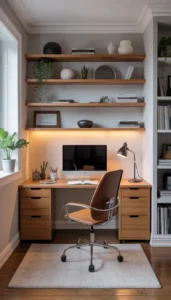
Choose warm neutral tones
Balanced lighting feels comfortable without being harsh. Warm neutral bulbs create a pleasant glow that supports focus while keeping the room inviting. Avoid lighting that feels too yellow, too dim, or too bright for daily work.
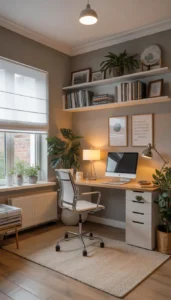
Color Schemes That Encourage Productivity
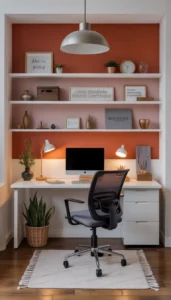
Color has a strong impact on focus and energy levels. The best home office color schemes feel calm enough for concentration while still offering enough interest to keep the space inspiring. Soft neutrals, muted accents, and smooth transitions can make the office feel professional and welcoming.
Stick to calming base colors
Soft neutrals create a relaxed and professional atmosphere. White, cream, beige, soft gray, and warm taupe work well on walls, furniture, and large pieces. These shades help reduce visual distraction and support a cleaner workspace.
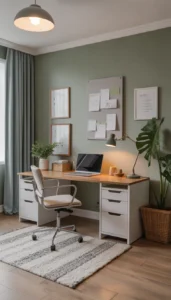
Add subtle accent tones
Muted blues, greens, or warm tones add interest without distraction. A soft accent wall, chair fabric, artwork, or rug can bring personality into the office. Subtle color keeps the room fresh while still focused.
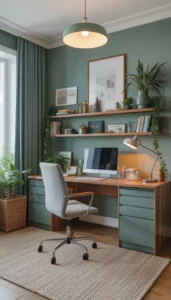
Keep color transitions smooth
Consistency between walls, furniture, and decor feels intentional. Avoid too many competing colors in one workspace. A coordinated palette helps the office feel organized, balanced, and easier to spend time in.
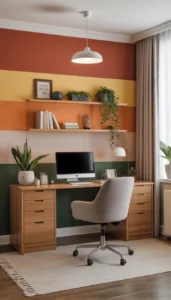
Home Office Wall Decor That Inspires
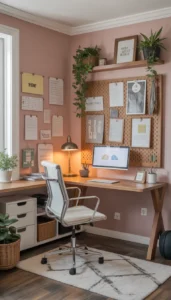
Wall decor helps personalize the workspace while keeping it motivating. The right wall styling can make a home office feel more creative and complete, but too many pieces can become distracting. Choose decor that adds interest, supports focus, and works with the room’s color palette.
Use simple artwork or prints
Minimal art keeps the space inspiring but uncluttered. Abstract prints, calming landscapes, line art, or motivational pieces can add personality without overwhelming the walls. Choose frames and colors that match the office style.
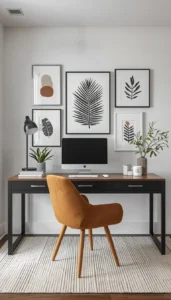
Add functional wall elements
Pinboards or planners blend decor with productivity. A calendar, corkboard, whiteboard, or wall grid can help track tasks while filling empty wall space. Keep these elements neat so they remain useful and attractive.
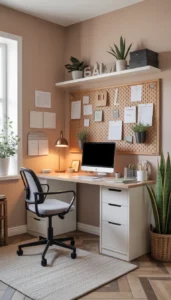
Avoid overcrowding walls
Negative space helps the room feel balanced. Leave open areas between artwork, shelves, and planners so the office does not feel busy. Calm walls can improve focus and make the workspace feel more spacious.
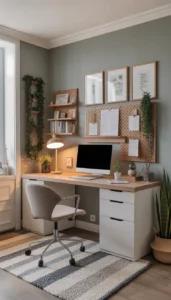
Small Home Office Design Ideas for Limited Space
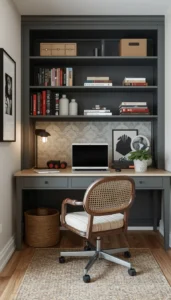
Even compact areas can be transformed into functional home offices. A small corner, hallway nook, bedroom wall, or living room section can work well with the right furniture and layout. The key is defining the workspace clearly and keeping the design light, practical, and uncluttered.
Define the workspace clearly
Use rugs or furniture placement to separate work from living areas. A small rug, wall shelf, or desk placement can make the office feel like its own zone. Clear boundaries help improve focus, even in shared rooms.
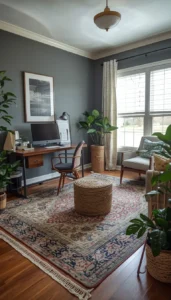
Choose multi functional furniture
Desks with storage or foldable designs save space. A wall mounted desk, ladder desk, or compact table with drawers can support daily work without taking over the room. Multi purpose pieces are ideal for smaller homes.
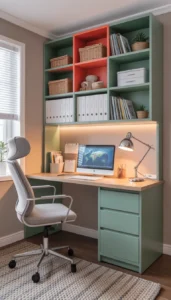
Keep decor minimal
Simple styling prevents small spaces from feeling cramped. Choose a few useful accents instead of filling shelves and surfaces. Minimal decor keeps the office light, open, and easier to maintain.
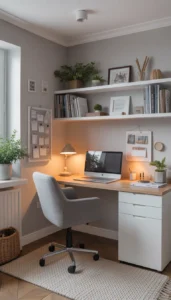
Natural Elements for a Balanced Workspace
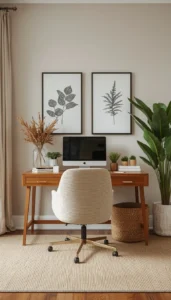
Natural touches bring warmth and comfort into home office design. Plants, wood, woven textures, and daylight can make the workspace feel more relaxed and less sterile. These elements create balance, especially in offices with screens, technology, and structured furniture.
Add indoor plants
Plants soften the space and improve visual appeal. A small desk plant, floor plant, or shelf greenery can make the office feel fresher. Choose low maintenance plants that suit the available light and do not crowd the workspace.
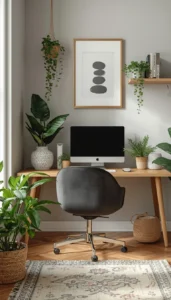
Use natural materials
Wood, linen, or woven textures add warmth. A wood desk, woven basket, linen curtain, or natural fiber rug can soften the room beautifully. These materials help the office feel connected to the rest of the home.
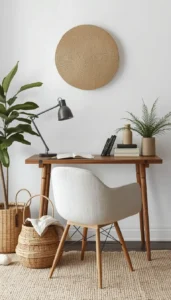
Let natural light in
Position the desk near windows when possible. Natural light can make the workspace feel brighter and more energizing. Use light curtains or shades to control glare while still keeping the office airy and pleasant.
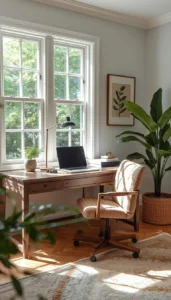
Tech Friendly Home Office Design
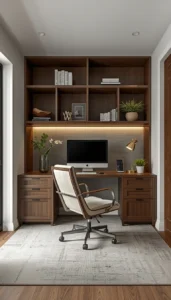
A modern home office needs to accommodate technology without clutter. Computers, monitors, chargers, printers, and cables are often necessary, but they can quickly make a space feel messy. A tech friendly design keeps devices organized while maintaining a clean and stylish look.
Hide cables neatly
Cable organizers keep the workspace clean and safe. Use clips, sleeves, trays, or boxes to guide cords behind the desk. Hidden cables make the office look more polished and reduce visual distraction.
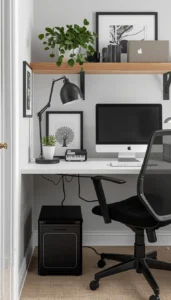
Use smart accessories
Charging stations and organizers improve efficiency. A dedicated charging area, monitor stand, or drawer organizer can make daily work smoother. Choose accessories that support your routine without adding unnecessary clutter.
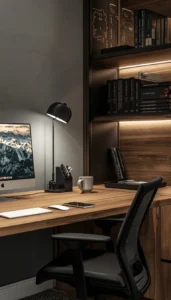
Keep tech visually minimal
Avoid overcrowding the desk with devices. Keep only the equipment you use regularly on the surface, and store extra gadgets nearby. A streamlined tech setup helps the home office feel calm and productive.
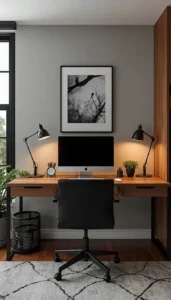
Minimalist Home Office Styling for Focus
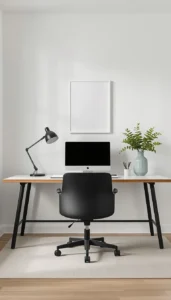
Minimal design is popular for creating calm and distraction free workspaces. A minimalist home office focuses on clean lines, useful furniture, and carefully chosen decor. This style works well when you want a room that feels focused, modern, and easy to maintain.
Limit decor to essentials
Fewer items create a clearer mental space. Keep only what supports work, comfort, or inspiration. A lamp, plant, notebook, or framed print may be enough to make the office feel finished without adding clutter.
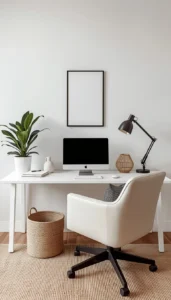
Choose clean lined furniture
Simple shapes enhance a modern look. A streamlined desk, slim chair, and basic shelving can make the room feel calm and organized. Clean furniture lines help the workspace appear larger and more refined.
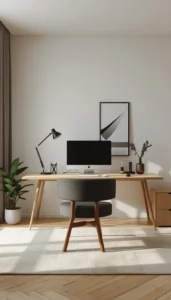
Maintain consistent styling
Uniform finishes help the room feel cohesive. Repeat similar colors, materials, and shapes across the desk, storage, lighting, and decor. Consistency keeps the minimalist office from feeling empty or unfinished.
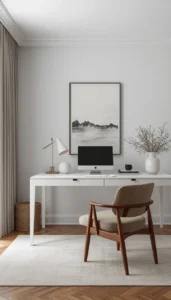
Design a Home Office You Enjoy Working In
A thoughtfully designed home office supports productivity while reflecting personal style. When comfort, organization, lighting, and decor work together, the workspace becomes a place that feels motivating rather than stressful. Start with a practical desk and supportive chair, then add storage that keeps clutter under control. Use layered lighting, calming colors, and natural textures to make the space feel balanced. Keep technology organized, surfaces clear, and decor meaningful but minimal. Whether your office is a full room or a small corner, thoughtful design choices can make it feel stylish, comfortable, and productive for everyday work.
If you enjoy styling productive spaces, explore more ideas focused on workspace organization, interior styling, and functional home decor to keep every corner of your home working beautifully for you.
More Decor Ideas You’ll Love
- Valentine’s Day Decorations for Home That Feel Romantic and Effortless
- Valentine’s Day Table Decor Ideas to Create a Romantic and Stylish Setting
- Valentine Decor Ideas That Make Your Home Feel Warm and Romantic
- Valentine Decorating Ideas That Feel Romantic, Cozy, and Stylish
- Romantic Bedroom Decor Ideas for Valentine’s Day That Feel Intimate and Special
