
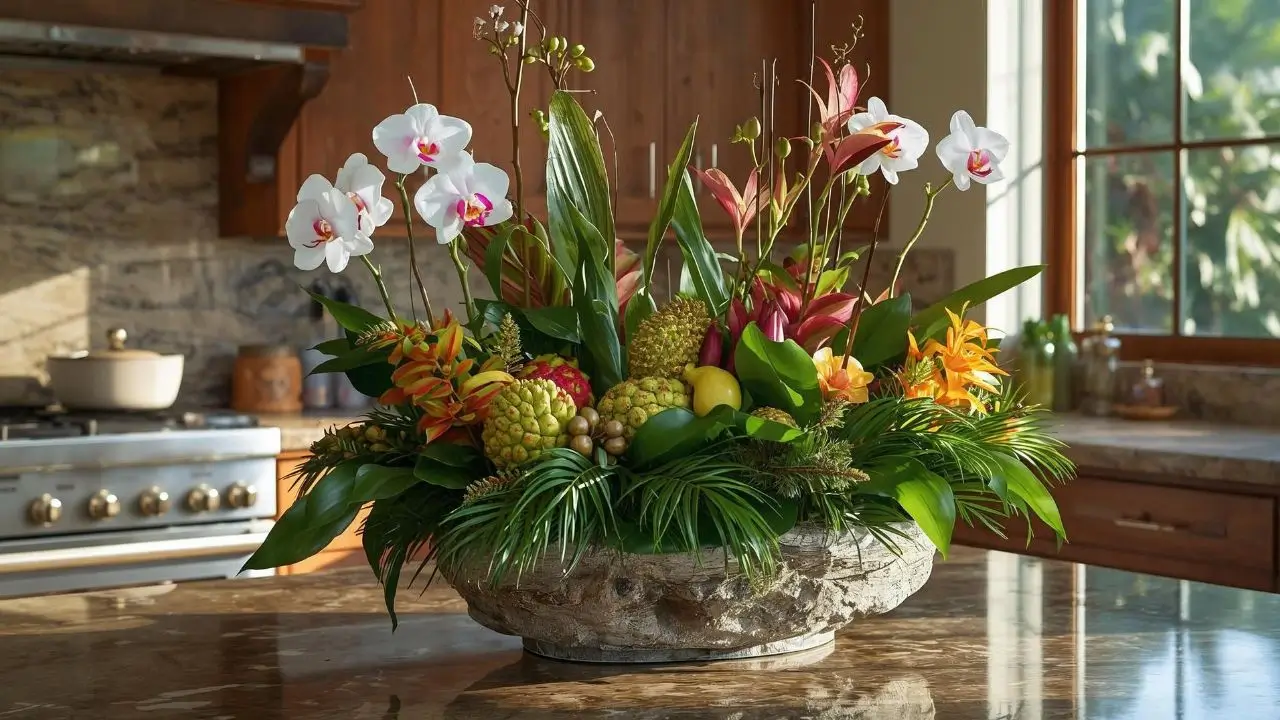
A kitchen island centerpiece is the finishing touch that makes the whole kitchen feel styled, balanced, and welcoming. Because the island is often used for cooking, serving, gathering, and casual meals, the centerpiece should look beautiful without getting in the way. The right arrangement can add warmth, color, texture, and personality while still keeping the surface practical for daily use. Whether your kitchen feels modern, farmhouse, classic, or minimal, a thoughtful centerpiece can make the space look more polished. These island centerpiece ideas focus on simple styling, natural materials, useful pieces, and balanced proportions for a kitchen that feels both elegant and easy to live in.
These island centerpiece ideas focus on simple styling, natural textures, and functional beauty to help you create a polished kitchen look that feels effortless and welcoming.
Decorative Trays as a Structured Centerpiece
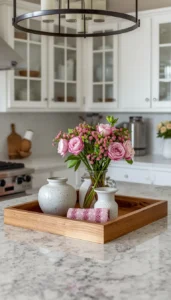
Trays are one of the simplest ways to create a kitchen island centerpiece that feels organized and intentional. They give decor a clear boundary, so small items look styled rather than scattered. A tray can hold candles, greenery, jars, napkins, or everyday essentials while keeping the island easy to clean and use. This approach works especially well when you want a centerpiece that feels polished but still practical.
Choose a tray that complements the countertop
The tray should feel connected to the surface beneath it. Wood trays add warmth to stone or marble countertops, while stone trays create a refined look on wood or neutral counters. Metal trays can suit modern kitchens, especially when they match hardware or lighting finishes. A complementary tray helps the centerpiece feel cohesive.
Group items in odd numbers
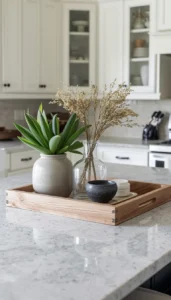
Odd numbered groupings often look more relaxed and natural than perfectly even arrangements. Three items, such as a small vase, candle, and jar, can create a balanced centerpiece without feeling too formal. Varying the size of each item also helps the arrangement feel layered, interesting, and easy on the eye.
Keep tray size proportional to the island
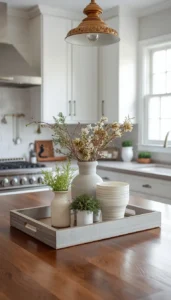
A tray should anchor the centerpiece without taking over the island. On a small island, use a compact tray that leaves open prep space. On a larger island, a wider tray can create stronger visual balance. The goal is to keep the surface stylish, open, and comfortable for daily kitchen tasks.
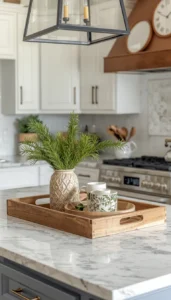
Fresh Greenery for a Natural Statement
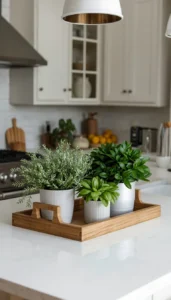
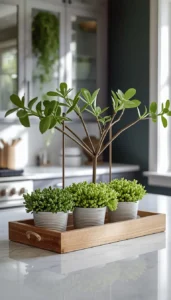
Greenery brings life, softness, and freshness to a kitchen island centerpiece. Even a small plant or vase of stems can make the kitchen feel more inviting. It also adds natural color without making the space feel busy. Fresh greenery works beautifully with wood, stone, ceramic, glass, and metal, making it easy to blend with many kitchen styles.
Choose low maintenance plants
Low maintenance plants are ideal because kitchen centerpieces should stay attractive with minimal effort. Small herbs, pothos, olive stems, eucalyptus, or simple leafy greenery can work well. Herbs are especially useful because they add fragrance, texture, and function. Choose plants that suit your light level so the centerpiece continues looking fresh.
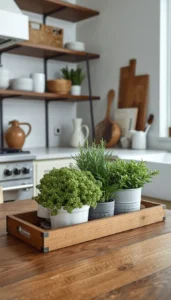
Use neutral planters
A neutral planter keeps the greenery from feeling too decorative or distracting. White ceramic, stone, clay, glass, or matte planters help maintain a clean kitchen look. Simple containers also make the plant feel more elegant. When the planter matches nearby finishes, the whole centerpiece feels more thoughtful and visually calm.
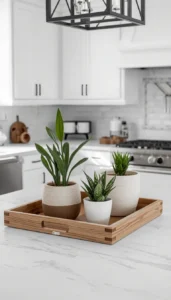
Place greenery near natural light
Greenery looks best when it stays healthy, so placement matters. If the island receives sunlight, place plants where they can benefit without blocking movement or views. For lower light kitchens, choose hardy greenery or fresh stems instead. This keeps the centerpiece bright, natural, and easy to maintain.
Fruit Bowls for Color and Function
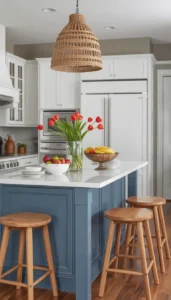
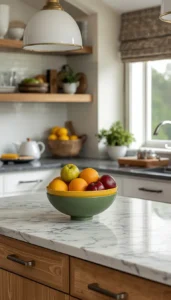
Fruit bowls are classic kitchen island centerpieces because they are both decorative and useful. They add color, shape, and freshness while keeping everyday fruit within easy reach. A well styled fruit bowl can make the island feel warm and lived in without adding unnecessary clutter. The key is choosing the right bowl and keeping the arrangement simple.
Use ceramic or wood bowls
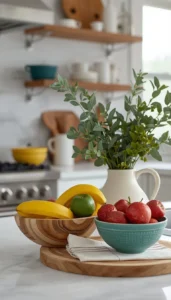
Ceramic and wood bowls bring natural texture to the island. A ceramic bowl can feel clean, timeless, and refined, while a wooden bowl adds warmth and softness. Both materials work well with modern, farmhouse, coastal, and traditional kitchens. Choose a bowl with a simple shape so it feels stylish, not overly decorative.
Keep fruit selection minimal
Too much fruit can make the island look crowded. A small collection of lemons, apples, pears, oranges, or limes usually feels cleaner and more intentional. Sticking to one or two fruit types creates a stronger visual impact. This also helps the centerpiece feel fresh, practical, and easy to refresh during the week.
Match bowl color to kitchen palette
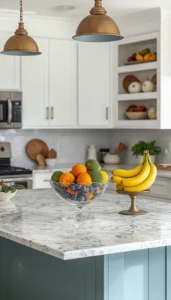
The bowl should connect with the colors already present in the kitchen. A white bowl works well in bright spaces, while wood suits warm neutral kitchens. Dark or stone toned bowls can add contrast to lighter countertops. Matching the bowl to the kitchen palette makes the centerpiece look planned and harmonious.
Candle Groupings for Cozy Atmosphere
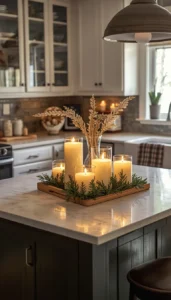
Candles can make a kitchen island feel warm, relaxed, and inviting, especially in the evening. They add soft ambiance without requiring a large centerpiece. A candle grouping works best when it feels simple, safe, and refined. Choose pieces that suit your kitchen style and keep the arrangement away from busy prep zones.
Choose unscented candles
Unscented candles are often best for the kitchen because they do not compete with cooking aromas. They still provide warmth and glow without overwhelming the space. If you prefer fragrance, choose something very mild and clean. The centerpiece should support the kitchen atmosphere, not overpower it with a strong scent.
Use matching candle holders
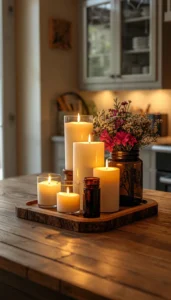
Matching candle holders create a polished and cohesive look. Glass, ceramic, stone, or metal holders can work depending on your kitchen finishes. Using similar holders in different heights adds interest without looking messy. This makes the candle grouping feel intentional and elegant while keeping the island decor simple.
Keep flames away from prep areas
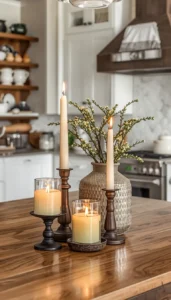
Safety should always guide candle placement on a kitchen island. Keep candles away from cutting zones, towels, paper napkins, greenery, and areas where people reach often. Battery candles can be a practical option for busy kitchens. A safe arrangement keeps the centerpiece beautiful without creating worry during daily use.
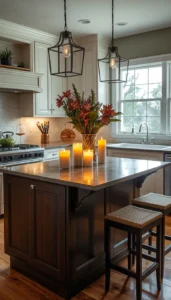
Sculptural Decor for Artistic Impact
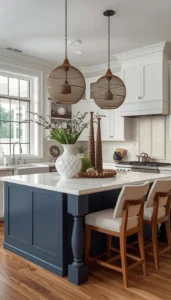
Sculptural decor can turn a kitchen island centerpiece into a strong design feature. A simple decorative object adds shape, personality, and visual interest without needing many extra pieces. This works especially well in modern or minimalist kitchens where one standout item can make the space feel curated. Choose sculptural decor that feels elegant, balanced, and easy to live with.
Choose one statement piece
One statement piece is often enough to create impact. A ceramic vessel, stone object, carved wood piece, or artistic bowl can become the island’s focal point. Keeping the centerpiece limited to one strong item prevents clutter and lets the shape stand out. This approach feels clean, confident, and stylish.
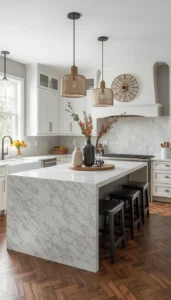
Keep shapes simple and elegant
Simple shapes usually look best on a kitchen island because they do not fight with cabinets, lighting, or countertop patterns. Rounded vessels, smooth bowls, and clean sculptural forms feel timeless. Avoid overly detailed objects that can make the surface feel busy. Elegant shapes keep the centerpiece calm and sophisticated.
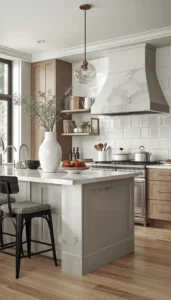
Match material tones with finishes
The material of the sculptural piece should relate to nearby finishes. Stone can echo countertops, wood can connect with floors or stools, and metal can match hardware or lighting. This small detail helps the centerpiece feel integrated into the kitchen design rather than placed randomly on the island.
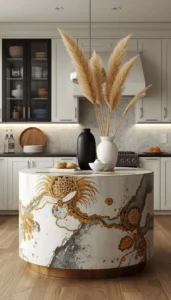
Seasonal Centerpieces for Easy Refresh
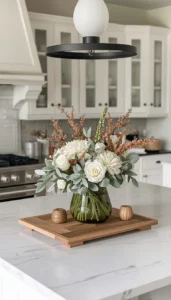
Seasonal centerpieces help the kitchen feel updated without requiring major changes. A few small swaps can bring a fresh mood to the island throughout the year. Natural accents, soft colors, and simple textures are often the most stylish choice. The goal is to reflect the season while keeping the kitchen practical, balanced, and timeless.
Rotate small decorative accents
Small changes can make the island feel new again. Swap candle colors, vase stems, bowl fillers, napkins, or tray accents as the season changes. This keeps the centerpiece interesting without adding too much decor. Rotating smaller pieces is also easier to store and helps the kitchen stay clean.
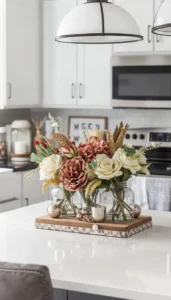
Use natural seasonal elements
Natural seasonal elements feel organic and elegant. Fresh flowers, branches, herbs, citrus, pinecones, or simple greenery can bring seasonal beauty to the island. These pieces add texture and freshness without looking overly themed. They also blend well with trays, bowls, candles, and other everyday kitchen decor.
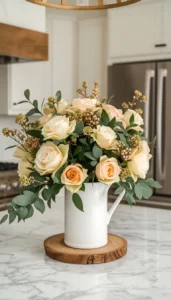
Keep color themes soft
Soft seasonal colors keep the centerpiece refined. Warm neutrals, muted greens, soft oranges, creamy whites, or gentle pastels can reflect the season without overwhelming the kitchen. Too many bold colors can make the island look crowded. A subtle palette feels calmer and easier to coordinate with existing finishes.
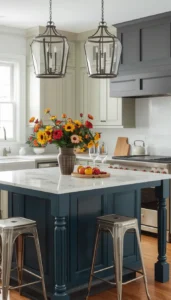
Functional Centerpieces That Serve Daily Use
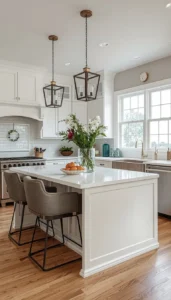
A functional centerpiece is perfect for a kitchen island because it combines beauty with purpose. Instead of using only decorative pieces, choose items that support cooking, serving, or organizing. Stylish jars, oil bottles, cutting boards, and containers can make the island look finished while keeping useful essentials close. This creates a centerpiece that feels natural in a working kitchen.
Use stylish oil bottles or jars
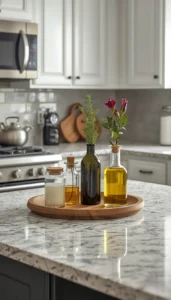
Oil bottles and jars can look beautiful when displayed with care. Choose glass, ceramic, or stoneware containers with clean shapes and simple labels. Grouping them on a tray keeps the look organized. This makes cooking essentials easy to reach while turning everyday items into part of the island styling.
Display cutting boards vertically
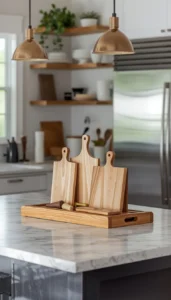
Cutting boards add warmth, texture, and function to a kitchen island. Displaying one or two boards vertically creates height without taking much surface space. Wood boards soften hard countertops and bring a natural element into the room. Keep the arrangement minimal so it feels useful rather than crowded.
Choose containers with clean designs
Clean containers help organize small kitchen items while maintaining visual balance. Use simple jars, baskets, crocks, or canisters for napkins, utensils, or everyday essentials. Neutral finishes work best because they blend with many kitchen styles. Good containers should make the island feel calmer, not heavier or more cluttered.
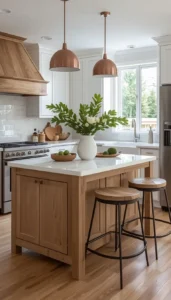
Layered Centerpieces for Depth and Texture
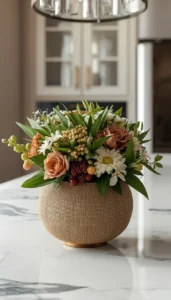
Layered centerpieces make a kitchen island feel styled and dimensional. By combining items with different heights, shapes, and finishes, the arrangement gains depth without needing too much decor. A layered centerpiece may include a tray, vase, bowl, candle, or small container. The key is to keep every piece connected through color, texture, or purpose.
Mix different heights
Different heights help the centerpiece feel more dynamic. A tall vase, medium candle, and low bowl can create a balanced arrangement. Height variation draws the eye naturally across the island. Keep taller items slim or placed carefully so they do not block conversation, light, or visibility across the kitchen.
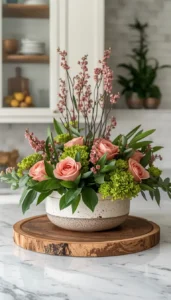
Combine textures thoughtfully
Texture adds richness to a centerpiece without relying on bright color. Pair smooth ceramic with woven fibers, glass with wood, or matte finishes with subtle shine. Two or three textures are usually enough. Thoughtful contrast makes the island feel warm and layered while still keeping the overall look clean.
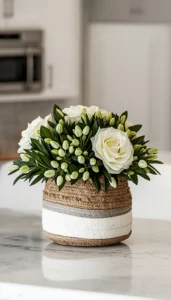
Leave breathing space around items
Breathing space is what keeps layered decor from becoming clutter. Leave small gaps between pieces so each item can be seen clearly. Open space also protects the island’s practical function. A centerpiece should feel styled but still allow room for cooking, serving, and everyday movement around the kitchen.
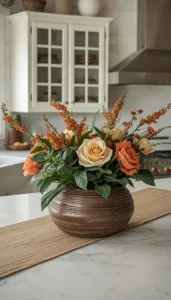
Minimalist Centerpieces for Clean Aesthetics
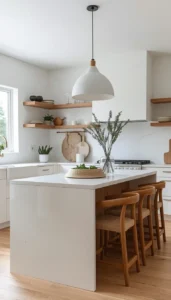
Minimalist centerpieces are ideal for kitchens where open surfaces and calm design matter most. This style focuses on fewer pieces, clean lines, and thoughtful placement. A single bowl, vase, plant, or tray can be enough to make the island feel finished. Minimal styling also keeps the kitchen easy to clean and comfortable to use.
Limit to one focal element
One focal element can make a stronger statement than several small pieces. A simple vase, sculptural bowl, or clean tray can anchor the island beautifully. This approach works well on smaller islands or busy countertops. By limiting decor, the centerpiece feels intentional, modern, and uncluttered.
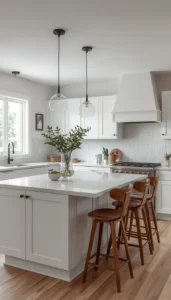
Keep colors neutral
Neutral colors help minimalist centerpieces feel calm and refined. White, beige, gray, black, wood, stone, and soft green tones work especially well. These colors blend easily with cabinets, counters, and lighting. A restrained palette allows shape and texture to stand out without making the island feel busy.
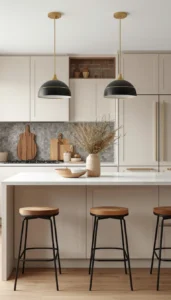
Maintain open prep areas
A minimalist centerpiece should never reduce the island’s function. Place decor where it leaves enough room for chopping, serving, or casual dining. Keeping prep areas open makes the kitchen feel larger and more practical. This balance is what makes minimalist styling both beautiful and useful.
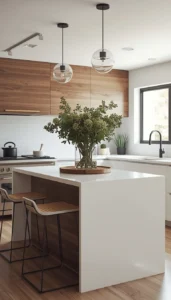
Centerpieces That Highlight Island Lighting
Lighting can make a kitchen island centerpiece look more polished and noticeable. Pendant lights, warm bulbs, and reflective finishes can all enhance the arrangement below. A good centerpiece works with the lighting rather than competing with it. Proper placement helps create a focal point while keeping the kitchen bright, open, and functional.
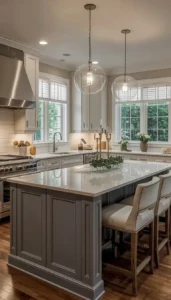
Position decor under pendant lights
Placing the centerpiece under pendant lights creates a natural focal point. The light draws attention to the arrangement and helps textures look more defined. A tray, bowl, vase, or candle grouping can look especially beautiful under soft lighting. This placement makes the island feel balanced and visually connected from above to below.
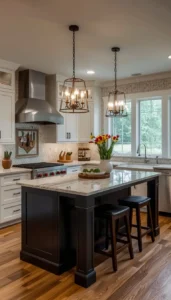
Avoid tall items blocking light
Tall decor can block light or interrupt the open feeling of the kitchen. Choose lower bowls, medium vases, or slim stems if the pendant lights hang close to the island. This keeps the surface bright and usable. A centerpiece should enhance the lighting, not create shadows or visual barriers.
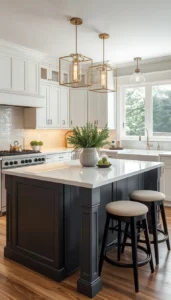
Choose reflective materials subtly
Subtle reflective materials can help bounce light around the island. Glass, polished ceramic, metal accents, or glossy bowls can add brightness without feeling flashy. Use these materials in small amounts for a refined effect. The goal is to enhance the glow while keeping the centerpiece tasteful and balanced.
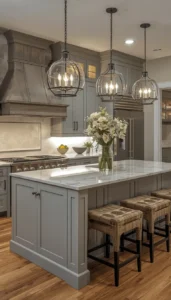
Create a Kitchen Island Centerpiece That Feels Effortless and Beautiful
A thoughtfully styled kitchen island centerpiece adds character, warmth, and polish to one of the most important surfaces in the home. The best centerpieces feel beautiful without interrupting daily routines. A tray can organize small essentials, greenery can bring freshness, fruit bowls can add color, and candles can create a cozy mood. Sculptural pieces, seasonal accents, and functional decor can also make the island feel more personal and complete.
If you enjoy styling kitchens, exploring more kitchen decor ideas, countertop styling inspiration, and home organization tips can help you continue creating a space that feels both beautiful and practical.
More Decor Ideas You’ll Love
- Kitchen Island Decor Ideas That Instantly Elevate Your Space
- Island Kitchen Ideas That Combine Function and Beautiful Design
- Mud Room Laundry Room Combo Ideas That Keep Your Home Organized and Stylish
- Small Narrow Laundry Room Ideas That Make Tight Spaces Feel Functional and Stylish
- Small Laundry Room Ideas That Maximize Space and Style
