
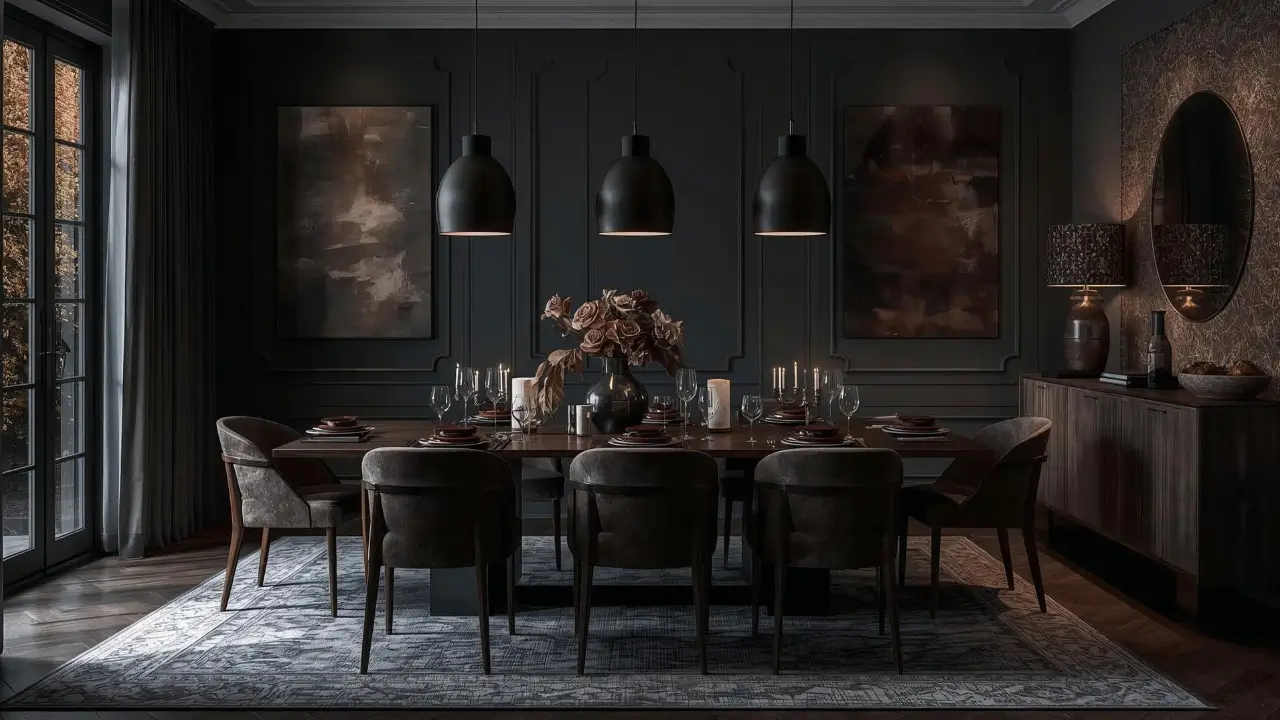
A dark and moody dining room creates a dramatic, intimate, and luxurious atmosphere that transforms everyday meals into special experiences. Deep colors, layered lighting, rich textures, and thoughtful styling work together to create a space that feels both inviting and sophisticated. This style works beautifully when the room has balance, contrast, and enough warmth to feel comfortable. Instead of making the space feel heavy, the right details can add depth, elegance, and personality. When designed with balance and intention, a moody dining room feels cozy rather than overwhelming. These decor ideas will help you design a dining space that feels stylish, comfortable, and visually striking.
When designed with balance and intention, a moody dining room feels cozy rather than overwhelming. These decor ideas will help you design a dining space that feels stylish, comfortable, and visually striking.
Deep Wall Colors That Set the Mood
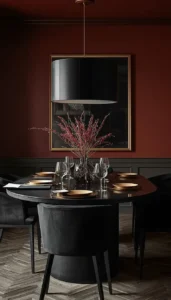
Wall color is the foundation of a dark dining room design. Rich shades create depth and character while giving the space a more intimate feeling. Colors like charcoal, navy, forest green, deep brown, and black can make the dining room feel refined when paired with warm lighting, artwork, and lighter accents.
Choose matte or satin finishes
Low shine paints prevent glare and enhance richness. Matte and satin finishes allow deep colors to look soft, smooth, and elegant on dining room walls. These finishes also help create a cozy effect because they absorb light gently instead of reflecting it harshly.
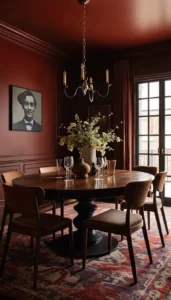
Balance dark walls with light accents
Lighter trims and artwork prevent heaviness. Cream molding, pale artwork, soft curtains, or light tableware can bring relief to a deep color palette. These accents help the room feel layered and stylish instead of closed in or overly dark.
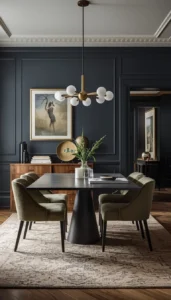
Test colors in different lighting
View paint shades at different times of day before finalizing. A color can look warm in evening light and cooler during the day. Testing samples on different walls helps you choose a shade that feels rich, balanced, and comfortable in your dining room.
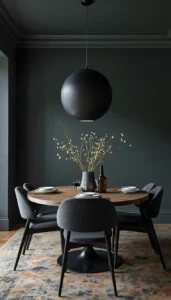
Dramatic Lighting for a Cozy Glow
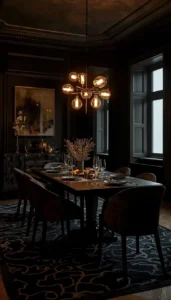
Lighting is essential in dark spaces to maintain warmth and visibility. A moody dining room needs lighting that highlights the table, softens the walls, and creates a welcoming atmosphere. Instead of relying on one bright fixture, use several light sources to add depth and flexibility.
Use layered lighting
Combine ceiling lights, wall sconces, and candles. Layered lighting gives the room dimension and allows you to adjust the mood for different meals or gatherings. A chandelier can define the table, while sconces and candles add softness around the room.
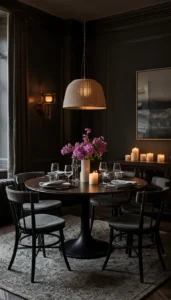
Select warm color temperatures
Warm bulbs soften dark surroundings. Soft golden light makes deep wall colors, wood furniture, and metallic accents feel more inviting. Avoid cool white bulbs because they can make a moody dining room feel harsh, flat, or less comfortable.
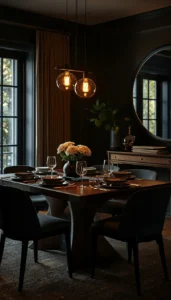
Highlight the dining table
Focus lighting directly above the table for function and style. A pendant or chandelier centered over the table creates a clear focal point. It also makes the dining area feel intentional while keeping meals comfortable and well lit.
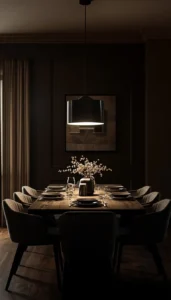
Statement Furniture With Rich Finishes
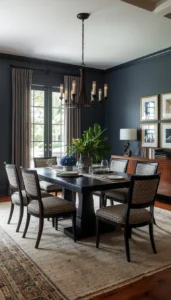
Furniture anchors the mood of the dining room and adds visual weight. In a dark and moody space, the table, chairs, and storage pieces should feel substantial but not overwhelming. Rich finishes, soft upholstery, and thoughtful shapes help the room feel elegant, grounded, and comfortable.
Choose dark wood tones
Walnut, espresso, and mahogany create depth. These finishes add warmth and timeless character to a moody dining room. Dark wood works especially well with deep wall colors, warm lighting, brass details, and textured rugs.
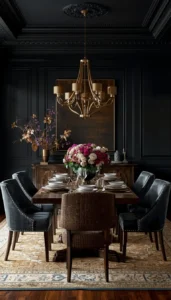
Add upholstered chairs
Fabric seating enhances comfort and softness. Upholstered chairs can balance the strong look of dark walls and wood furniture. Choose velvet, linen, boucle, or textured fabric in rich or neutral tones to make long meals feel more comfortable.
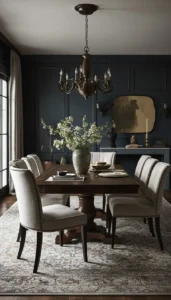
Mix textures thoughtfully
Balance wood with metal or glass accents. A dark wood table can feel lighter when paired with metal lighting, glass vases, or ceramic decor. Mixing materials keeps the dining room interesting and prevents the space from feeling too heavy.
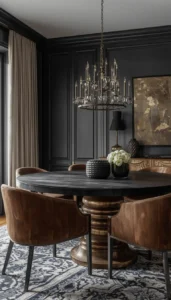
Metallic Accents for Subtle Contrast
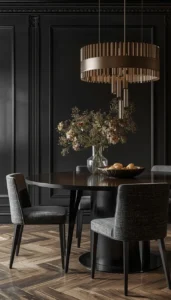
Metal finishes brighten moody interiors without overpowering them. Brass, gold, bronze, blackened metal, or antique finishes can add a refined glow to the dining room. The key is using metal in small, intentional ways so it supports the dark palette rather than dominating it.
Use brass or gold details
Warm metals complement dark palettes. Brass candle holders, gold frames, or bronze hardware can add warmth against deep walls. These finishes create gentle contrast and make the dining room feel more elegant without becoming too flashy.
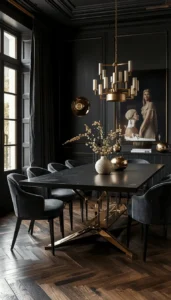
Incorporate metallic lighting fixtures
Chandeliers and pendants add elegance. A metal light fixture above the dining table can become a beautiful focal point. Choose a finish that works with your furniture, wall color, and other accents so the room feels cohesive.
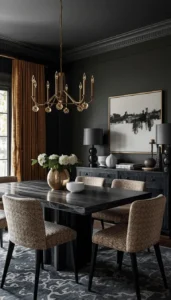
Keep metals consistent
Limit finishes to one or two tones. Too many metal finishes can make the space feel busy. Repeating the same finish through lighting, frames, hardware, or table decor keeps the moody dining room polished and intentional.
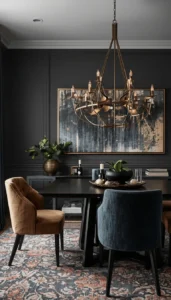
Textured Walls and Architectural Details
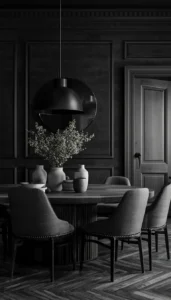
Texture adds dimension and prevents dark rooms from feeling flat. In a moody dining room, walls can become a major design feature through paneling, molding, wallpaper, or subtle surface details. Texture helps shadows feel intentional and gives the room a more custom, layered appearance.
Install wood paneling or molding
Wall details enhance visual interest. Paneling, picture frame molding, or vertical wood details can make deep wall colors feel richer. These features add structure and character, especially when painted in the same moody shade as the walls.
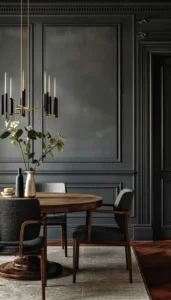
Use wallpaper with subtle patterns
Dark prints add depth without clutter. A tone on tone wallpaper, botanical print, or soft geometric pattern can make the dining room feel dramatic and refined. Choose a pattern that adds movement while still allowing the room to feel calm.
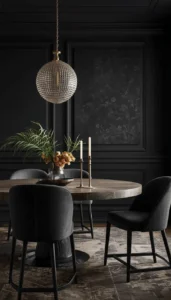
Add wainscoting for structure
Lower wall panels create balance. Wainscoting can break up tall dark walls and give the dining room a more finished look. It also adds architectural charm and works well with both classic and modern moody interiors.
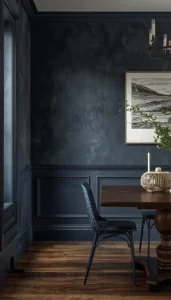
Layered Table Styling for Visual Interest
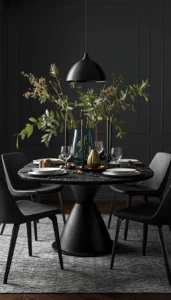
Table decor plays a major role in enhancing the moody atmosphere. A dining table should feel styled but still practical for meals. Deep linens, natural centerpieces, candles, and mixed materials can make the table feel elegant while supporting the room’s bold and intimate mood.
Use dark table linens
Deep toned runners and placemats add richness. Charcoal, burgundy, forest green, navy, or chocolate brown linens can make the table feel more dramatic. Pair them with lighter plates or metallic accents to create contrast and balance.
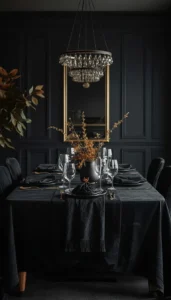
Add organic centerpieces
Flowers, branches, and greenery soften the look. A low arrangement with dark florals, dried stems, or fresh greenery can bring life to the table. Organic shapes help balance strong furniture and deep colors with natural movement.
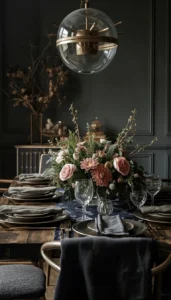
Mix materials on the table
Combine ceramic, glass, and metal elements. A ceramic vase, glass candle holder, and brass accent can add quiet depth to the setting. Mixing textures makes the table feel collected without needing too many decorative pieces.
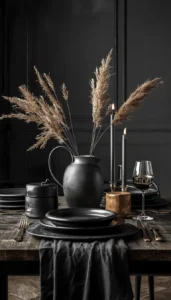
Rugs That Ground the Space
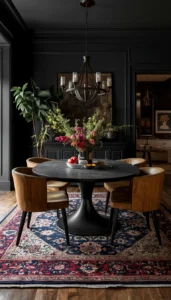
Area rugs add warmth and help define the dining zone. In a dark dining room, a rug can soften hard flooring, add pattern, and make the space feel more complete. The right rug should be practical for dining while supporting the room’s rich and layered design.
Choose low pile rugs
They are easier to clean under dining tables. Low pile styles allow chairs to move smoothly and are more practical for spills or crumbs. This makes the dining room more functional while still adding softness and comfort underfoot.
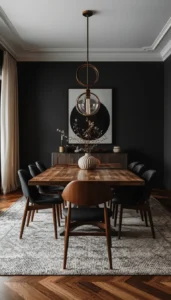
Select darker patterns
They hide stains and maintain mood. A rug with deep colors, muted patterns, or vintage inspired tones can blend beautifully with moody decor. Subtle pattern adds depth while making everyday maintenance feel easier.
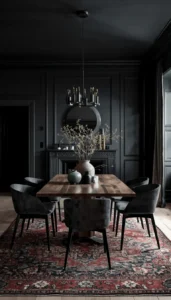
Ensure proper sizing
Chairs should remain on the rug when pulled out. A rug that is too small can make the dining area feel awkward. Choose a size that extends beyond the table so the room feels balanced, comfortable, and well planned.
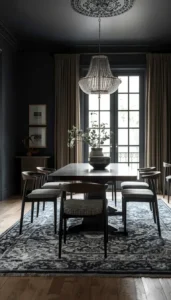
Window Treatments for Controlled Light
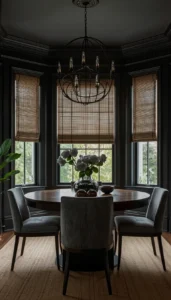
Window decor influences brightness and privacy in dark dining rooms. Curtains or shades can soften daylight, add texture, and support the moody design. The goal is to control light while keeping the room from feeling closed off or overly heavy during the day.
Use sheer layered curtains
They soften sunlight without blocking it. Sheers can filter daylight and make dark walls feel more gentle. Pairing sheer curtains with heavier panels gives flexibility, allowing the room to feel bright during the day and intimate at night.
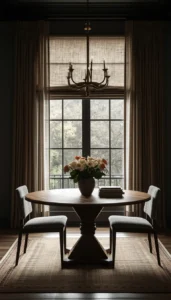
Choose rich fabric textures
Velvet and linen enhance luxury. Velvet adds drama and softness, while linen brings a more relaxed and natural feel. Both can work beautifully in a moody dining room when chosen in deep or neutral tones.
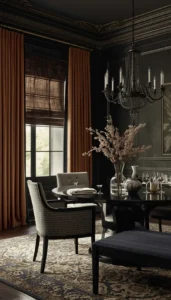
Match curtains with wall tones
Creates a cohesive appearance. Curtains in a similar shade to the walls can make the room feel taller and more seamless. This approach adds depth while keeping the overall look calm, elegant, and visually connected.
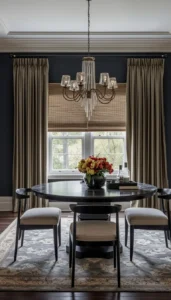
Artwork That Enhances Drama
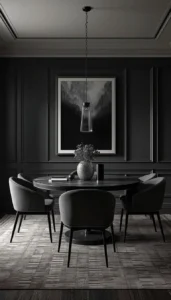
Wall art adds personality and strengthens the visual impact. In a dark dining room, artwork can create contrast, highlight the color palette, and make the space feel more curated. The best pieces feel intentional and large enough to stand out against moody walls.
Choose high contrast artwork
Light colored art stands out on dark walls. Cream, white, gold, or soft neutral details can create a striking effect against charcoal, navy, or black walls. High contrast artwork helps brighten the room while keeping the dramatic style.
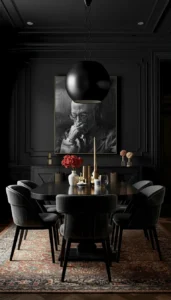
Use oversized pieces
Large artwork creates strong focal points. One oversized painting or print can make the dining room feel sophisticated and complete. Larger pieces often look more refined than several small items, especially in a dark and elegant space.
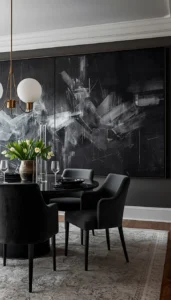
Frame art in simple styles
Clean frames keep the look refined. Thin black, wood, brass, or simple neutral frames allow the artwork to remain the focus. Avoid overly busy frames unless they match the room’s style and add to the overall mood.
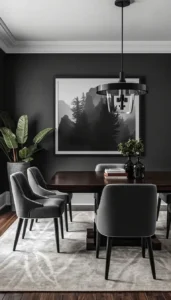
Natural Elements for Balance
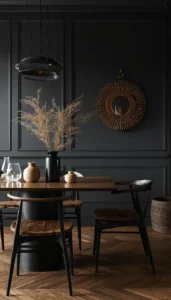
Natural accents bring warmth and prevent dark spaces from feeling heavy. Greenery, wood, stone, ceramic, and organic textures make the dining room feel more grounded and comfortable. These elements soften bold colors and help create a space that feels dramatic but still welcoming.
Add indoor plants
Greenery refreshes the room. A plant in the corner, a small arrangement on a sideboard, or greenery on the table can bring life to a dark dining space. Deep green leaves look especially beautiful against moody walls.
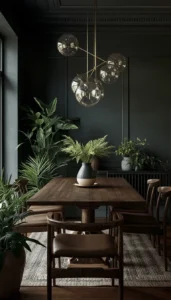
Use wooden accessories
Natural wood softens bold colors. Wood bowls, trays, candle holders, or frames add warmth and texture without changing the room’s dramatic feel. These accents help balance metal, glass, and dark painted surfaces.
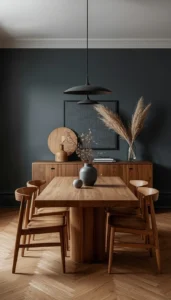
Incorporate stone decor
Stone textures add depth and grounding. A marble tray, stone bowl, ceramic vase, or clay vessel can make the dining room feel more layered. Natural finishes add quiet elegance and prevent the decor from feeling too polished or flat.
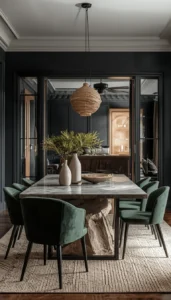
Create a Dining Room That Feels Intimate and Memorable
A dark and moody dining room invites connection, conversation, and comfort. With rich colors, layered lighting, textured surfaces, and intentional accents, your dining space can feel both dramatic and welcoming. Start with deep wall colors, then balance them with warm light, comfortable furniture, natural textures, and carefully chosen metallic details. Keep the table styled but functional, use rugs and curtains to soften the space, and choose artwork that adds personality without clutter. When every element works together, a moody dining room becomes more than a bold design choice. It becomes an intimate, elegant, and memorable space for everyday meals and special gatherings.
Explore more interior styling ideas, statement lighting inspiration, and modern dining room decor tips to continue creating spaces that feel refined and personal.
More Decor Ideas You’ll Love
- Open Layout Living Room Dining Room Ideas for a Stylish and Connected Space
- Dining Room Decor Ideas to Create a Stylish and Inviting Space
- Cozy Teen Bedroom Ideas for a Comfortable and Stylish Personal Space
- Cozy Guest Bedroom Ideas to Make Every Visitor Feel at Home
- Moody Bedroom Ideas That Create a Cozy and Sophisticated Retreat
