
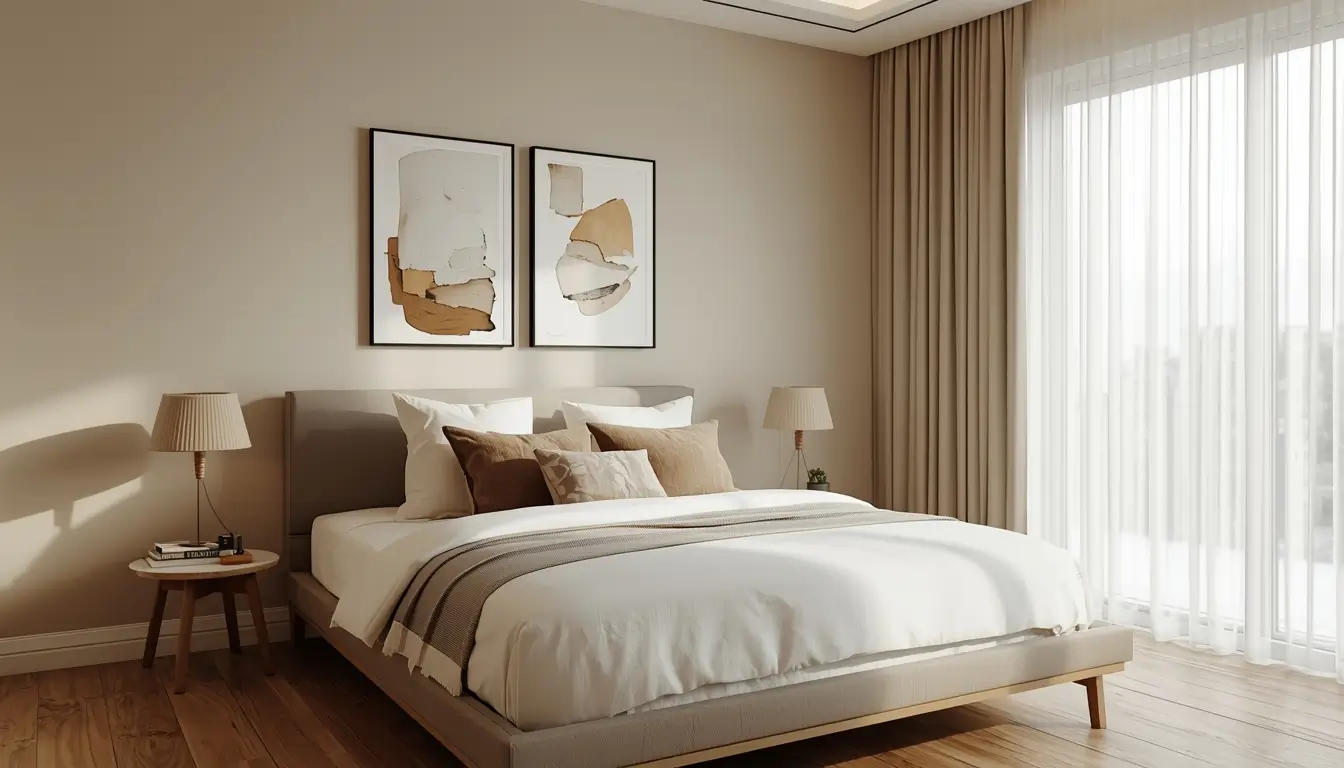
A bedroom does not need a traditional headboard to feel complete. Many modern and cozy bedrooms are designed without one, using creative alternatives that add style, personality, and visual interest. No headboard bedroom ideas focus on flexibility, simplicity, and thoughtful styling that keeps the space feeling open and balanced. From painted wall details and artwork to textiles, shelving, wallpaper, and layered bedding, there are many ways to make the bed area feel finished. Whether you prefer a minimalist look or a layered and cozy feel, these no headboard bedroom ideas offer smart solutions that transform the bed area into a beautiful focal point.
Whether you prefer a minimalist look or a layered and cozy feel, these no headboard bedroom ideas offer smart solutions that transform the bed area into a beautiful focal point.
Statement Wall Paint Behind the Bed
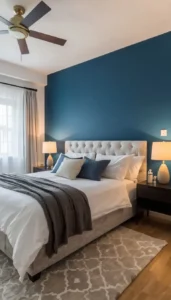
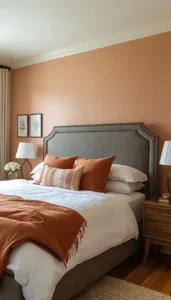
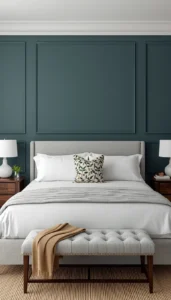
Paint can define the bed area without adding furniture. A painted wall behind the bed creates instant focus while keeping the room open and uncluttered. This is a simple option for small bedrooms, rental friendly updates, or minimalist spaces where a bulky headboard may feel unnecessary.
Use a bold or contrasting color
A deeper shade creates a strong focal point. Colors like charcoal, olive, navy, rust, or warm brown can make the bed area feel grounded. Choose a color that complements your bedding and furniture so the wall feels intentional rather than disconnected.
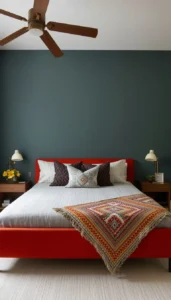
Keep edges clean and intentional
Straight lines give a polished look. If you paint only part of the wall or create a defined section, crisp edges are important. Clean paint lines make the design feel modern, neat, and purposeful, especially in bedrooms without a physical headboard.
Balance with neutral bedding
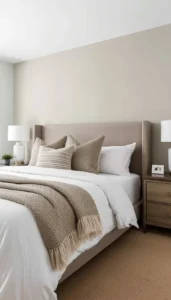
This keeps the design from feeling heavy. When the wall color is strong, softer bedding can create balance. Cream, beige, white, gray, or muted tones help the bed feel calm while allowing the painted wall to remain the main feature.
Wall Paneling for Subtle Structure
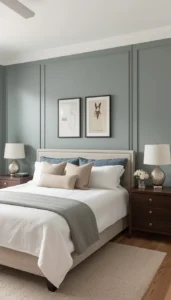
Paneling adds texture and architectural interest. It can make a no headboard bedroom feel more finished without adding bulky furniture. Simple wall paneling creates structure behind the bed, giving the room depth, warmth, and a custom look while still keeping the overall design clean.
Choose simple panel designs
Clean lines feel modern and timeless. Vertical slats, board and batten, or flat panel details can frame the bed beautifully. Avoid overly busy patterns if you want the bedroom to remain calm, balanced, and easy to style.
Paint paneling in soft tones
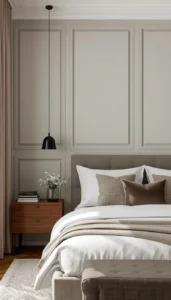
Muted colors keep the look calm. Soft white, beige, greige, sage, or warm gray can make paneling feel elegant without overpowering the room. These shades add subtle detail while still allowing bedding, lighting, and decor to shine.
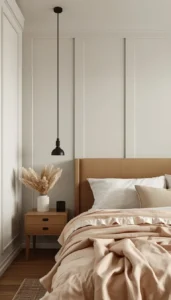
Extend paneling beyond bed width
This visually anchors the bed. Paneling that reaches wider than the mattress creates a stronger focal point and makes the bed area feel intentional. This technique works especially well when the bed has no frame detail or headboard.
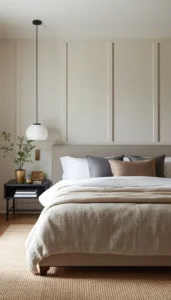
Large Scale Artwork as a Headboard Alternative
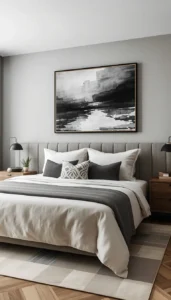
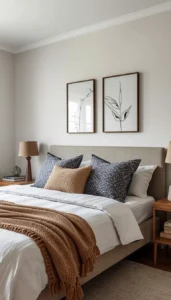
Artwork can replace a traditional headboard beautifully. A large piece above the bed creates height, personality, and visual focus without adding furniture. This option works well in modern, cozy, boho, or classic bedrooms because artwork can be chosen to match the room’s mood.
Choose one oversized piece
Large art creates impact without clutter. A single artwork can make the bed wall feel complete and stylish. Choose a size that feels proportional to the bed so the piece looks balanced rather than too small or overwhelming.
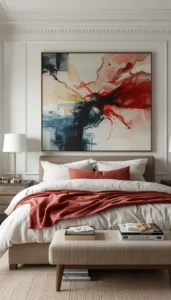
Keep artwork centered above the bed
Balanced placement feels intentional. Centering the artwork with the mattress helps the wall look organized and calm. Leave enough space between the pillows and frame so the arrangement feels comfortable, safe, and visually polished.
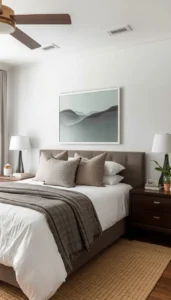
Stick to calming color palettes
Soft tones suit bedroom spaces best. Abstract art, landscapes, botanical prints, or muted designs can add personality without disturbing the restful mood. Choose colors that connect with your bedding, curtains, or rug for a cohesive look.
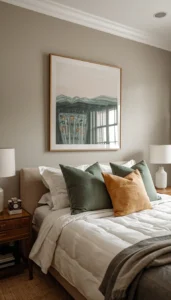
Tapestries and Fabric Wall Hangings
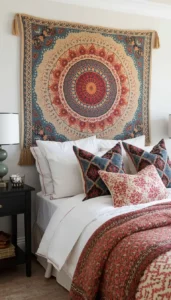
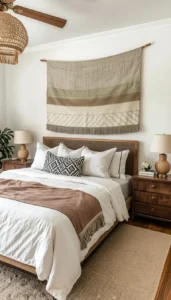
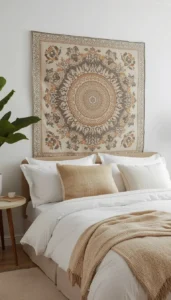
Textiles add softness and warmth. A tapestry or fabric wall hanging can make a bedroom feel cozy while replacing the visual weight of a headboard. This idea works especially well in relaxed, boho, earthy, or layered bedrooms where texture matters.
Use natural or woven fabrics
They enhance comfort and texture. Linen, cotton, macrame, wool, or woven wall hangings bring softness to the bed area. Natural fabrics make the room feel warmer and more inviting while keeping the design relaxed and personal.
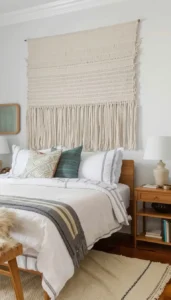
Hang fabric wide enough
Coverage helps frame the bed area. A wall hanging should feel connected to the mattress size, not like a small floating accent. Wider fabric creates a headboard like effect and gives the bed wall a stronger visual presence.
Keep patterns subtle
This maintains a relaxing atmosphere. Soft patterns, muted colors, or simple woven designs work best in bedrooms. Avoid overly loud prints if the goal is to create a calm sleeping space that still feels stylish and expressive.
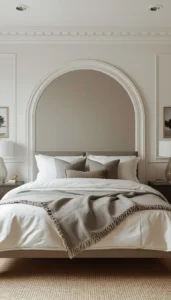
Painted Arch or Shape Behind the Bed
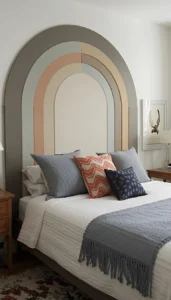
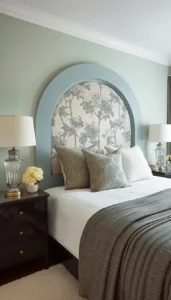
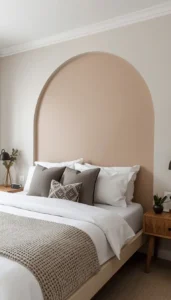
Decorative paint shapes add character. A painted arch, rectangle, circle, or organic shape can create the feeling of a headboard without furniture. This approach is affordable, flexible, and perfect for adding personality to a bedroom while keeping the bed area light.
Use curved or geometric designs
Shapes add visual interest. A soft arch can make the room feel relaxed and cozy, while a rectangle or circle can feel modern and clean. Choose a shape that matches your bedroom style and feels balanced with the bed size.
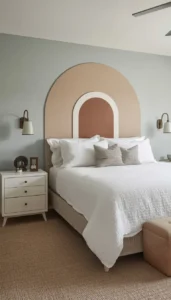
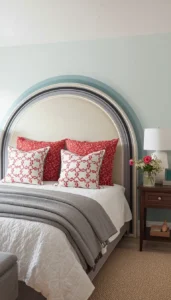
Choose neutral or earthy colors
They blend easily with decor. Beige, clay, sage, taupe, warm gray, or soft brown can add depth without feeling too bold. These colors pair well with wood furniture, layered bedding, and natural textures.
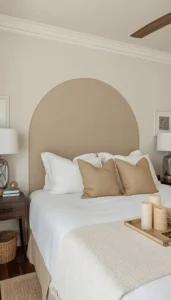
Center the design with the bed
Alignment creates balance. The painted shape should sit directly behind the bed so it feels like a planned feature. Good alignment helps the room look finished and prevents the design from feeling random or misplaced.
Shelving Above the Bed for Style and Function
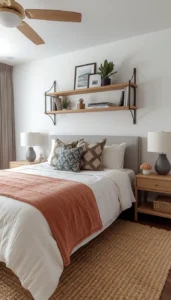
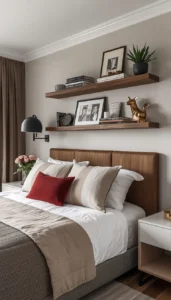
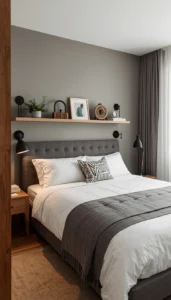
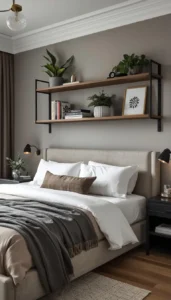
Shelves offer decor and storage. A floating shelf above the bed can create a clean headboard alternative while giving you space for art, books, plants, or small decorative pieces. The key is keeping the shelf styled lightly and installed safely.
Use floating shelves
They keep the space light and modern. Floating shelves create visual interest without taking up floor space. A simple shelf in wood, white, black, or a matching wall color can make the bed area feel styled and functional.
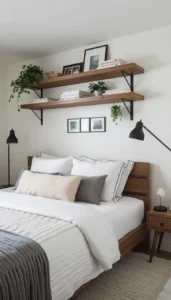
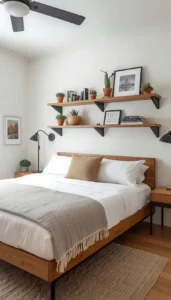
Style shelves minimally
Too much decor can feel cluttered. Choose a few items such as framed art, a small plant, books, or a ceramic vase. Leaving open space keeps the shelf calm and prevents the bed area from feeling visually heavy.
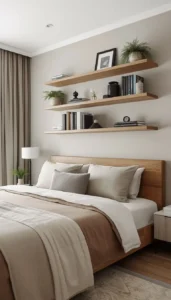
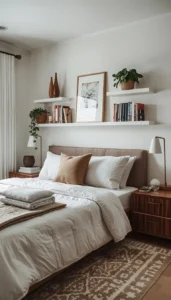
Secure shelves properly
Safety is essential above the bed. Shelves should be firmly attached to wall studs or proper anchors. Avoid placing heavy or fragile items above pillows, and keep decor stable so the space remains practical and comfortable.
Accent Wallpaper for a Defined Bed Zone
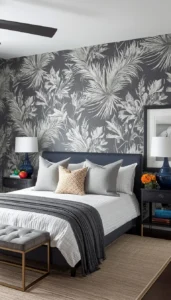
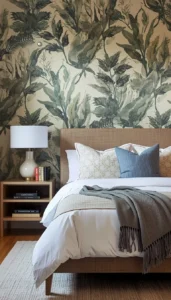
Wallpaper adds pattern and depth. It can make a no headboard bedroom feel designed by turning the wall behind the bed into a clear focal point. Soft prints, textured wallpaper, or muted designs work beautifully when balanced with simple furniture and bedding.
Choose subtle patterns
Soft designs feel restful. Gentle florals, linen textures, small geometric prints, or nature inspired patterns can add charm without overwhelming the bedroom. Subtle wallpaper gives the bed wall interest while keeping the room calm and relaxing.
Apply wallpaper to one wall only
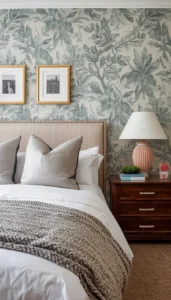
This keeps the look balanced. Using wallpaper behind the bed creates impact without making the whole room feel busy. One accent wall is often enough to define the sleeping area and replace the need for a traditional headboard.
Pair with simple furniture
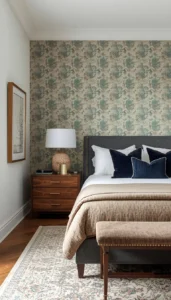
Let the wall stand out. When wallpaper has pattern or texture, choose nightstands, lamps, and bedding with cleaner lines. Simple furniture keeps the room from feeling crowded and allows the accent wall to feel intentional.
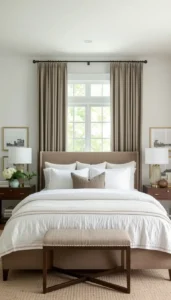
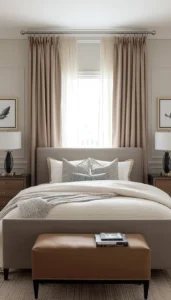
Floor to Ceiling Curtains Behind the Bed
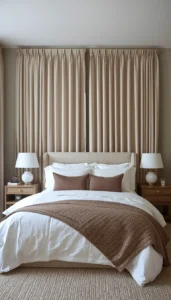
Curtains add softness and height. Hanging fabric behind the bed can create a dreamy backdrop that feels cozy, elegant, and complete. This idea works especially well when you want the bedroom to feel warm and layered without using heavy furniture.
Hang curtains high
This creates the illusion of taller ceilings. Placing the curtain rod close to the ceiling draws the eye upward and makes the room feel more spacious. Floor length panels also add drama while keeping the bed area soft and refined.
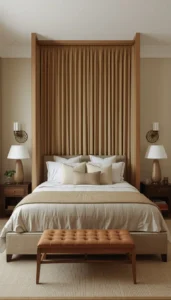
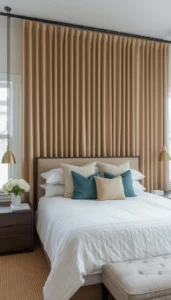
Use light flowing fabrics
They add elegance without heaviness. Linen, cotton, or sheer curtains can soften the wall and create gentle movement. These fabrics make the bedroom feel calm and airy, especially when paired with neutral bedding and warm lighting.
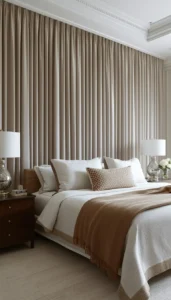
Choose neutral curtain colors
They blend easily with most styles. White, cream, beige, taupe, or soft gray curtains create a peaceful backdrop behind the bed. Neutral fabric also makes it easier to change bedding or decor without redesigning the entire room.
Decorative Mirrors for Visual Space
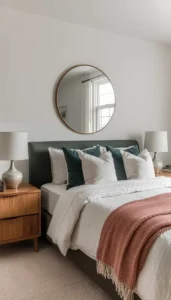
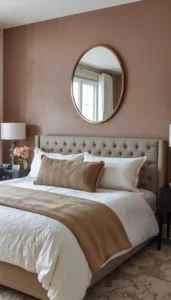
Mirrors add light and openness. They can make a no headboard bedroom feel larger while creating a stylish focal point above or behind the bed. Mirrors are especially useful in small bedrooms because they reflect light and reduce the feeling of heaviness.
Use one large mirror
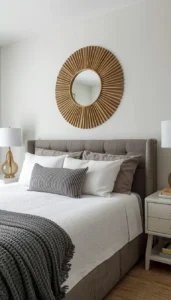
It creates a focal point. A large round, arched, or rectangular mirror can visually replace a headboard while adding brightness. Choose a shape that suits the room’s style and place it carefully so it feels centered and balanced.
Choose simple frames
Minimal frames keep the look clean. Wood, black, brass, or frameless mirrors can all work depending on the bedroom style. A simple frame prevents the mirror from feeling too decorative and keeps the focus on light and openness.
Place mirrors securely
Safety and balance are key. Mirrors above or near the bed must be installed properly with strong hardware. Choose a stable placement and avoid overly heavy designs if the wall or layout does not support them comfortably.
Layered Pillows and Bedding for a Cozy Look
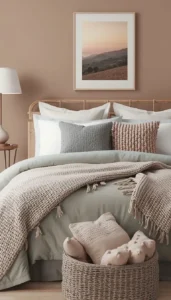
Bedding can define the headboard area. Without a headboard, pillows, throws, and bedding layers help add height, softness, and visual structure. This is one of the easiest ways to make a bed feel finished while keeping the room flexible and comfortable.
Use oversized pillows
They create visual height. Large sleeping pillows, euro pillows, or back cushions can fill the space where a headboard would normally sit. This makes the bed feel fuller, softer, and more complete without needing extra furniture.
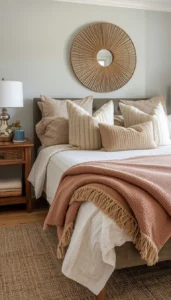
Layer different textures
This adds warmth and depth. Combine cotton sheets, linen pillowcases, a quilt, a knit throw, or velvet cushions for a cozy effect. Texture helps the bed area feel rich and inviting even when the overall color palette is simple.
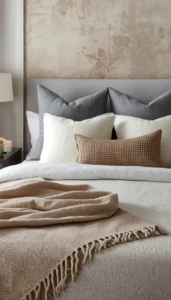
Keep colors cohesive
A unified palette feels intentional. Choose bedding colors that connect with the walls, rug, curtains, or artwork. Repeating similar tones makes the no headboard setup feel polished and prevents the bed from looking unfinished.
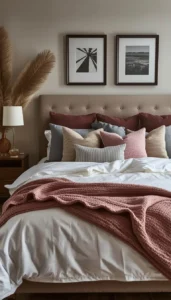
Create a No Headboard Bedroom That Feels Complete
A no headboard bedroom allows for creativity and flexibility while still feeling stylish and finished. By using paint, wall decor, textiles, wallpaper, paneling, mirrors, shelving, or layered bedding, you can design a bed area that feels intentional and visually appealing. The key is to create a clear focal point behind the bed while keeping the room balanced, comfortable, and easy to use. Choose the idea that fits your style, space, and budget, then support it with cohesive colors and thoughtful textures. With the right styling, a bedroom without a headboard can feel modern, cozy, and beautifully complete.
If you enjoy creative bedroom styling, exploring more bedroom decor and space saving ideas can help you continue designing spaces that feel comfortable, stylish, and uniquely yours.
