
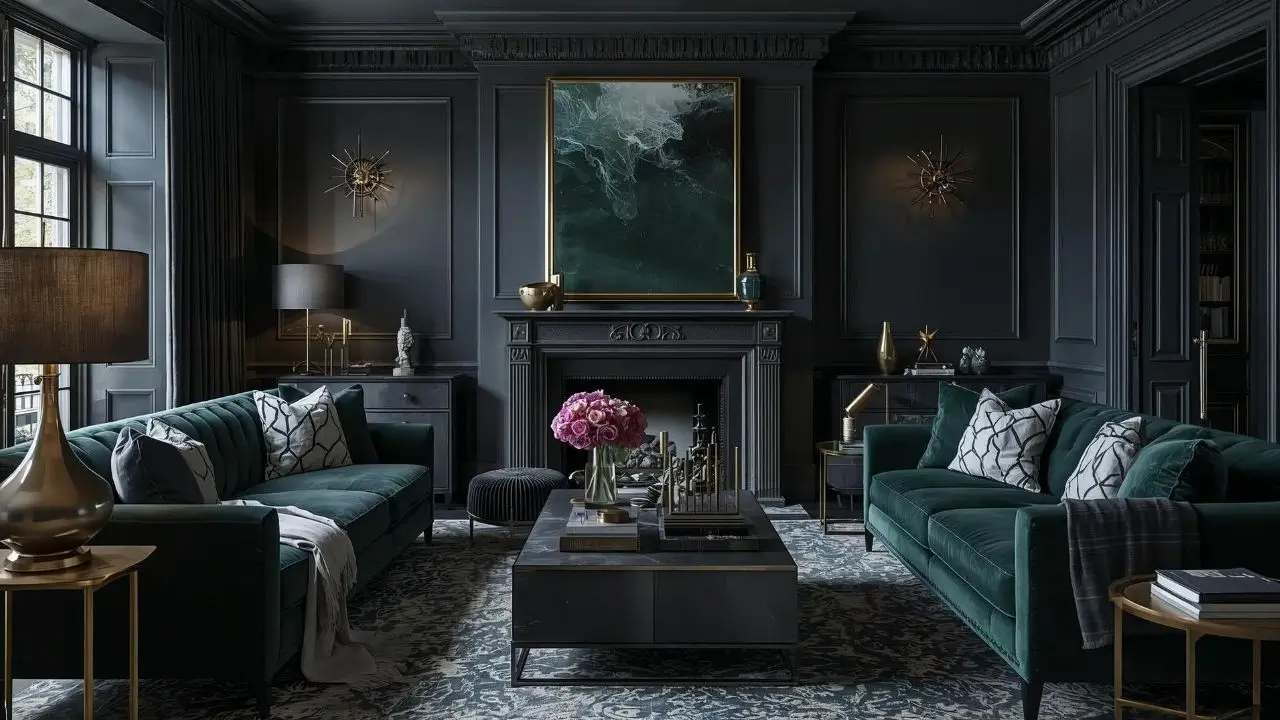
A moody living room creates a sense of depth, warmth, and sophistication. Rich colors, layered textures, and intentional lighting work together to transform an ordinary space into one that feels cozy and expressive. Instead of feeling dark or heavy, a well designed moody living room feels intimate, stylish, and welcoming. The key is balance. Deep tones need softness, bold details need breathing room, and dramatic styling should still support everyday comfort. These moody living room ideas focus on color, lighting, furniture, texture, and layout choices that help create a space that feels bold, relaxing, and easy to live in.
These moody living room ideas focus on balance, comfort, and thoughtful styling choices that help create a space that feels dramatic yet easy to live in.
Deep Color Palettes That Set the Mood
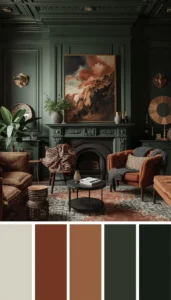
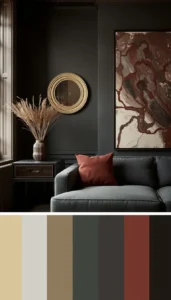
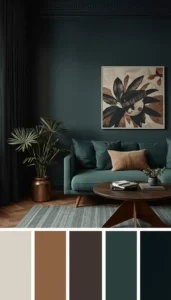
Color is the foundation of a moody living room. Deep tones create atmosphere, define the space, and make the room feel more intimate. A moody palette can be dramatic without feeling gloomy when it includes warmth, contrast, and repetition. The best color choices feel rich, grounded, and connected to the furniture, lighting, and decor.
Choose rich earthy shades
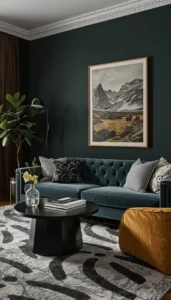
Deep greens, charcoal, navy, and warm brown create depth. These shades work beautifully on walls, sofas, rugs, or accent furniture. Earthy dark colors feel more inviting than flat black because they bring warmth and character while still creating a bold, atmospheric living room.
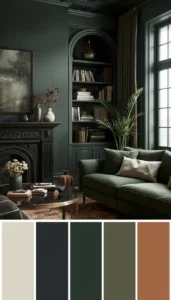
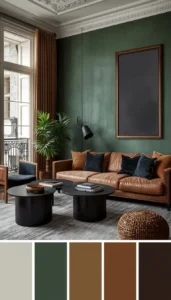
Balance dark walls with lighter accents
This prevents the room from feeling closed in. Cream pillows, beige curtains, pale artwork, or light wood details can soften deep walls and add visual relief. Lighter accents help the room feel layered and comfortable while keeping the moody look strong and intentional.
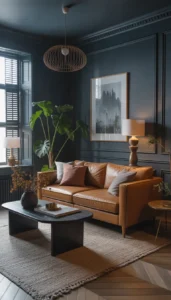
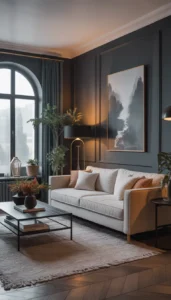
Use color consistently
A cohesive palette enhances the moody effect. Repeat your main colors through textiles, art, furniture, and decor so the room feels connected. Using a controlled range of tones makes the design look polished and prevents the space from feeling busy or mismatched.
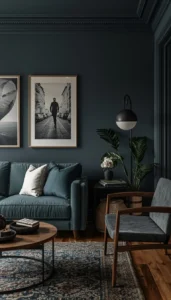
Layered Lighting for Atmosphere and Comfort
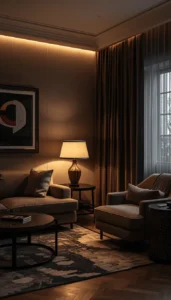
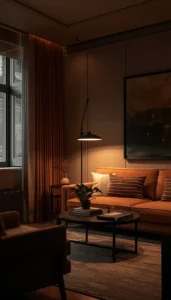
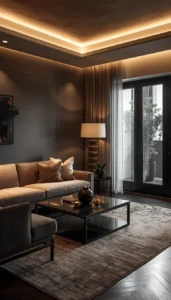
Lighting plays a key role in moody interiors. It softens dark colors, highlights textures, and makes the room feel warm rather than shadowy. A moody living room should have flexible lighting that works for relaxing, reading, entertaining, and quiet evenings. Layered light creates depth and keeps the atmosphere comfortable.
Use multiple light sources
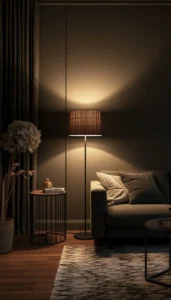
Table lamps, floor lamps, and wall lights add dimension. Instead of relying on one central fixture, spread lighting across the room. Lamps near seating, sconces near artwork, and accent lights on shelves help create a warm glow and make the room feel more inviting.
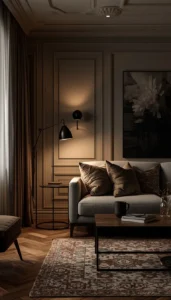
Choose warm lighting tones
Soft light enhances comfort and mood. Warm bulbs bring out the richness of dark paint, wood, leather, and textured fabrics. They also make the space feel relaxed in the evening, which is especially important in a living room designed for comfort.
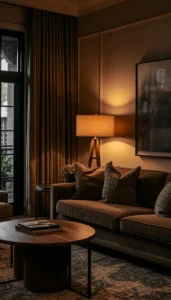
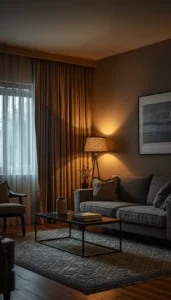
Avoid overly bright ceiling lights
Subtle lighting keeps the space intimate. Bright overhead lights can flatten dark colors and remove the cozy atmosphere. Use dimmers, shaded fixtures, and indirect lighting to create a softer effect that feels calm, dramatic, and easy to enjoy.
Textured Fabrics That Add Warmth
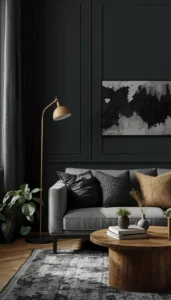
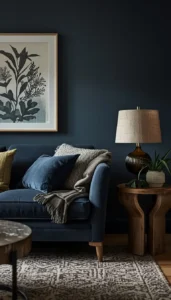
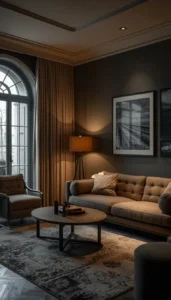
Texture helps soften dark colors. In a moody living room, fabric choices make the difference between a space that feels cold and one that feels cozy. Upholstery, pillows, throws, and curtains add comfort while giving the room depth. Rich textures also help darker palettes feel more luxurious and layered.
Use plush upholstery
Velvet and woven fabrics feel cozy. A deep velvet sofa, textured armchair, or boucle accent piece can add softness and visual interest. Plush materials catch light beautifully, making dark colors look richer while keeping the living room comfortable and inviting.
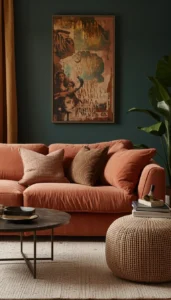
Layer throw pillows and blankets
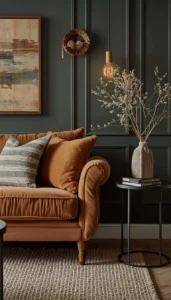
Soft layers add comfort and depth. Pillows and throws in wool, linen, cotton, or velvet can make seating feel warmer and more relaxed. Choose tones that connect with the room’s palette so the layers feel thoughtful rather than cluttered.
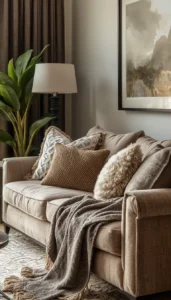
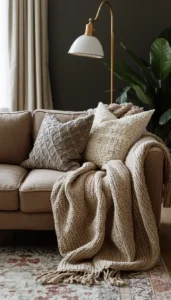
Mix textures thoughtfully
Combining smooth and tactile fabrics creates balance. Pair velvet with linen, leather with wool, or woven pillows with a smooth sofa. This mix keeps the room visually interesting while preventing any one texture from feeling too heavy or repetitive.
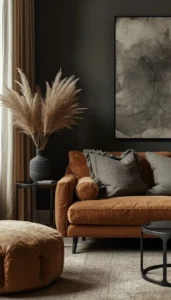
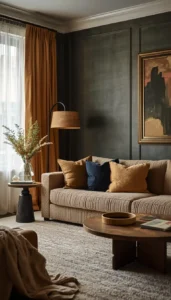
Dark Accent Walls for Visual Impact
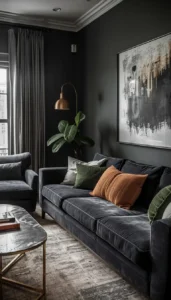
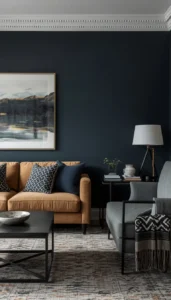
Accent walls add drama without overwhelming the room. They are a smart way to introduce a moody look if you do not want every wall dark. A single deep colored or textured wall can create a strong focal point and give the living room structure while keeping the overall design balanced.
Choose one focal wall
This keeps the design intentional. A wall behind the sofa, fireplace, or media area is often the best choice. Focusing the dark color in one place creates impact while allowing the rest of the room to feel open, layered, and comfortable.
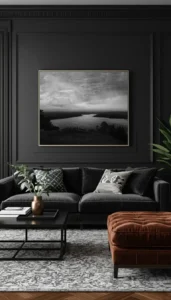
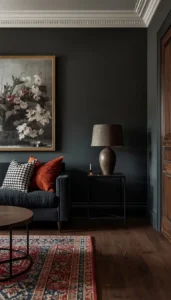
Use paint or textured finishes
Subtle texture adds interest. Matte paint, limewash, plaster, wood paneling, or textured wallpaper can make an accent wall feel richer. Texture brings movement to dark surfaces and prevents the wall from looking flat or unfinished.
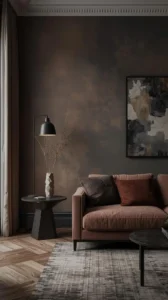
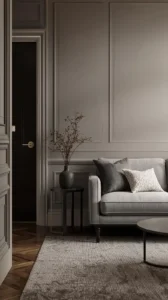
Pair with simple decor
Minimal accents allow the wall to stand out. A large artwork, mirror, or simple shelf may be enough. Keeping decor restrained helps the wall remain the main feature and prevents the room from feeling crowded or overly styled.
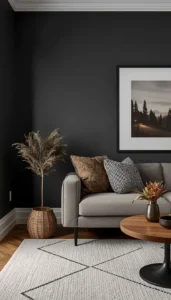
Natural Elements That Balance the Mood
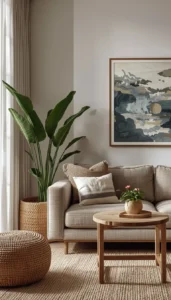
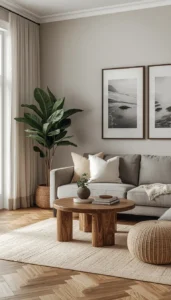
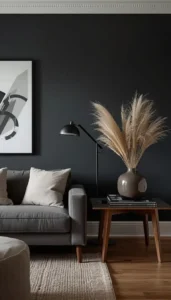
Organic materials keep moody spaces feeling grounded. Dark colors can feel intense on their own, but wood, stone, ceramic, and greenery add warmth and softness. These natural elements make the room feel more relaxed and livable while supporting the dramatic style.
Add wood accents
Natural wood warms up dark tones. A wood coffee table, sideboard, picture frame, or shelving unit can soften moody walls and furniture. Medium and dark wood tones work especially well because they add richness without breaking the cozy atmosphere.
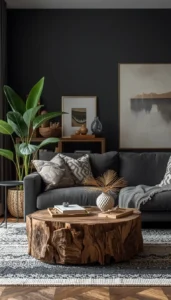
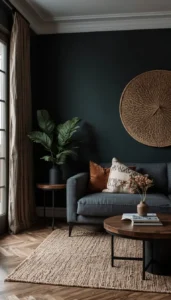
Incorporate stone or ceramic decor
They add texture and interest. Stone bowls, ceramic vases, clay planters, or marble trays bring organic character into the room. These details feel refined but natural, helping the living room look layered without adding unnecessary clutter.
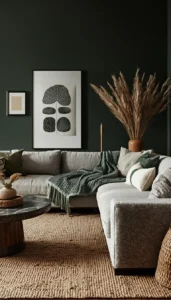
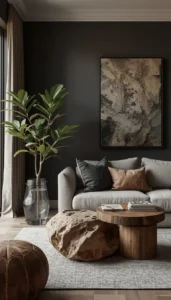
Use greenery sparingly
Plants bring freshness and contrast. A tall plant in a corner or a small arrangement on a table can soften dark colors. Deep green foliage blends beautifully with moody palettes while adding life, shape, and a calming natural touch.
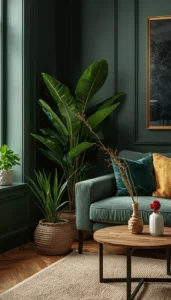
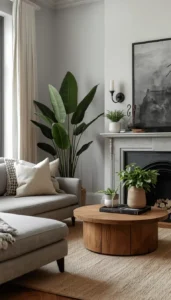
Statement Furniture for a Bold Look
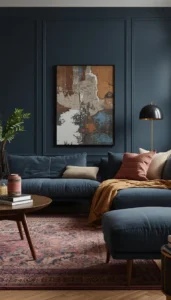
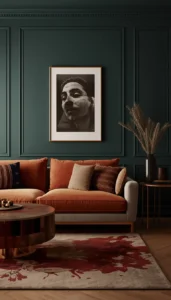
Furniture can enhance the moody aesthetic. Strong shapes, deep colors, and comfortable materials help define the living room’s personality. A statement sofa, chair, or coffee table can create focus without needing too much decor. The goal is to choose pieces that feel bold but still practical for daily use.
Choose pieces with strong shapes
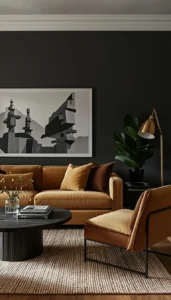
Clean lines add structure. A sculptural sofa, bold armchair, or solid coffee table can ground the room and make it feel more designed. Strong shapes work especially well with rich colors because they give the moody palette a clear visual framework.
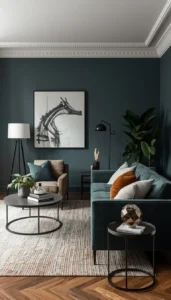
Use darker upholstery
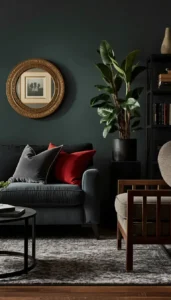
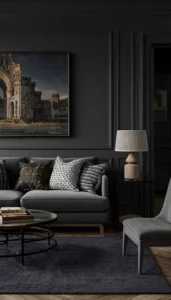
Deep colors support the overall mood. Charcoal, espresso, forest green, navy, or burgundy upholstery can make seating feel dramatic and cozy. Dark fabrics also pair well with lighter pillows, warm wood, and soft lighting for a balanced look.
Keep furniture comfortable
Moody does not mean impractical. Sofas and chairs should still feel supportive, soft, and easy to use. A living room should invite people to sit, relax, and stay, so choose furniture that blends bold style with everyday comfort.
Area Rugs That Anchor the Space
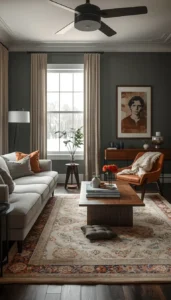
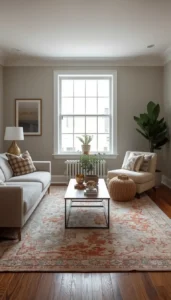
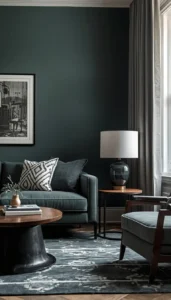
Rugs help define seating areas. In a moody living room, the right rug can connect furniture, add warmth, and soften the floor. Rugs also introduce texture and pattern without needing more wall decor. A well chosen rug makes the space feel grounded, cozy, and complete.
Choose rich textured rugs
They add warmth underfoot. Wool, woven, vintage inspired, or high texture rugs can bring softness to dark interiors. Rich textures make the living room feel more comfortable and help balance harder surfaces like wood, stone, or metal.
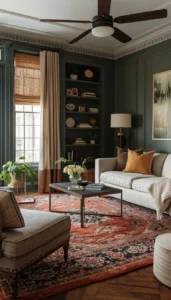
Use rugs large enough for furniture
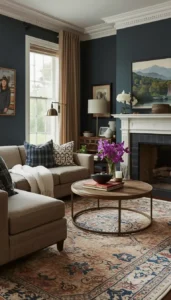
Proper sizing improves cohesion. A rug should connect the sofa, chairs, and coffee table so the seating area feels unified. If the rug is too small, the room can feel disconnected, while a larger rug creates a more polished layout.
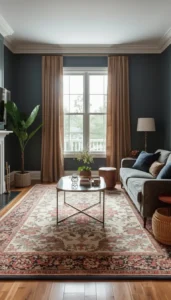
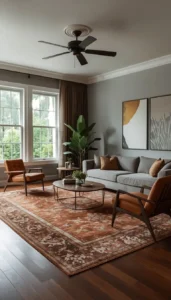
Stick to muted patterns
Subtle designs complement dark colors. Faded patterns, tonal designs, or low contrast motifs add interest without competing with the room’s mood. Muted rugs keep the space stylish and calm while adding enough detail to feel layered.
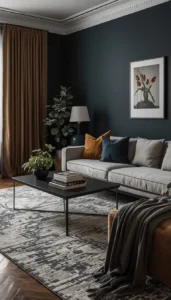
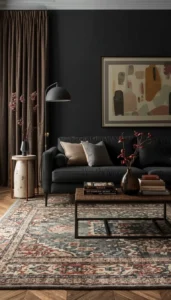
Wall Decor That Feels Intentional
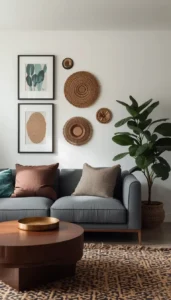
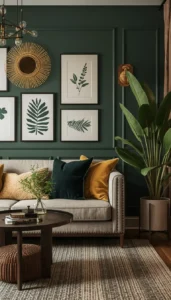
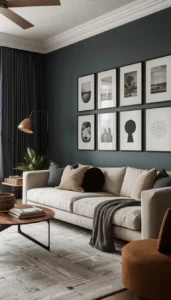
Wall decor should enhance the mood. In a moody living room, art and frames can add personality, depth, and visual focus. The best wall decor feels chosen with care and connects to the room’s color palette. A few strong pieces often look better than many small decorations.
Use large scale artwork
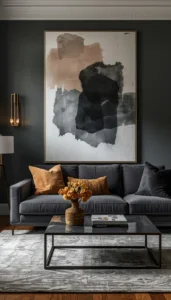
Bold art creates a focal point. One oversized piece above a sofa or fireplace can make the room feel more dramatic and finished. Choose artwork with deep tones, soft contrast, or expressive shapes that support the moody atmosphere.
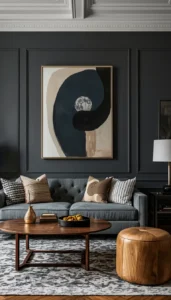
Choose dark or neutral frames
They blend into the palette. Black, walnut, bronze, or soft neutral frames work well with deep walls and rich furniture. Simple frames keep the artwork feeling refined and prevent the room from looking too busy.
Limit the number of pieces
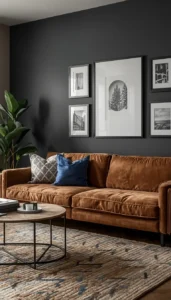
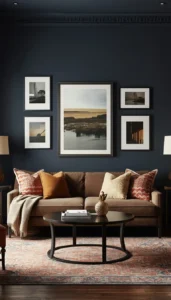
Less clutter keeps the space refined. Too many small frames can make dark walls feel crowded. Choose one large piece, a pair of coordinated artworks, or a small balanced gallery so the room remains calm, stylish, and intentional.
Window Treatments That Enhance Coziness
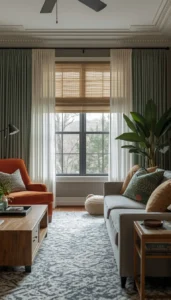
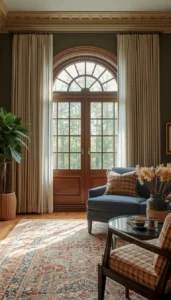
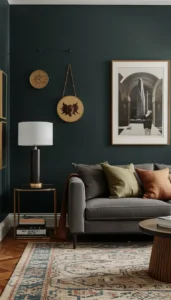
Curtains add softness and privacy. They also help control light, frame windows, and make a moody living room feel more intimate. The right window treatments can add height, texture, and warmth while supporting the room’s dramatic color palette and cozy atmosphere.
Use heavier fabrics
They enhance the cozy feel. Linen blends, velvet, cotton, or woven drapery can soften the room and add visual weight. Heavier fabrics also help make the living room feel more private, warm, and comfortable during evening hours.
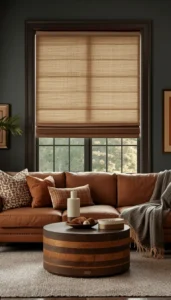
Choose dark or neutral tones
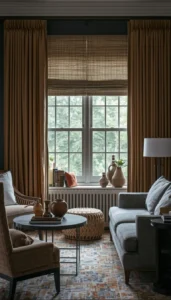
They complement moody colors. Deep curtains create drama, while beige, taupe, or warm gray panels soften darker walls. Choose the tone based on how much contrast you want, but keep the fabric connected to the room’s overall palette.
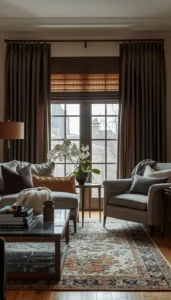
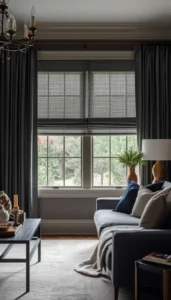
Hang curtains high
This adds visual height. Mounting curtain rods closer to the ceiling draws the eye upward and makes the room feel taller. Letting curtains fall to the floor also gives the living room a more polished, elegant, and cozy look.
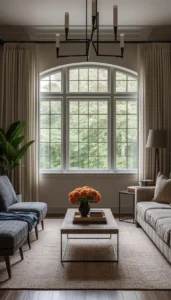
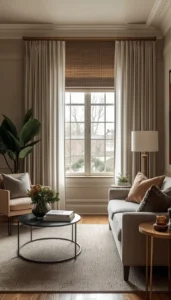
Layouts That Encourage Relaxation
Furniture arrangement affects comfort. A moody living room should feel intimate but not cramped, dramatic but still easy to move through. The layout should support conversation, lounging, and everyday use. Balanced placement helps dark colors and bold furniture feel inviting rather than heavy.
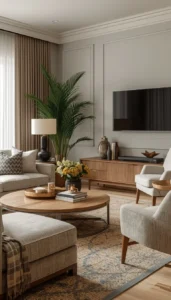
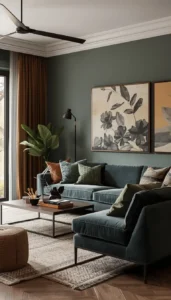
Arrange seating for conversation
It creates intimacy. Place sofas and chairs so people can face each other naturally. A conversational layout makes the living room feel welcoming and supports relaxed gatherings, quiet evenings, and comfortable daily use.
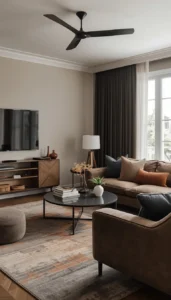
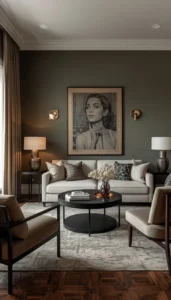
Keep pathways clear
Good flow prevents heaviness. Open walkways make the room feel easier to use and less crowded. Avoid blocking doors, windows, or main routes with oversized furniture, especially in darker rooms where tight layouts can feel heavier.
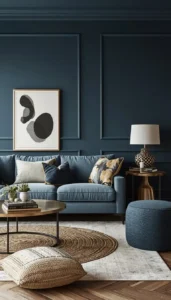
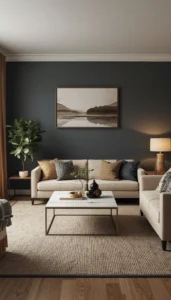
Balance the room visually
Even distribution feels harmonious. Spread color, lighting, and furniture weight throughout the space so one side does not feel too dark or crowded. Visual balance helps the living room feel calm, polished, and comfortable from every angle.
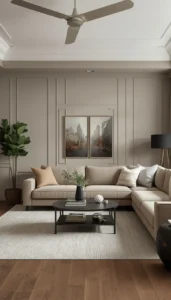
Create a Moody Living Room You Will Love
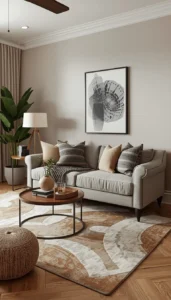
A moody living room is about creating a space that feels expressive, comfortable, and inviting. By layering deep colors, soft textures, warm lighting, natural materials, and intentional decor, you can design a room that feels both dramatic and welcoming. Start with a rich color palette, then add contrast through lighter accents, wood tones, plush fabrics, and carefully placed lighting. Keep the layout open enough for comfort and choose furniture that supports everyday relaxation. When the details feel balanced, a moody living room becomes more than a bold design choice. It becomes a cozy, stylish space you will love using every day.
If you enjoy bold interiors and atmospheric styling, exploring more living room decor and mood driven design ideas can help you continue creating spaces that feel rich and thoughtfully styled.
