
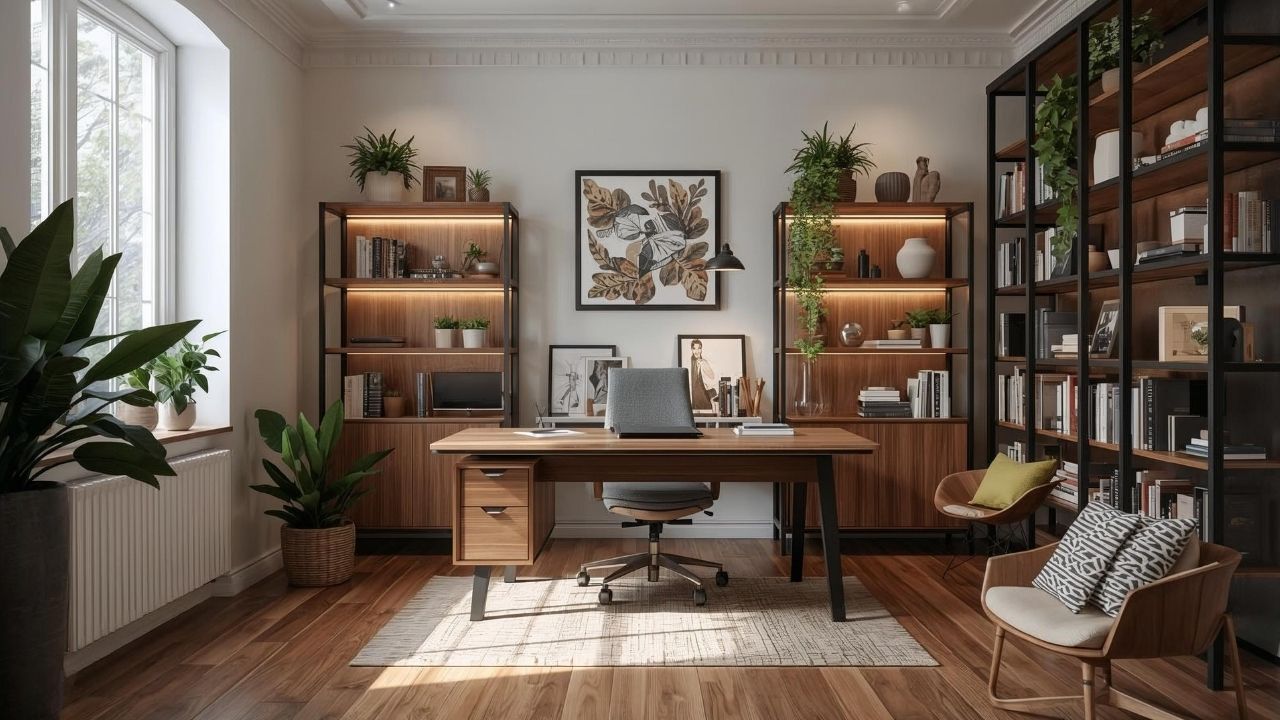
A well designed home office should feel productive, comfortable, and visually inspiring. As more people spend time working or creating at home, home office decor has shifted toward spaces that support focus while still feeling warm and personal. The right design choices can make a home office more enjoyable and efficient without sacrificing style. From calming colors and ergonomic furniture to smart storage, lighting, and personal details, every element should help the room feel organized and motivating. These home office decor ideas focus on creating a workspace you enjoy spending time in every day.
These home office decor ideas focus on smart layouts, calming colors, and thoughtful details that help create a workspace you enjoy spending time in.
Neutral Color Palettes for a Calm Work Environment
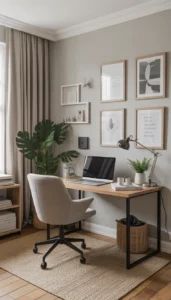
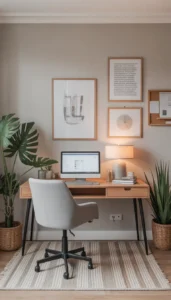
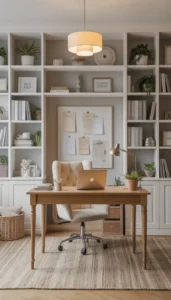
Neutral tones help create a focused and distraction free workspace. A calm color palette allows the mind to settle, making it easier to concentrate on tasks, meetings, and creative work. Soft neutrals also make a home office feel brighter and more flexible, especially when paired with natural materials, warm lighting, and simple decor.
Use soft light shades
Beige, off white, and warm gray keep the space feeling open. These shades work well on walls, curtains, rugs, and furniture because they create a quiet foundation. Softer tones also reflect light gently, helping the office feel fresh, calm, and easy to work in.
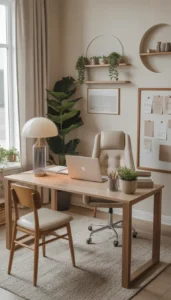
Add contrast with darker accents
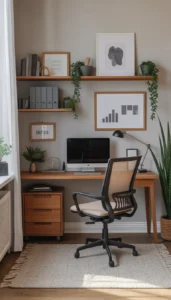
Small dark elements add depth and definition. A black desk lamp, charcoal chair, dark picture frame, or deep wood shelf can ground the room visually. These accents prevent a neutral office from feeling flat while still keeping the overall look focused and refined.
Keep colors consistent
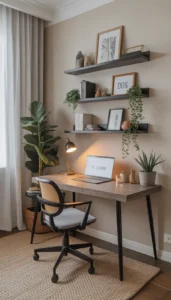
A cohesive palette promotes visual calm. Repeating similar tones across furniture, storage, textiles, and wall decor helps the office feel organized. When colors flow naturally, the workspace feels less distracting and more intentional, which can support better concentration during daily work.
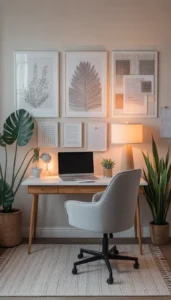
Ergonomic Furniture That Blends Comfort and Design
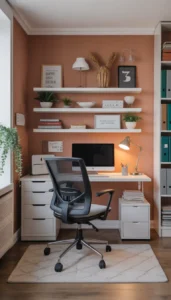
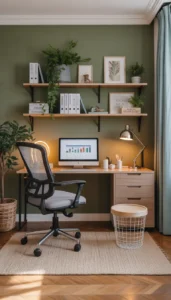
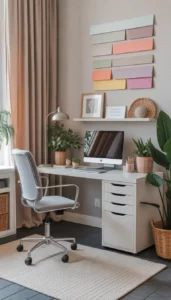
Furniture plays a key role in productivity and comfort. A stylish office is only successful if it supports long work sessions without discomfort. Ergonomic furniture should fit the room, support good posture, and still match the overall decor style. The best pieces feel practical, comfortable, and visually connected to the space.
Choose a supportive desk chair
Comfort improves focus and posture. A good chair should support your back, allow proper height adjustment, and feel comfortable for extended use. Choose a design that blends with your decor, whether that means soft upholstery, warm leather, simple fabric, or a sleek modern shape.
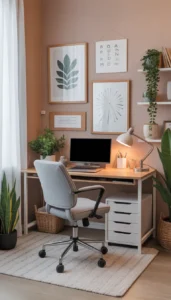
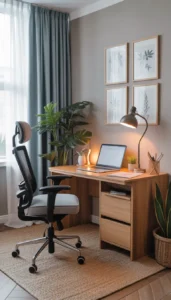
Select desks with clean lines
Simple designs keep the workspace organized. A clean lined desk gives you enough room for daily tasks without making the office feel crowded. Look for practical surfaces, built in drawers, or slim profiles that support productivity while keeping the room visually calm.
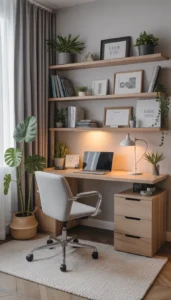
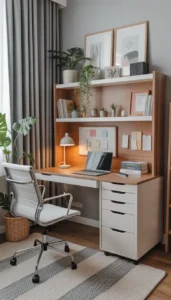
Keep furniture scaled to the room
Proper sizing prevents overcrowding. A large desk can overwhelm a small office, while a tiny desk may not support your work needs. Choose furniture that leaves enough space for movement, storage, and comfortable seating so the room feels balanced and easy to use.
Smart Storage Solutions That Reduce Clutter
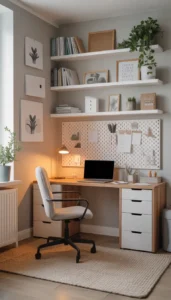
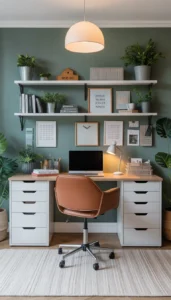
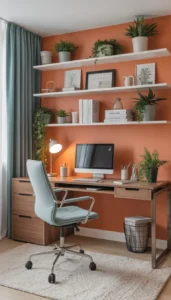
Organized spaces support better workflow. A cluttered office can quickly become distracting, especially when papers, cables, books, and supplies collect on the desk. Smart storage keeps essentials accessible while allowing the room to feel clean and polished. The goal is to make organization simple enough to maintain every day.
Use wall mounted shelving
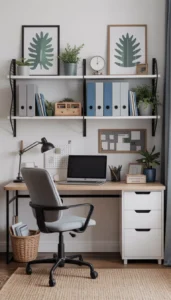
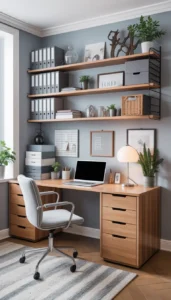
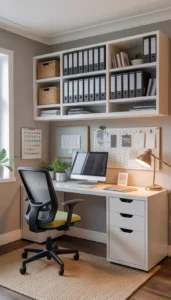
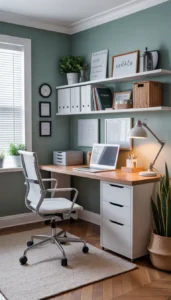
Shelves free up desk space. Wall mounted shelves are useful for books, files, decor, and office supplies without taking up floor area. Keep shelves lightly styled with baskets, boxes, and a few decorative pieces so they look intentional rather than crowded.
Choose closed storage for paperwork
Hidden storage keeps the office looking tidy. Cabinets, drawers, and lidded boxes are ideal for documents, chargers, notebooks, and extra supplies. Closed storage helps reduce visual clutter, making the office feel calmer and more professional during work hours and video calls.
Keep essentials within reach
Functional placement improves efficiency. Items you use often, such as pens, notebooks, chargers, and files, should be easy to access. Store less used items higher up or inside cabinets so the main work area stays clear and focused.
Lighting That Supports Focus and Comfort
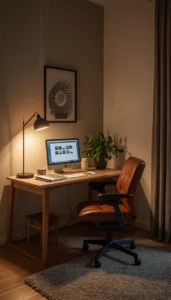
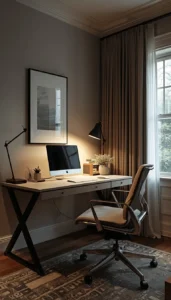
Lighting impacts both mood and productivity. A home office needs enough brightness for reading, writing, and screen work, but the light should not feel harsh or tiring. A thoughtful lighting plan combines general light, task light, and softer accents to create a comfortable workspace throughout the day.
Use layered lighting
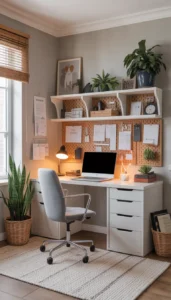
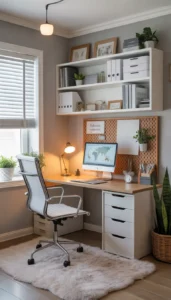
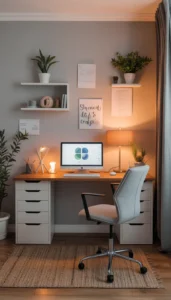
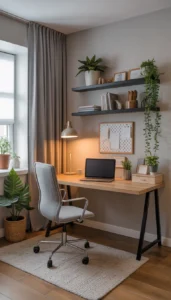
Combine overhead lights with task lighting. Ceiling lights brighten the room, while a desk lamp gives focused light exactly where you need it. Adding a floor lamp or wall light can soften darker corners and make the office feel warmer and more complete.
Choose warm neutral light
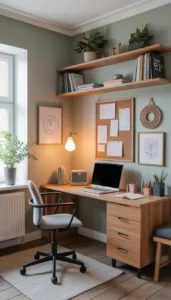
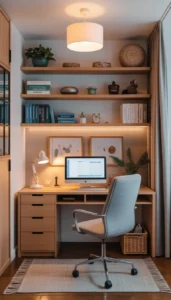
Balanced lighting reduces eye strain. A warm neutral bulb feels comfortable without making the room too yellow or too cold. This type of lighting works well for long work sessions because it keeps the office bright enough for focus while maintaining a calm atmosphere.
Position lights strategically
Proper placement prevents shadows. A desk lamp should light your work surface without reflecting harshly on a screen. Place lights to the side of your dominant hand when writing, and use additional lighting near shelves or reading corners to keep the room evenly lit.
Desk Styling That Feels Functional and Personal
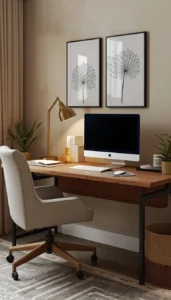
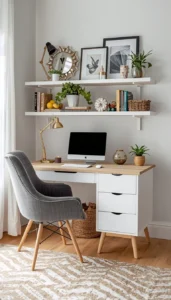
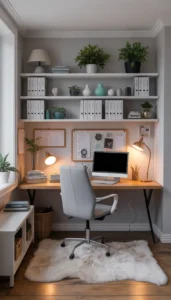
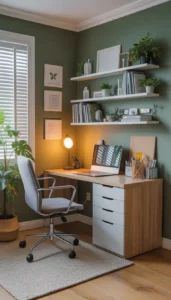
Desk decor should inspire without distracting. Since the desk is the main work surface, it needs to stay practical, organized, and comfortable. A few thoughtful details can make the office feel personal while still leaving enough open space for daily tasks, laptops, notebooks, and planning tools.
Keep the surface minimal
Less clutter helps maintain focus. Keep only the items you use daily on the desk, such as a lamp, notebook, pen holder, and computer. A clear surface makes it easier to begin work and helps the office feel calmer throughout the day.
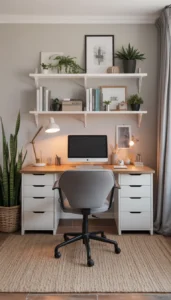
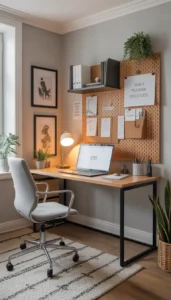
Add one or two decorative pieces
Personal touches add warmth. A small plant, framed photo, candle, or ceramic object can make the desk feel more inviting. Choose pieces that make you feel comfortable or motivated, but keep the arrangement. Choose pieces that make you feel comfortable or motivated, but keep the arrangement simple so the decor does not interrupt your workflow.
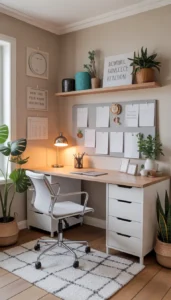
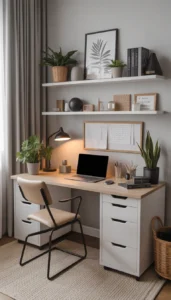
Use organizers that match the decor
Cohesive accessories create a polished look. Matching trays, pen cups, file holders, and boxes can make practical items feel like part of the design. Choose materials such as wood, metal, fabric, or acrylic that complement the desk and surrounding furniture.
Wall Decor That Motivates and Inspires
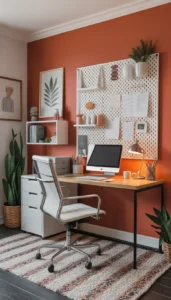
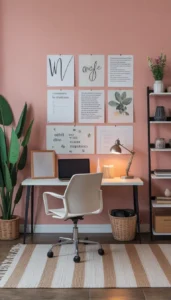
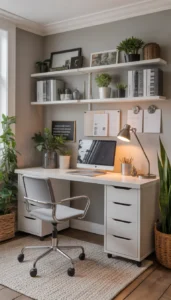
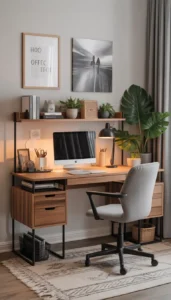
Wall styling can influence creativity and mood. A home office wall should feel inspiring, but not too busy. Artwork, planners, shelves, or pinboards can add personality and function while keeping the room organized. The right wall decor can turn a plain office into a more motivating and visually pleasing workspace.
Display artwork or prints
Visual inspiration enhances the workspace. Choose art that feels calm, creative, or motivating without being distracting. Abstract prints, nature inspired artwork, typography, or soft landscapes can add character while supporting the office’s overall color palette and style.
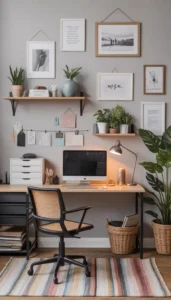
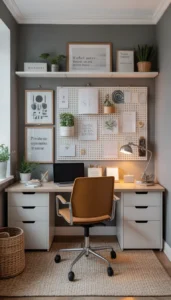
Use a pinboard or planner
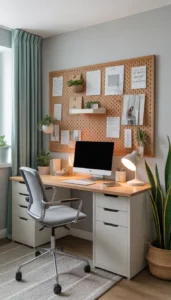
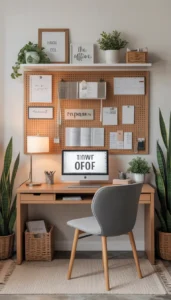
Functional decor supports organization. A pinboard, whiteboard, calendar, or wall planner can help track tasks, reminders, and goals. Choose a clean design that blends with the room so it adds usefulness without making the wall feel messy.
Keep layouts balanced
Avoid overcrowding the walls. Too many frames, notes, or shelves can make the office feel busy. Leave open space around each piece so the wall decor feels intentional, calm, and easy to look at during focused work.
Natural Elements That Improve the Atmosphere
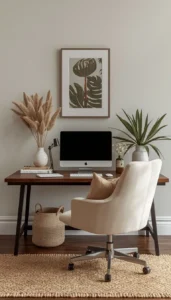
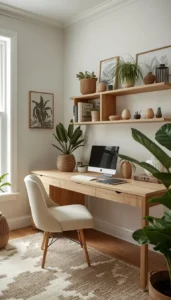
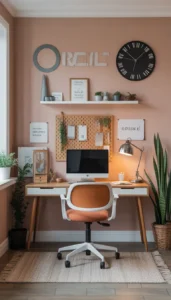
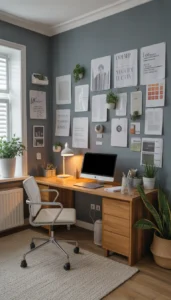
Organic details make home offices feel more inviting. Natural elements bring warmth, softness, and freshness into a workspace that could otherwise feel too plain or technical. Plants, wood accents, woven textures, and breathable fabrics can make the office feel more comfortable while still supporting a clean and productive environment.
Add indoor plants
Greenery improves comfort and freshness. A small plant on the desk, a floor plant in the corner, or a trailing plant on a shelf can soften the workspace. Plants add natural color and make the office feel more alive, especially in neutral rooms.
Use wood accents
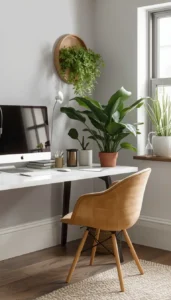
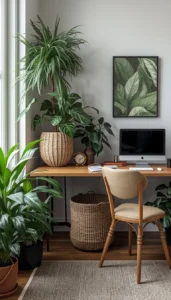
Natural textures add warmth. A wood desk, shelf, picture frame, tray, or chair detail can make the office feel more grounded. Wood works beautifully with neutral colors and helps balance modern technology with a softer, more comfortable look.
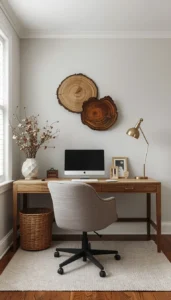
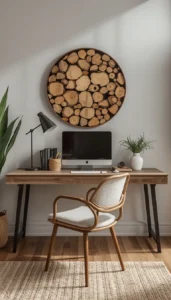
Choose breathable materials
Natural fabrics enhance comfort. Linen curtains, cotton cushions, wool rugs, or woven baskets can add texture without clutter. These materials help the room feel relaxed and welcoming, which makes long work sessions feel less stiff or cold.
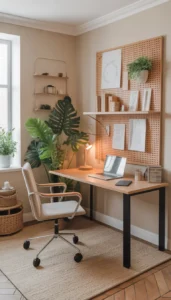
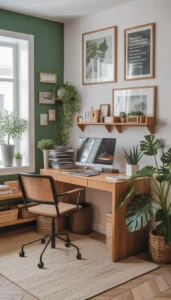
Layout Ideas That Maximize Small Home Offices
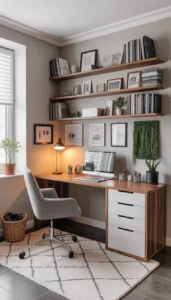
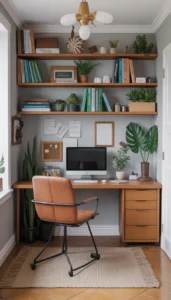
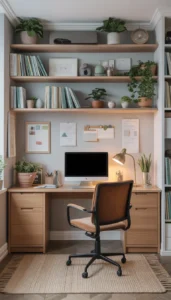
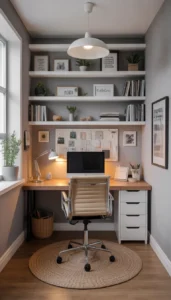
Smart layouts make even compact offices work well. A small home office needs clear movement, practical storage, and a desk position that supports focus. With thoughtful planning, even a corner, closet office, bedroom area, or narrow room can become a productive and stylish workspace.
Place the desk near natural light
Daylight improves mood and focus. Positioning the desk near a window can make the office feel brighter and more pleasant. Natural light also helps the space feel larger, but make sure the screen is placed to avoid glare during work.
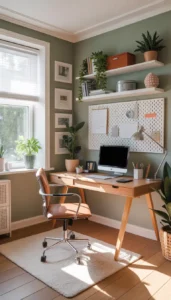
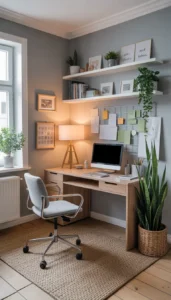
Define the workspace clearly
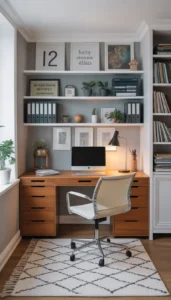
Visual separation improves productivity. Use a rug, wall color, shelving unit, or lighting to mark the office area, especially in shared rooms. Clear boundaries help the workspace feel intentional and make it easier to shift into work mode.
Keep walkways open
Clear movement makes the space feel larger. Avoid placing furniture where it blocks doors, closets, or paths around the desk. An open layout keeps the office comfortable and prevents the room from feeling cramped or difficult to use.
Tech Friendly Decor for Modern Workspaces
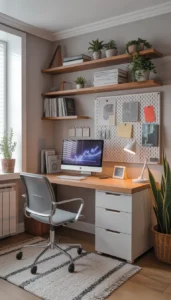
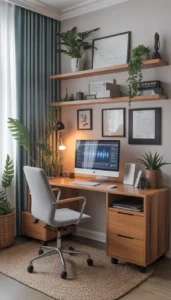
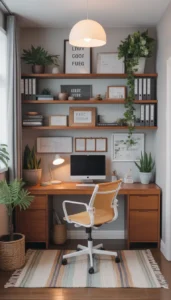
Technology is an essential part of home offices. Computers, screens, chargers, speakers, and accessories need to be easy to use without creating visual clutter. A tech friendly workspace should feel clean and modern, with cables, devices, and tools organized in a way that supports daily productivity.
Hide cables neatly
Cable management keeps the space clean. Use cable clips, cord covers, trays, or desk channels to keep wires controlled. Hidden cables instantly make a home office feel more polished and prevent the desk area from looking messy or distracting.
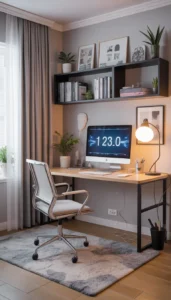
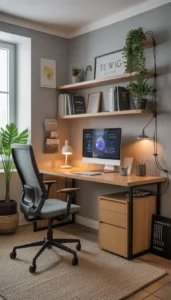
Use wall mounted screens if needed
They save desk space. A wall mounted monitor or screen can free up the work surface and create a cleaner setup. This is especially helpful in small offices where desk space is limited and every inch needs to stay functional.
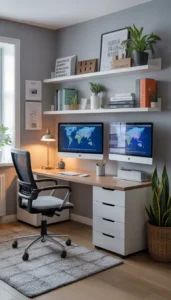
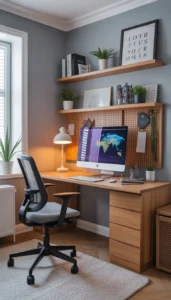
Choose minimal tech accessories
Simple designs blend into the decor. Keyboards, lamps, speakers, charging stations, and monitor stands in neutral colors or clean finishes feel more cohesive. Minimal tech accessories help the workspace look modern while still supporting practical needs.
Cozy Touches That Make the Office Feel Inviting
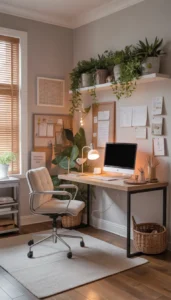
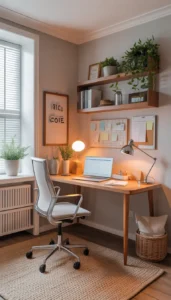
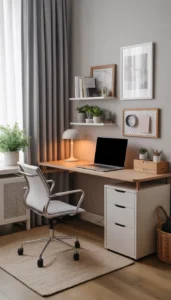
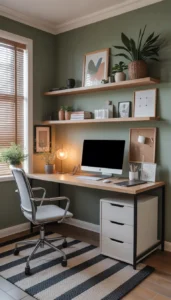
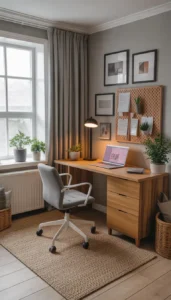
Comfort enhances long work sessions. A home office should support productivity, but it should also feel pleasant enough to use every day. Cozy details like rugs, cushions, soft lighting, and warm textures can make the space feel more inviting without reducing function or professionalism.
Add a soft rug
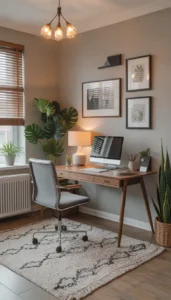
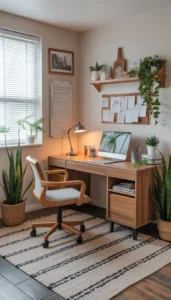
Rugs add warmth and sound absorption. A rug under the desk or seating area can make the office feel more comfortable and visually grounded. Choose a low pile option if the chair needs to roll easily, and keep the color connected to the room’s palette.
Use comfortable textiles
Cushions and throws improve coziness. A small cushion on a chair, a throw nearby, or soft curtains can add comfort and texture. These details help the office feel less rigid while keeping the space warm, calm, and personal.
Maintain a balanced look
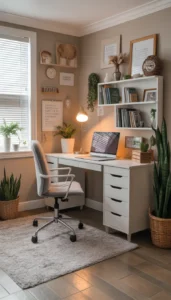
Comfort should not compromise function. Cozy decor works best when it supports the room rather than crowding it. Keep the desk clear, choose practical textiles, and use only a few soft accents so the office remains efficient and stylish.
Create a Home Office That Works for You
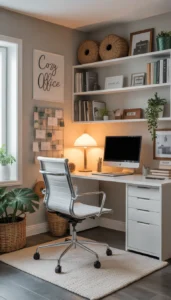
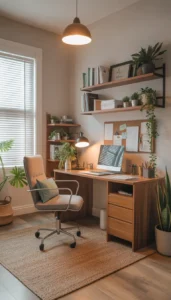
A thoughtfully styled home office can improve both productivity and well being. By focusing on calming colors, smart storage, comfortable furniture, balanced lighting, and personal details, you can design a workspace that feels efficient and enjoyable. Start with a layout that supports your daily tasks, then add ergonomic seating, organized storage, natural textures, and decor that helps you feel motivated. Keep technology tidy, surfaces clear, and lighting comfortable so the office stays easy to use. When style and function work together, your home office becomes a space that supports focus, creativity, and a better workday.
If you enjoy creating functional and stylish interiors, exploring more home office and interior decor ideas can help you continue designing spaces that support both work and creativity.
